
You probably picture Rudolph with that famous glowing red nose and leading Santa’s sleigh, but have you ever wondered what kind of deer he actually is? Rudolph is a fictional reindeer (a caribou), not a white-tailed deer, and his story borrows from the traits of Arctic reindeer—think thick fur and antlers on both males and females.
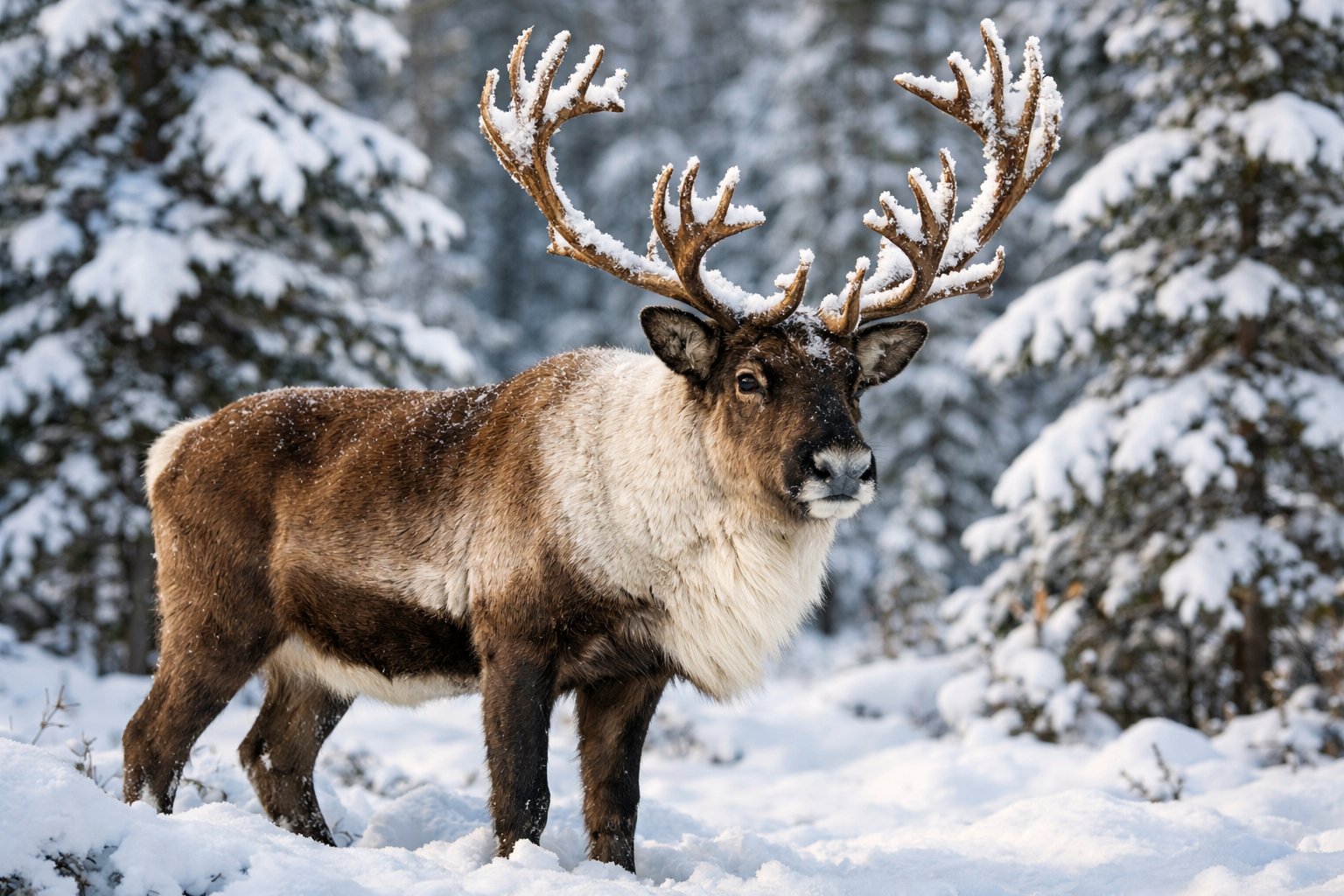
His North Pole home, those seasonal adaptations, and the classic story all point to real reindeer biology. Still, some illustrations seem to favor white-tailed deer features. Why’s that? And what’s up with the red nose? Let’s dig into the folklore and the real-life inspirations behind Rudolph.
Is Rudolph a Reindeer or Another Type of Deer?

Rudolph’s story paints him as a northern animal with antlers and a thick coat. When you look at reindeer traits, they really match up with Rudolph. He’s nothing like a whitetail deer, honestly.
Let’s check out the science and those cold-weather adaptations.
Reindeer Characteristics vs. Other Deer
Reindeer—called caribou in North America—are pretty stocky, with short legs and dense fur that keeps them warm. They’ve got lighter undercoats and a woolly winter layer, which is perfect for Arctic life.
Both male and female reindeer grow antlers. That’s not something you see with most deer species, where usually only the guys get the antlers.
Reindeer hooves actually change with the seasons. In winter, they spread out for better traction on snow. In summer, they tighten up for walking on harder ground.
Their noses and big, broad hooves are built for the Arctic, not the woods and fields where most deer hang out. Reindeer just look and act different from the slender deer you find in North America and Europe’s forests.
Why Rudolph Is Not a Whitetail Deer
Whitetail deer mostly live in North American woodlands. They don’t have the heavy winter features you see on Rudolph.
Female whitetails almost never have antlers, and their tails are long—used for signaling—while reindeer tails stay short.
Rudolph’s home at the North Pole and his job pulling Santa’s sleigh make it clear: he’s adapted for cold and long-distance travel. Whitetails just don’t have thick coats, wide hooves, or those cool seasonal hoof changes.
Honestly, it’s tough to imagine Rudolph as anything but a reindeer.
The Scientific Name and Adaptations of Reindeer
The scientific name for reindeer is Rangifer tarandus. These animals live across Scandinavia, northern Europe, and parts of North America, where most people call them caribou.
Reindeer come with a thick insulating coat, a special nose structure to warm up cold air, and they can digest lichens in winter. Seriously, they’re built for tough conditions.
Female reindeer usually keep their antlers through winter. That helps them compete for food before calving.
Reindeer eyes can even shift to improve vision in low light during those long, dark winters. All these features make Rudolph, as Santa’s lead reindeer, a perfect fit for Rangifer tarandus—not some deer from a milder place.
Rudolph’s Red Nose and His Place in Christmas Folklore
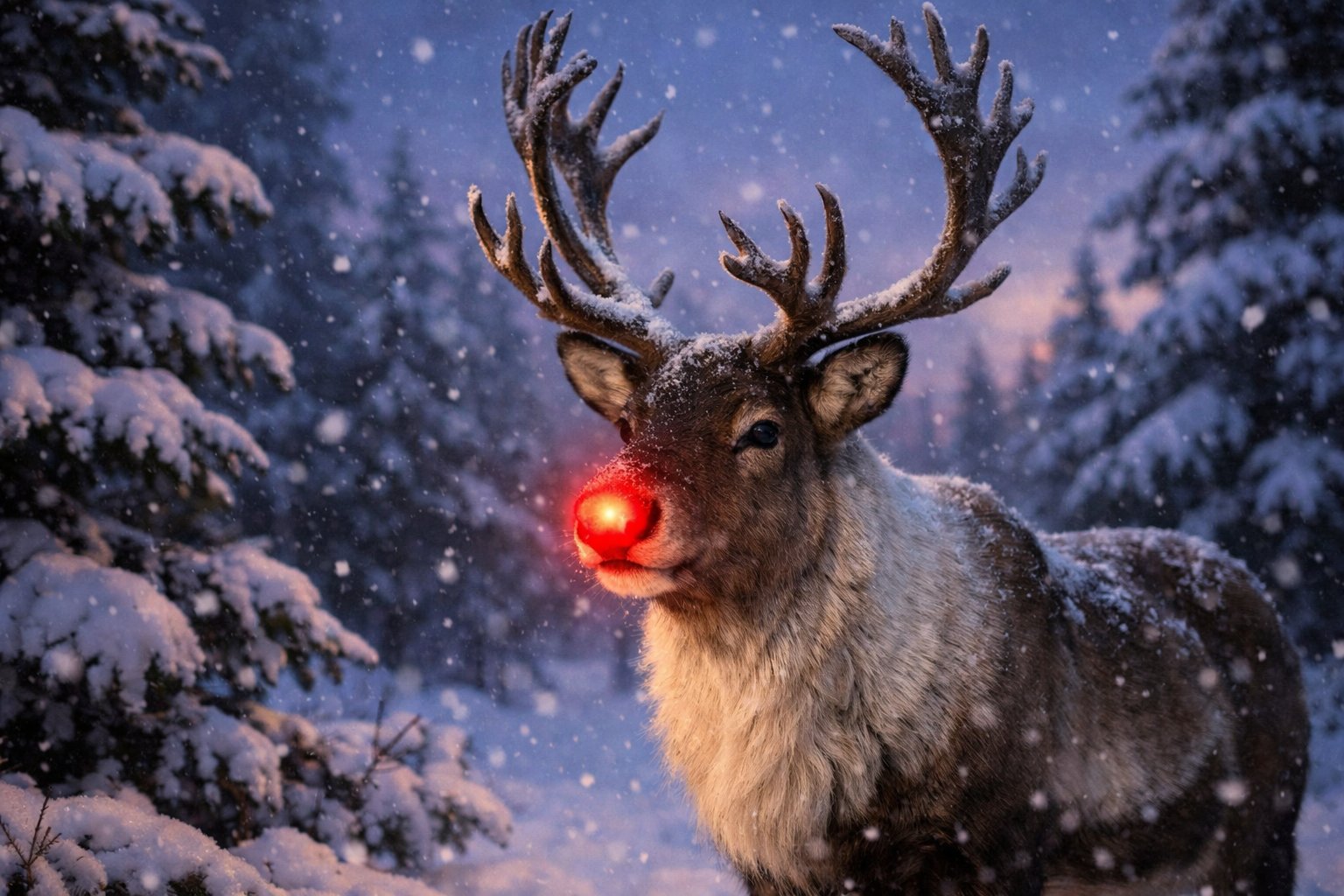
Rudolph’s glowing red nose and his part in Santa’s team started with a 1939 department-store story. Over time, he’s become a global holiday icon.
So how did the nose start? And how did Rudolph join Santa’s crew? Let’s get into it.
The Origin of Rudolph the Red-Nosed Reindeer
Robert L. May wrote Rudolph in 1939 for Montgomery Ward, creating a gentle, rhyming story about a young reindeer with a glowing red nose. The nose was a plot twist—other reindeer teased him, but it turned out to be exactly what Santa needed on a foggy Christmas Eve.
Johnny Marks, May’s brother-in-law, turned the story into a Christmas song. Gene Autry’s 1949 recording made Rudolph famous and part of holiday music everywhere.
The poem’s rhythm echoes “A Visit from St. Nicholas” (“The Night Before Christmas”), which gives it that classic holiday vibe.
Santa’s Sleigh and the Christmas Reindeer Team
Santa’s sleigh usually runs with eight reindeer: Dasher, Dancer, Prancer, Vixen, Comet, Cupid, Donner, and Blitzen. Rudolph gets added as the ninth and youngest, leading the team when the weather turns nasty.
You see this in almost every version—Santa picks Rudolph to guide the sleigh through fog or snow, using that bright nose as a beacon.
Stories and songs might change a few details, but the main idea sticks: Rudolph’s nose helps Santa deliver gifts from the North Pole, even in the worst weather. Most versions keep Donner or Blitzen as Rudolph’s parent, tying him back to the classic team and adding a helpful new face to the lineup.
Rudolph in Popular Culture and Media
Rankin/Bass’s 1964 stop-motion animation TV special made Rudolph instantly recognizable. The show introduced characters like Clarice, Hermey the elf who dreams of being a dentist, and Yukon Cornelius.
These new faces helped shape the images you probably picture when you think of Rudolph. The special ran for decades. It inspired later movies, books, and a mountain of merchandise.
You’ll find other versions too—comic books, a 1998 animated film, and the song and TV special popping up every holiday season. Rudolph even shows up in store displays, stamps, and plenty of parodies.
The story keeps shifting, doesn’t it? Sometimes it’s about the red nose—maybe a disability, maybe a superpower. Sometimes it’s about feeling like an outsider. But no matter what, it always circles back to Santa needing Rudolph to guide the sleigh and deliver gifts.
- Key media: Gene Autry’s song, Rankin/Bass special, Montgomery Ward booklet.
- Common themes: acceptance, the value of uniqueness, and helping Santa through tough weather.


