
You’ll spot deer munching on leaves, shoots, grasses, berries, and fallen nuts all over woods, fields, and hedgerows in the UK. Deer mostly eat plant material — leaves, twigs, grasses, fruit, and tree bark — and what’s on the menu really depends on the season and the species.
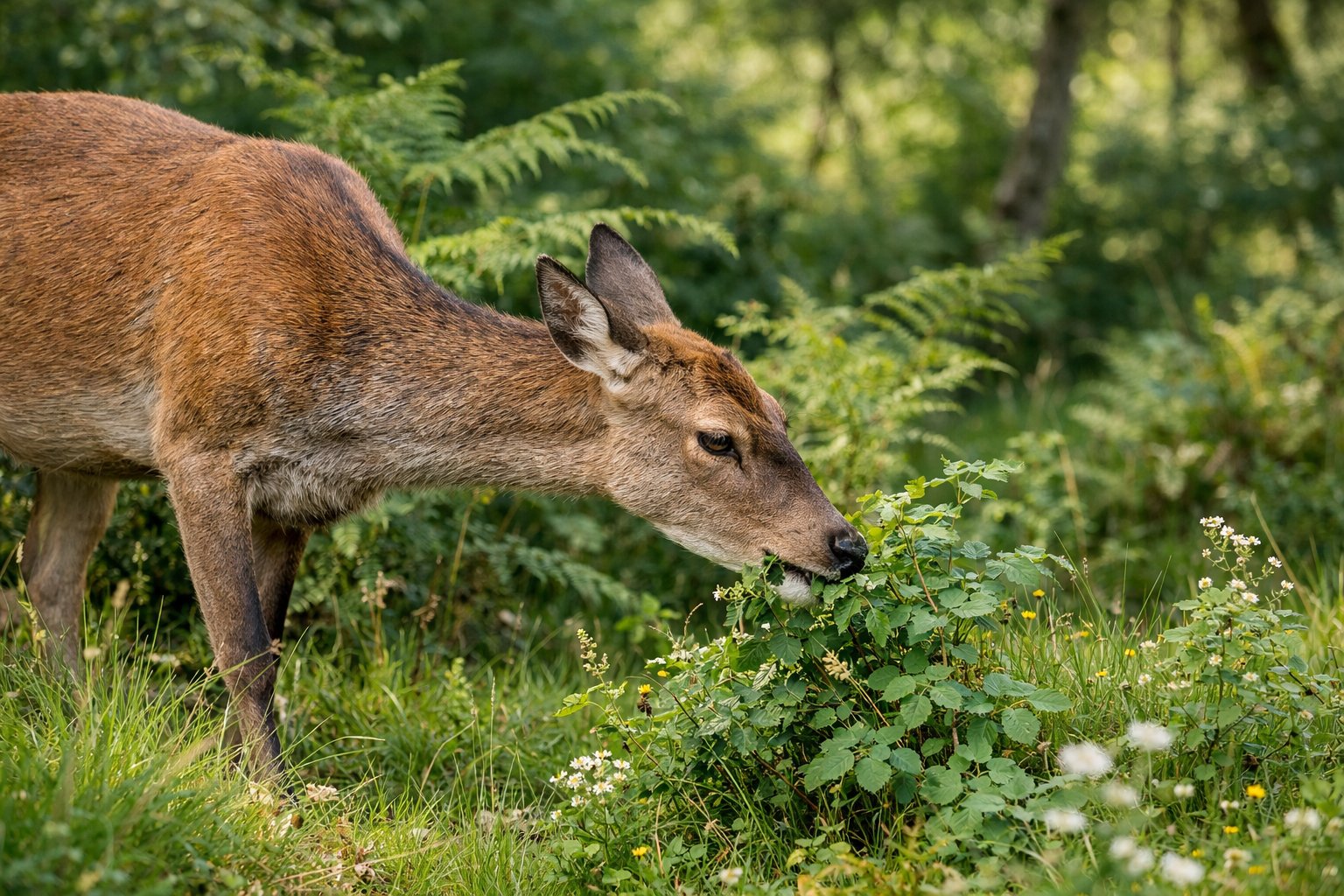
Walk into a woodland and you’ll notice how deer pick their food: some nip off tender shoots, others go for grass or strip bark when there aren’t many fresh leaves around. Curious about which species eat what, and how their diet shifts with the seasons? Let’s dig in.
Main Foods Deer Eat in the UK
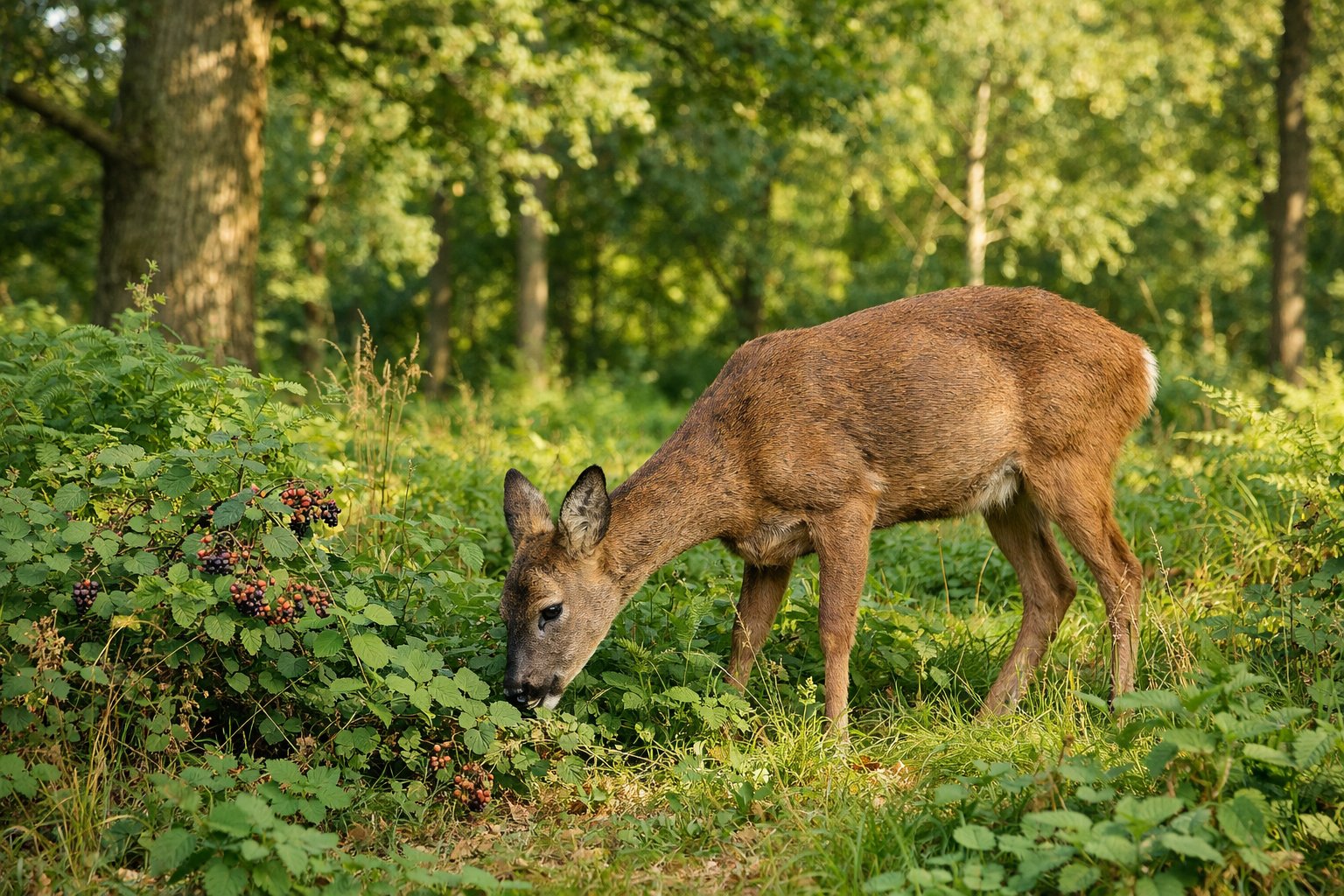
Deer in the UK eat a mix of grasses, leafy plants, shrubs, fruits, and woody shoots. Their diet changes with the seasons and whatever grows near your garden or woodland.
Grasses and Forbs
You’ll see deer grazing on grasses like ryegrass and tussock grass along field edges. They also eat forbs — broad-leaved herbaceous plants such as clover and alfalfa — which give them a good protein boost in spring and summer.
In meadows or pastures, deer often crop young, tender shoots right down to the ground. Forbs like hosta leaves in gardens or wild species in hedgerows attract deer because they’re soft and easy to digest.
As ruminants, deer use a multi-chambered stomach to ferment these plants, so they usually go for nutrient-rich, leafy forbs when they find them.
Shrubs and Woody Plants
Deer browse shrubs and young trees, stripping shoots and leaves from willow, dogwood, maple, and rose. They eat ivy and brambles too, especially in winter when softer food is hard to come by.
Young tree shoots and saplings often get hit the hardest, since deer bite off the growing tips, which can really mess with woodland regeneration. If you’re looking after woods or hedgerows, you’ll probably notice deer targeting oak and beech saplings, plus any soft-barked trees.
They can remove buds and bark, so managers often end up fencing or protecting young trees just to give them a fighting chance.
Fruits, Berries, and Mast
You might spot deer eating fallen fruit and mast like acorns and beechnuts in autumn. Deer love apples, pears, and other soft fruit that’s already on the ground, rather than bothering with fruit up in the branches.
Mast like acorns packs in fats and calories, which helps deer get through winter. Berries and persimmons (if they’re around) make it onto the menu when they’re ripe.
Deer rarely eat much fruit straight from the trees; instead, they scour the forest floor for whatever’s dropped, mixing mast with grasses and forbs for a more balanced diet.
Special Dietary Adaptations
Deer act as concentrate selectors among ruminants, so they pick out high-quality, low-fiber plants when they can. Local deer seek out protein-rich shoots, young leaves, and soft forbs because their rumen handles these foods pretty well.
When the weather turns harsh, they switch to bark, twigs, and tougher browse, which have more fiber and fewer nutrients. This flexible approach — from clover and alfalfa to woody browse and mast — helps deer ride out seasonal changes, but it can also mean trouble for gardens and young woodlands.
If you want more detail on what deer eat through the year, check out seasonal deer nutrition and summer forage.
Deer Species and Feeding Differences in the UK

Size, antler use, and habitat all shape what each deer species eats. Some feed high up in trees, while others stick to low plants, and the time of year pushes deer to switch up their diet.
Red Deer Feeding Habits
Red deer are the largest species in the UK and feed up to about 1.5 meters high. You’ll often see them browsing tree shoots and taller shrubs.
Stags use their antlers during the rut, but their feeding patterns shift; males bulk up before rutting and eat more grasses and coarse plants to put on weight. Hinds and fawns go for leafy shoots, herbs, and young trees in woodlands and open moorland.
In winter, bark and twigs matter more because green food gets scarce. If you manage woods or fields, keep in mind red deer can stop young trees from regenerating by eating seedlings and saplings.
Roe Deer Diet Preferences
Roe deer are smaller and pickier. You’ll spot them nibbling young leaves, buds, and broadleaved shoots close to the ground, often hiding in dense cover.
Roe bucks and does eat all sorts of shrubs, garden plants, and field crops if they find them. They prefer high-protein, nutrient-packed shoots in spring and summer, then switch to woody browse, brambles, and hedgerow fruits in autumn.
During the rut, roe bucks may eat less while they’re searching for mates, but they still need good-quality forage to stay healthy.
Fallow, Sika, Muntjac, and Chinese Water Deer
Fallow deer munch on grasses, herbs, and young tree shoots. They browse at mid-height and often stick together in herds.
You’ll spot them grazing in open parkland or along woodland edges. The males—bucks—grow broad, palmate antlers and use them for autumn displays and fights.
Sika deer eat just about anything. They browse shrubs, grasses, and young trees, and they seem to handle wet woodlands and parkland pretty well.
Muntjac are small but surprisingly aggressive when they feed. They graze on low vegetation, up to about a meter high, and eat shoots, seedlings, and even garden plants.
Sometimes, muntjac use their small tusks in fights. Chinese water deer don’t have antlers at all; instead, both sexes use tusks and stick mostly to reeds, grasses, and marsh plants in wet spots.
When winter rolls around, all these species turn to bark and woody material. They can cause problems for tree regeneration and crops if their numbers get out of hand.
If you notice a lot of heavy browsing, people usually put up fencing or try controlled management to protect young trees and gardens.


