
You might be surprised by just how many kinds of deer roam the world. There are about 50–55 species in the deer family (Cervidae), split into two main groups and living on nearly every continent—except for Australia and Antarctica.
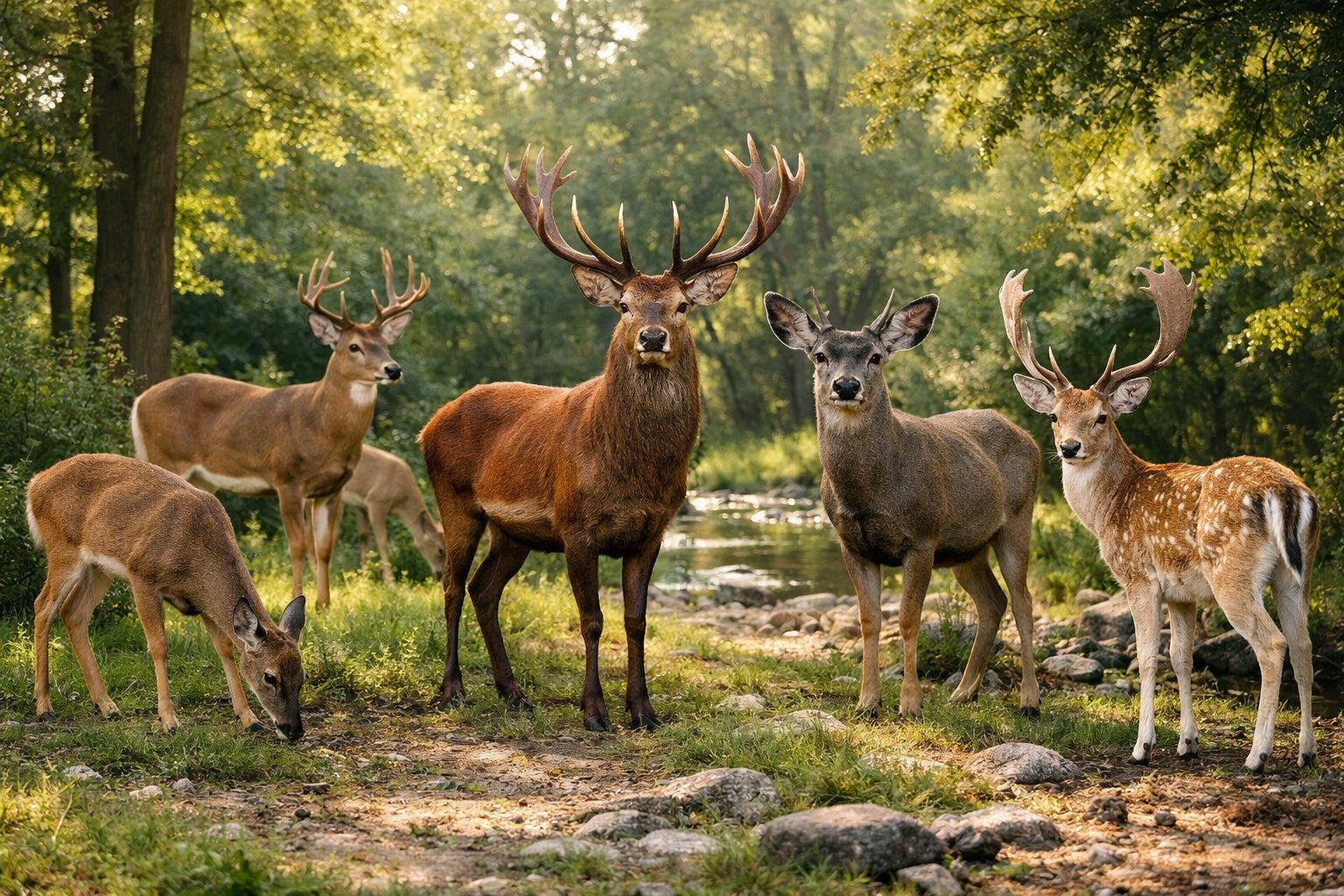
As you read on, you’ll see how scientists sort these species, what sets each group apart, and which deer are most remarkable for their size, antlers, or habitat. I’ll point out some well-known and oddball species so you can start to notice patterns and maybe even spot deer in more places.
How Many Types of Deer Are There Worldwide?

You’ll find around 40–55 living deer species, depending on who you ask. They all belong to the Cervidae family. Scientists divide them into two main groups, with some rare or unusual species scattered across the globe.
Classification of Deer Species
Deer sit in the order Artiodactyla and family Cervidae. Depending on how closely scientists split relatives, they count about 43–55 living species.
Taxonomists use skull shape, antler form, chromosomes, and DNA to group them. Some lists mention 43 species, while others go up to 50—the difference comes from ongoing debates in classification.
Subspecies and regional populations sometimes get bumped up to full species, or they get merged again, which changes the total.
Key traits that define deer species:
- Males usually have antlers (except for a few, like female reindeer).
- Each foot has two large and two small hooves.
- They use a rumen-style stomach to digest plants.
If you want an exact count for a specific region, check a reliable field guide or database. Numbers change as scientists discover new species or revise old ones.
Major Deer Groups: Cervinae and Capreolinae
Scientists split the Cervidae family into two subfamilies: Cervinae (Old World deer) and Capreolinae (New World deer). Each subfamily has its own genera and species with traits you can actually spot outdoors.
Cervinae includes species like red deer and sika deer. These deer often have branching antlers and live in Europe, Asia, and parts of North Africa.
Capreolinae covers white-tailed deer, moose, and reindeer. You’ll see more antler variety here, and these species come from the Americas and parts of Eurasia.
A few examples:
- Cervinae: red deer, sika, muntjac.
- Capreolinae: white-tailed deer, roe deer (also in Eurasia), moose, caribou (reindeer).
Knowing which subfamily a deer falls into can help you guess its behavior, what it eats, and what kind of antlers it might grow.
Unique and Lesser-Known Deer Types
Some deer really stand out for their looks or where they live. The pudu, for example, is the world’s smallest deer—it lives in South American forests and barely reaches 12–15 inches at the shoulder.
Moose, on the other hand, are giants. Some males can weigh over 1,000 pounds.
You’ll also find swamp-loving species like the marsh deer, which has big hooves for walking on wet ground. The Chinese water deer doesn’t have antlers at all, but it does have long, fang-like tusks.
A few species, like Schomburgk’s deer (now extinct) and the Kashmir musk deer, are either endangered or have extremely tiny ranges. These oddballs show just how much variety you get in the deer family.
If you want a full list or more details, check out the Britannica list of deer.
Notable Deer Species Around the World
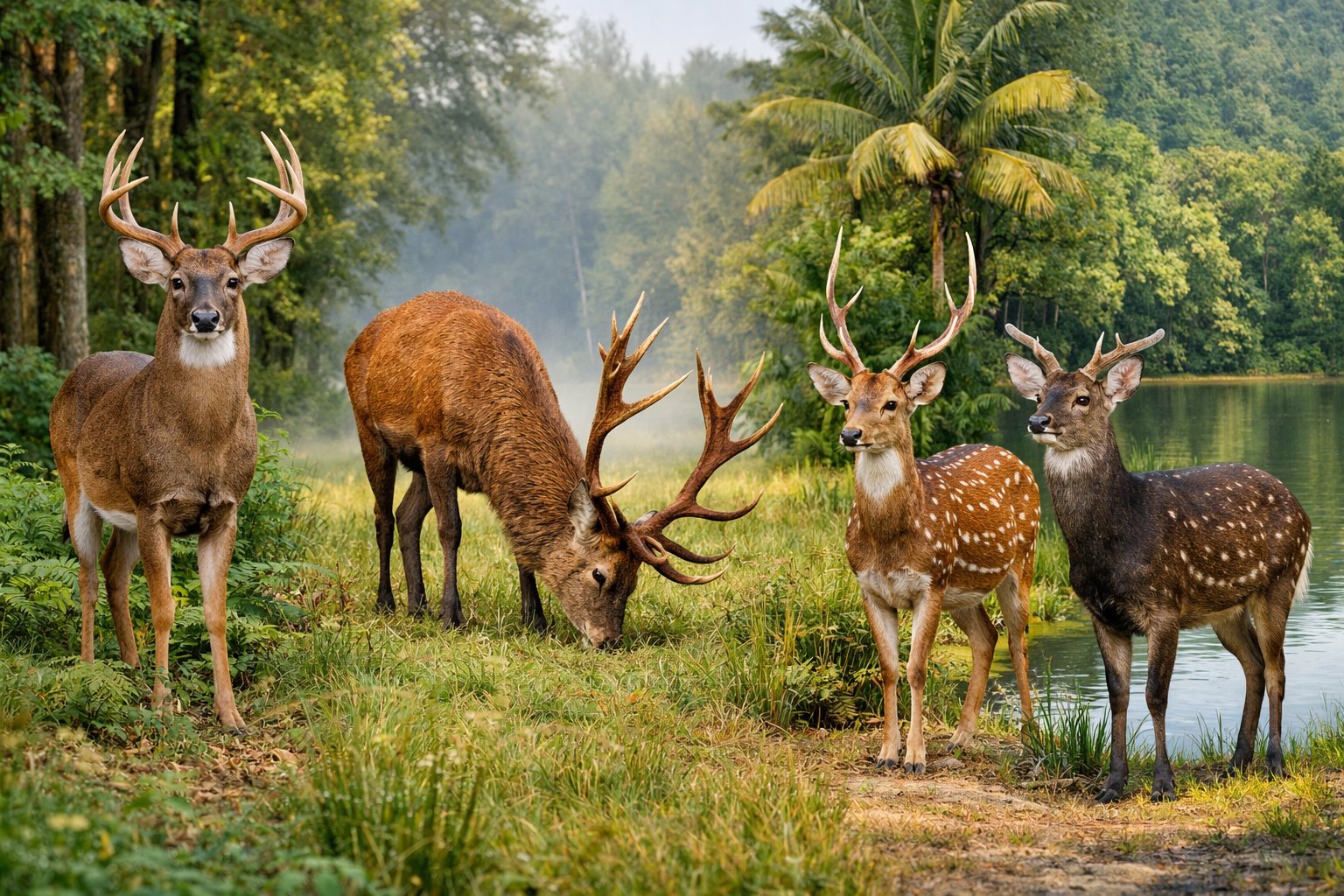
Deer come in all shapes and sizes. Some live in forests, others in tundra or wetlands, and a few are just plain unusual.
Iconic Deer: White-Tailed, Moose, Elk, and Red Deer
You’ll spot white-tailed deer all over North America. They like forests and fields. Males grow antlers every year, but females almost never do. Their coats change color with the seasons, and they can bolt quickly if startled.
Moose are the biggest deer out there. You can find them in northern North America and Eurasia. Their broad, flat antlers and long faces really make them stand out. Moose eat a lot of aquatic plants and browse near water.
Elk, or wapiti, gather in big herds in open woods across North America and eastern Asia. Males make loud bugling calls during the rut. Their antlers are long and branch out.
Red deer mostly roam Europe and parts of Asia. Scotland’s famous stags are red deer. They look a lot like elk but differ in size and antler shape. You might also come across mule deer and black-tailed deer in western North America. These have forked antlers and different tails.
Fascinating Old World Deer: Sika, Fallow, and Sambar
Sika deer (Cervus nippon) come from East Asia and wear spotted coats in summer. They handle dense forests and marshes well, and their loud calls are hard to miss during mating season. People have introduced sika to other places, where they sometimes compete with native deer.
Fallow deer (Dama dama) show off a range of coat patterns—spotted, dark, you name it. They’re native to Europe but now live in parks and game reserves all over the world. Males have wide, palmate antlers that are easy to recognize.
Sambar deer (Rusa unicolor) are large, rugged, and native to South and Southeast Asia. They stick to forests and wetlands and have thick, three-tined antlers. Sambar are a key prey for tigers and other big predators.
You might also run into axis deer (chital) with white spots, barasingha with many-tined antlers, or the rare Persian fallow deer in certain regions.
Rare and Unique Species: Pudu, Water Deer, and Tufted Deer
The pudu is the smallest deer on Earth. Northern and southern pudu hide out in South America’s thick underbrush. They only stand about knee-high and tend to be shy.
Water deer (Hydropotes inermis) don’t grow antlers, but they do have long upper canine tusks. They’re native to China and Korea and like reed beds and wet meadows. Their tusks and small size make them look pretty different from other deer.
Tufted deer (Elaphodus cephalophus) live in the mountain forests of China and Myanmar. Males have a dark tuft of hair on their forehead and small antlers. They also have big canine teeth and a compact body.
Other rare species include the Philippine spotted deer, Indian muntjac, and marsh deer. Each one has special habitat needs, which makes conservation pretty important.
Reindeer and Caribou: Arctic Adaptations
Reindeer and caribou (Rangifer tarandus) make their home in the Arctic and subarctic. You’ll notice that both males and females often grow antlers—pretty unusual for deer, honestly.
Their hooves actually shift with the seasons. In summer, they get softer for better grip, but when winter hits, those hooves harden up so they can handle icy ground.
They travel crazy long distances searching for food and places to give birth. You can spot them in the cold thanks to their thick fur and those fat layers—they’re built for it.
People in northern cultures have herded reindeer for ages, using them for transport, milk, and even clothing.


