
Ever spot a doe in spring and wonder just how many fawns she might be hiding? Most deer have one to three fawns at a time, but two is usually the magic number. Singles are common, and triplets pop up every now and then. If you catch a glimpse of a mother deer in a field or woods, this gives you a pretty good idea of what’s going on.
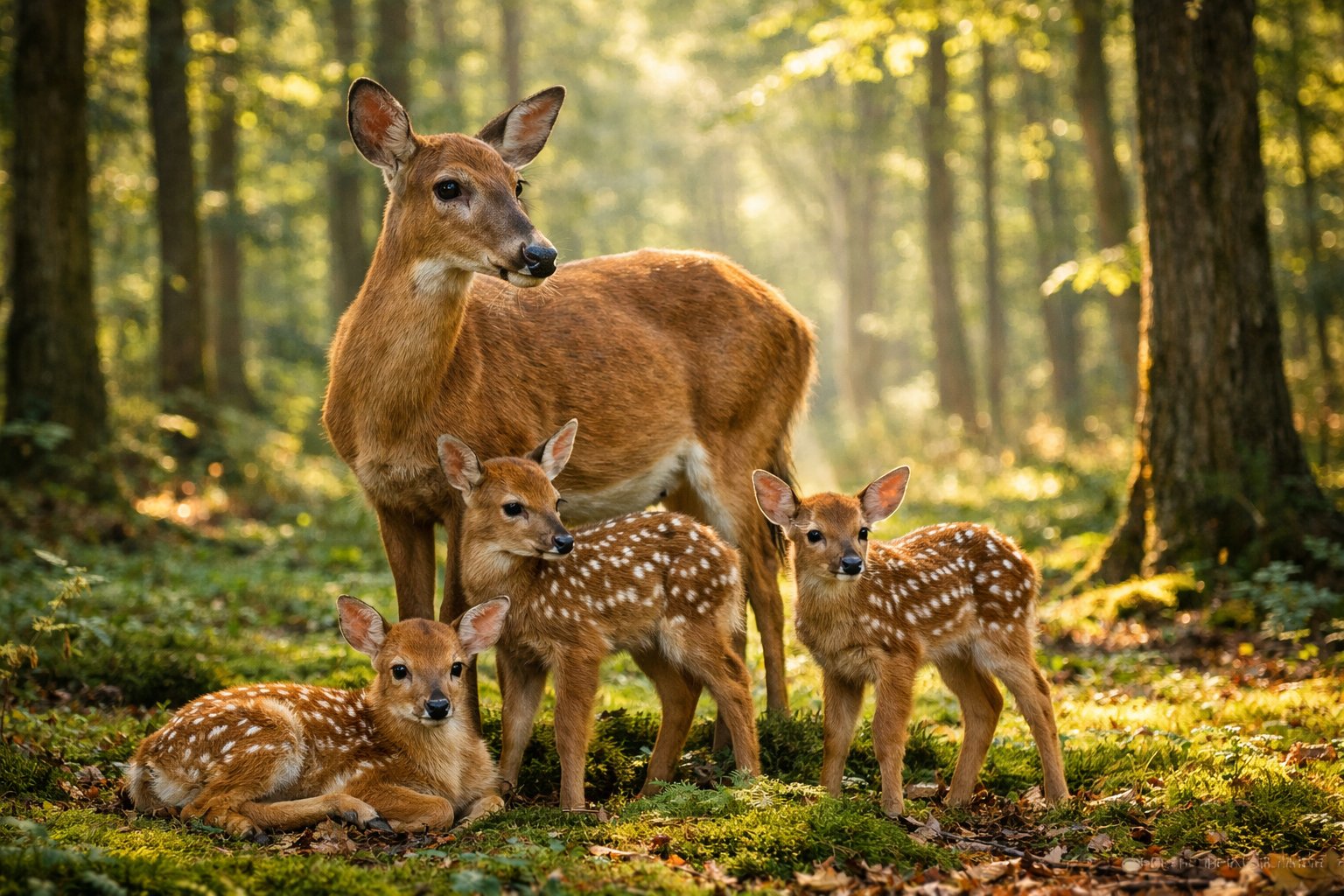
Age, food, and species all play a part in those numbers. White-tailed does often end up with more young than mule deer. It’s interesting to see how the environment and how the mother cares for her fawns shape both the count and their chances.
How Many Babies Does a Deer Have at Once?
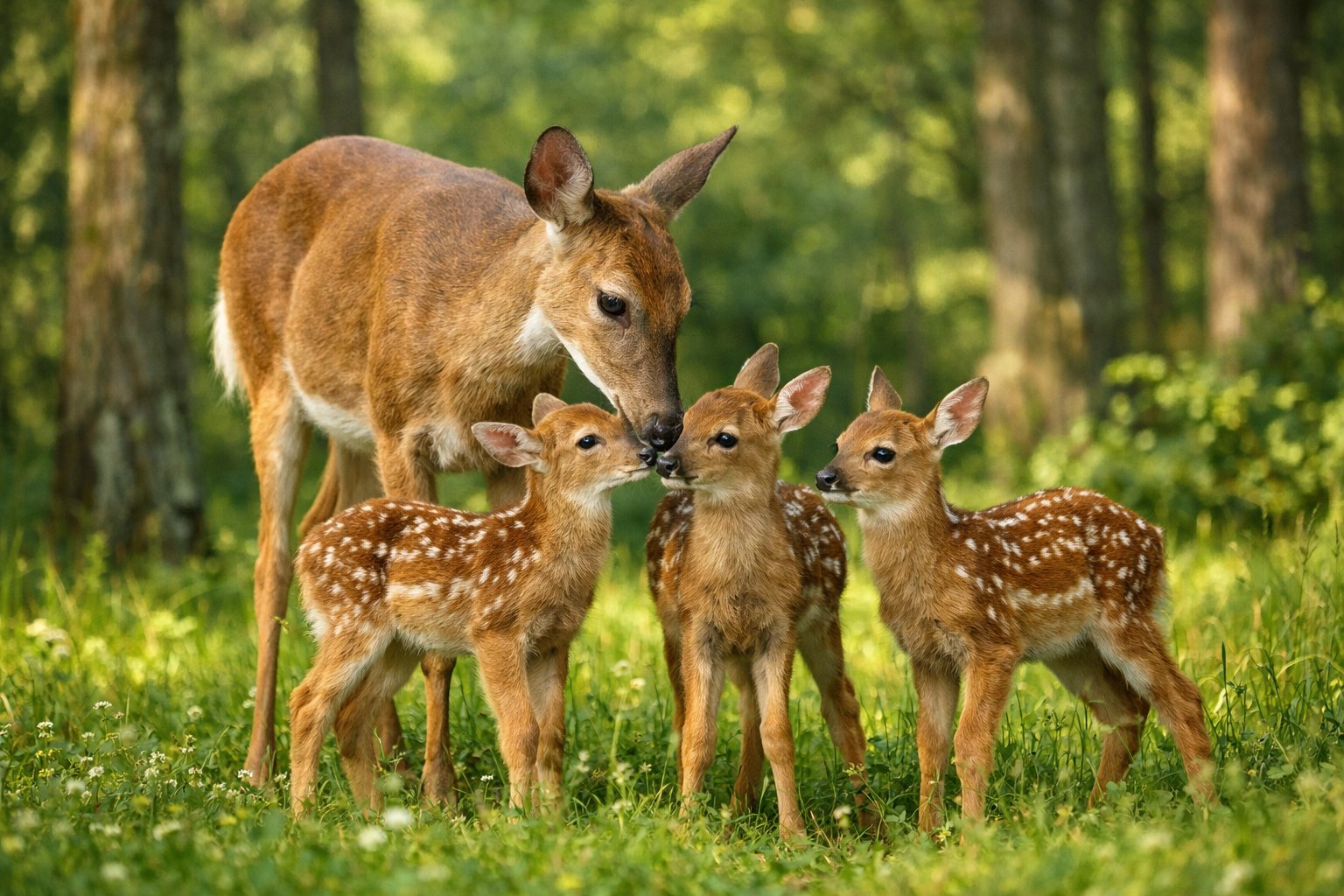
A doe usually gives birth to one or two fawns in a season. The number depends on her age, what she’s been eating, and what kind of deer she is.
Common Litter Size and Frequency
Most does drop one or two fawns every year. In healthy white-tailed deer, twins are pretty standard. First-time moms or does that aren’t getting enough to eat usually have just one.
A mature, well-fed doe tends to have twins more often. Deer breed once a year, so this cycle repeats itself each spring. Fawns arrive in springtime, giving them a shot at growing up before winter hits.
If you pay attention to local deer, you’ll see litter sizes change with habitat and weather.
Species Differences in Fawn Numbers
White-tailed deer often have twins, while mule deer more often have singles and fewer twins. White-tailed does can breed younger and sometimes have twins as early as two years old.
Mule deer mature a bit slower and live in drier areas, so they usually have fewer fawns. If you’re counting fawns, keep in mind how much food is around and whether predators are a problem.
In good habitats, both species might have more twins or even triplets. But if things are rough, you’ll mostly see single fawns.
Occasional Triplets and Quadruplets
Triplets and quadruplets can happen, but honestly, it’s rare. These bigger litters show up in spots with lots of food and healthy moms.
When a doe has triplets, she needs more energy and milk, which can be tough if food or cover runs short. Some records mention quadruplets or even quintuplets, but those are outliers, not the norm.
If you ever spot a doe with three or more fawns, take a look at the habitat—good nutrition usually explains the big family.
Factors That Influence Litter Size in Deer
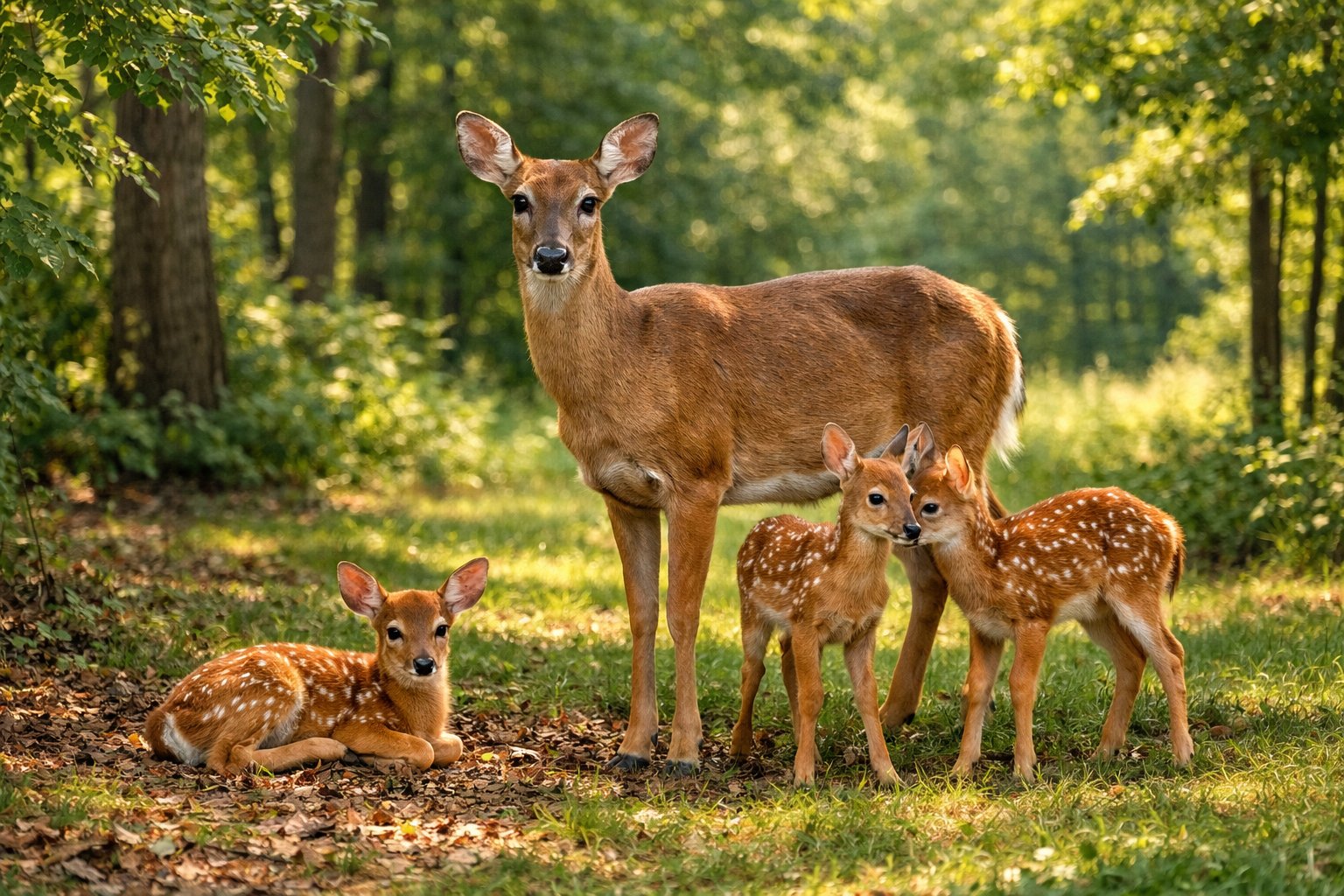
A few things really drive how many fawns a doe has. Her age and condition matter a lot. Food quality, the timing of breeding, and local pressure from predators or too many deer also play their parts.
Impact of Age and First-Time Mothers
Yearlings and first-time moms usually have smaller litters. A young doe is still growing, so she often carries just one fawn.
Does between 2 and 7 years old are in their prime and more likely to have twins. Their bodies and reproductive systems are fully up to the task.
First-time mothers face more risk during pregnancy and nursing. They might not produce as much milk, and they lack experience hiding or moving their fawns. That can lower fawn survival.
If you watch a herd, you’ll probably notice litter sizes go up as more does reach their best years.
Role of Nutritional Status and Food Resources
A doe’s health has a direct impact on how many fawns she can carry and raise. When there’s plenty of good food, does build up the fat and muscle they need for twins or sometimes triplets.
If food is scarce or low quality, you’ll see more single fawns or even failed pregnancies. Good nutrition helps does nurse better and keep more fawns alive.
If you want to boost litter sizes, improving the habitat with better forage and food-rich edges can help a lot.
Environmental Conditions and Predators
The environment changes fawn survival more than how many are conceived. Thick cover, warm springs, and light winters help does hide and feed their fawns, which means more twins make it.
Harsh winters, drought, or poor habitat force does to make tough choices, which often means fewer fawns or lower survival. Predators like coyotes and bobcats go after fawns and can really affect the numbers you see.
If predators are thick, even does with twins might lose one or both. In crowded deer populations, competition for food can also shrink litter sizes and weaken the does.
Breeding Season and Gestation Period
The rut really sets the schedule for when fawns arrive. Most deer mate in the fall. For white-tailed deer, you’ll usually see conception in November.
That means fawns show up around May or June, since gestation lasts about 200 to 210 days. This lines up with the biggest burst of plant growth, so does get better nutrition while nursing.
Some species mix things up with delayed implantation or shifts in mating timing. These factors can move birth dates around and even change how many fawns are born.
If bucks are hard to find or the rut happens late, conception gets pushed back. That can lower the chances of twins or triplets.
It’s worth watching local rut activity if you want to guess when fawns will hit the ground—or how many you might see.


