
You’ll spot a happy deer by its calm body, gentle tail movements, and relaxed feeding or social play.
When a deer feels safe and content, it shows loose muscles, soft ears, slow grazing, and might groom or rest near other deer.
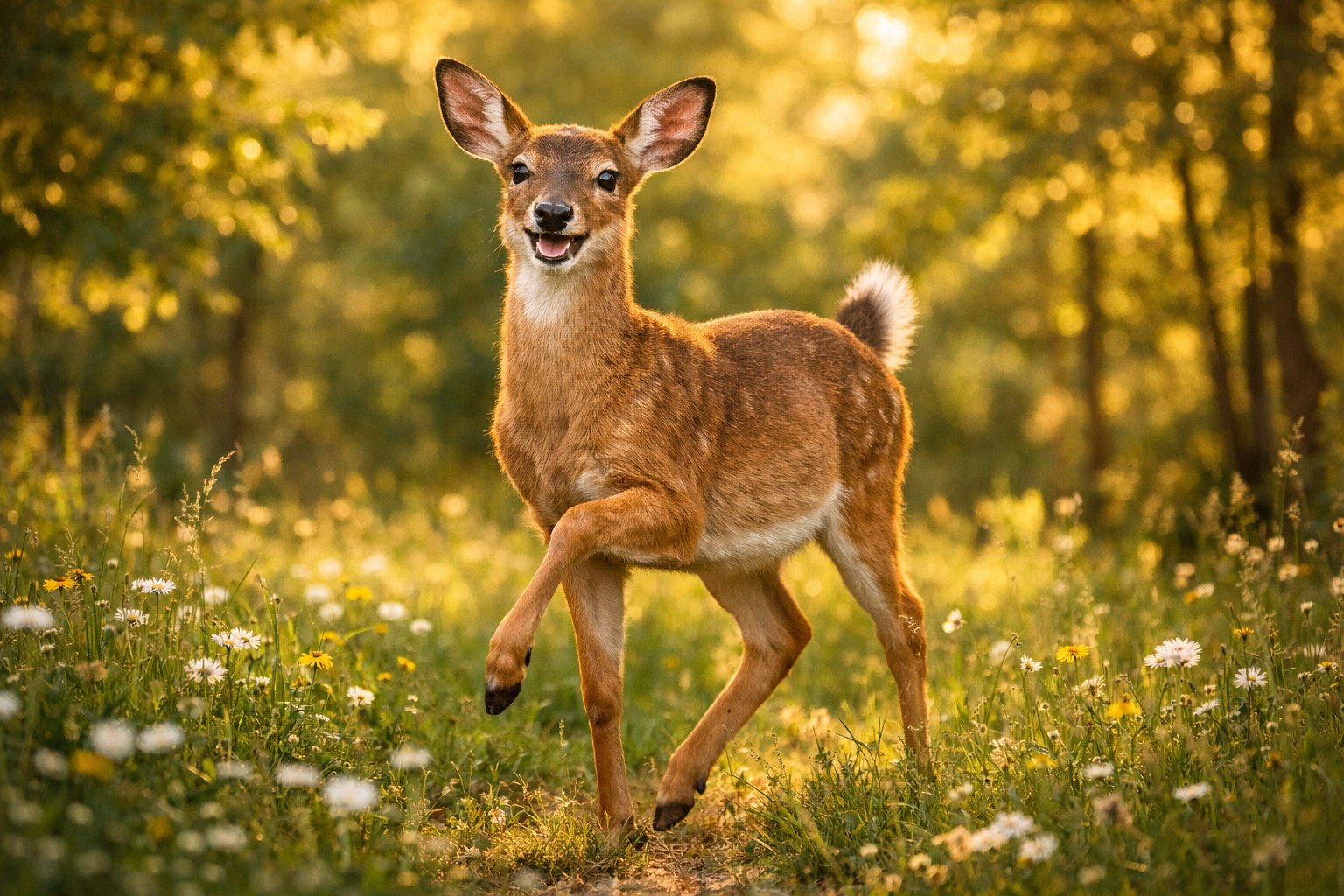
Watch for playful chases or light head-butting among young deer.
Sometimes, you’ll see a deer lying in the sun, breathing steadily and without hurry—honestly, that’s a classic sign of contentment if you’re wandering North American woods.
As you start noticing these subtle signals, you’ll get a better sense of how habitat, food, and even human activity can shape deer moods and actions.
Key Signs a Deer Is Happy

When a deer feels safe, you’ll spot calm feeding, gentle grooming, and a relaxed body posture.
Keep an eye on the tail, ears, and group behavior for signals of contentment.
Tail Movements and Flagging
A gently wagging or slow-swishing tail usually means the deer feels relaxed.
In white-tailed deer, a side-to-side tail movement or a low-held tail shows ease, not alarm.
If you see fast, high tail flagging, that’s a sign of danger, so pay attention to the difference.
Notice those short, rhythmic swishes when the deer grazes.
Fawns often flick their tails while playing—pretty friendly, right?
If a doe or buck keeps its tail down and moves it slowly while chewing, it probably feels secure.
Tail cues don’t stand alone.
If the tail looks relaxed but the ears go stiff and the deer snorts, it’s more alert than happy.
So, use the tail as just one clue in the bigger picture.
Relaxed Body Language
A content deer holds its head at a normal level and moves with loose muscles.
You’ll see slow, deliberate steps—none of that quick, tense stuff.
Look for soft ears that flick or rotate, not those pinned-forward “what’s that?” ears.
When a deer lies down to ruminate or sunbathe, it often stretches out and breathes easily.
Its eyes look soft, not wide or bulging.
Bucks and does might rest together in open patches when they feel safe, showing some real comfort with their surroundings.
Pay attention to feeding style.
Calm, steady chewing and long feeding sessions in open areas are good signs the animal doesn’t sense a threat.
If the deer keeps pausing to scan, it’s probably not feeling so relaxed.
Social Interactions Among Deer
Happy deer interact calmly with herd members.
You might spot mutual grooming, where does and fawns nibble and clean each other—honestly, that’s pretty adorable and shows trust.
Young fawns play by chasing and leaping.
This play, common among happy whitetail fawns, helps them pick up social cues.
Bucks sometimes engage in gentle sparring outside the rut.
Light, non-injurious head butting usually means play or social sorting, not aggression.
Listen for soft contact grunts or bleats during close interactions.
These quiet sounds, especially between does and fawns, point to contented communication, not alarm calls.
When deer feed together with barely any scanning, you’re looking at a socially calm herd.
Influences on Deer Contentment

Good food, safe cover, and calm social groups let deer relax, feed, and groom without always feeling on edge.
Human activity, predators, and seasonal breeding cycles all change how deer behave day to day.
Safe and Abundant Deer Habitat
You want deer to feel safe enough to feed and rest.
Quality habitat gives them dense cover for bedding, young fawns, and escape routes from predators like coyotes and bears.
Native hardwood edges, thick understory, and water nearby help deer find food and shelter all year.
Maintain a patchwork of open feeding areas and dense cover within a few hundred yards.
This way, deer can move quickly between browsing and hiding.
Places with steady mast crops—think acorns—and late-season browse reduce risky movement toward roads or yards.
The National Deer Association and local wildlife planners recommend keeping night lighting and loud human activity to a minimum near bedding areas if you want calm deer.
If you live near hunting areas, placing food plots and bedding cover thoughtfully can reduce stress on deer during hunting season.
Try not to create narrow travel corridors that force deer into exposed routes.
This lowers the chance that mature bucks or does will leave a home range because it feels unsafe.
The Role of Social Structure
Deer are social, and that shapes your odds of seeing relaxed behaviors.
Does and fawns form nursery groups that groom and rest close together.
That close contact signals comfort and lowers how much each individual has to stay alert.
Bucks form small bachelor groups outside the rut, which lets them feed more and spar playfully without getting aggressive.
Stable groups panic less when one animal senses danger.
If you notice grooming, close resting, or calm feeding, the herd probably trusts its surroundings.
Social stress—caused by overcrowding, lots of human disturbance, or dominance fights—pushes deer to be more alert and move more often.
You can help social stability by keeping human presence predictable and limited in key areas.
In landscapes with more predators like coyotes, deer might tighten group cohesion and spend more time in cover, changing where and when they show relaxed behavior.
Seasonal Factors and the Rut
Seasons push deer to eat, seek cover, and deal with stress. In spring and summer, bucks start growing velvet antlers and get into some playful sparring.
You’ll spot fawns leaping around, and bucks don’t seem as territorial. When velvet sheds in late summer, you know things are about to get more intense.
Once the rut hits in fall, bucks get focused on breeding. Mature bucks start traveling farther, sparring more, and chasing does.
You’ll notice they feed less calmly. Hunting season ramps things up—human scent, dogs, and gunfire make deer turn more nocturnal.
Winter’s rough. Food and shelter run low, so deer crowd into the best spots, and you’ll see them compete more, acting jumpier.
If you watch plant growth, antler changes, and local hunting dates, you can guess when deer might act relaxed. Those signs show you when they’re feeding out in the open, when they’re hiding, and when breeding groups form.
Reading up on tail signals and calm body language helps you spot these seasonal changes. If you time your trips right and do some habitat work, you’ll have a better shot at seeing deer when they’re actually relaxed.


