
Ever stood motionless in the woods and wondered if deer nap through the night or just during daylight? Deer rarely sleep all night; they tend to rest in short, alert bursts during the day, and you’ll find them most active at dawn and dusk. If you’re hoping to spot deer, track bedding spots, or just figure out why they seem to vanish when your headlights hit the trees, this is worth knowing.
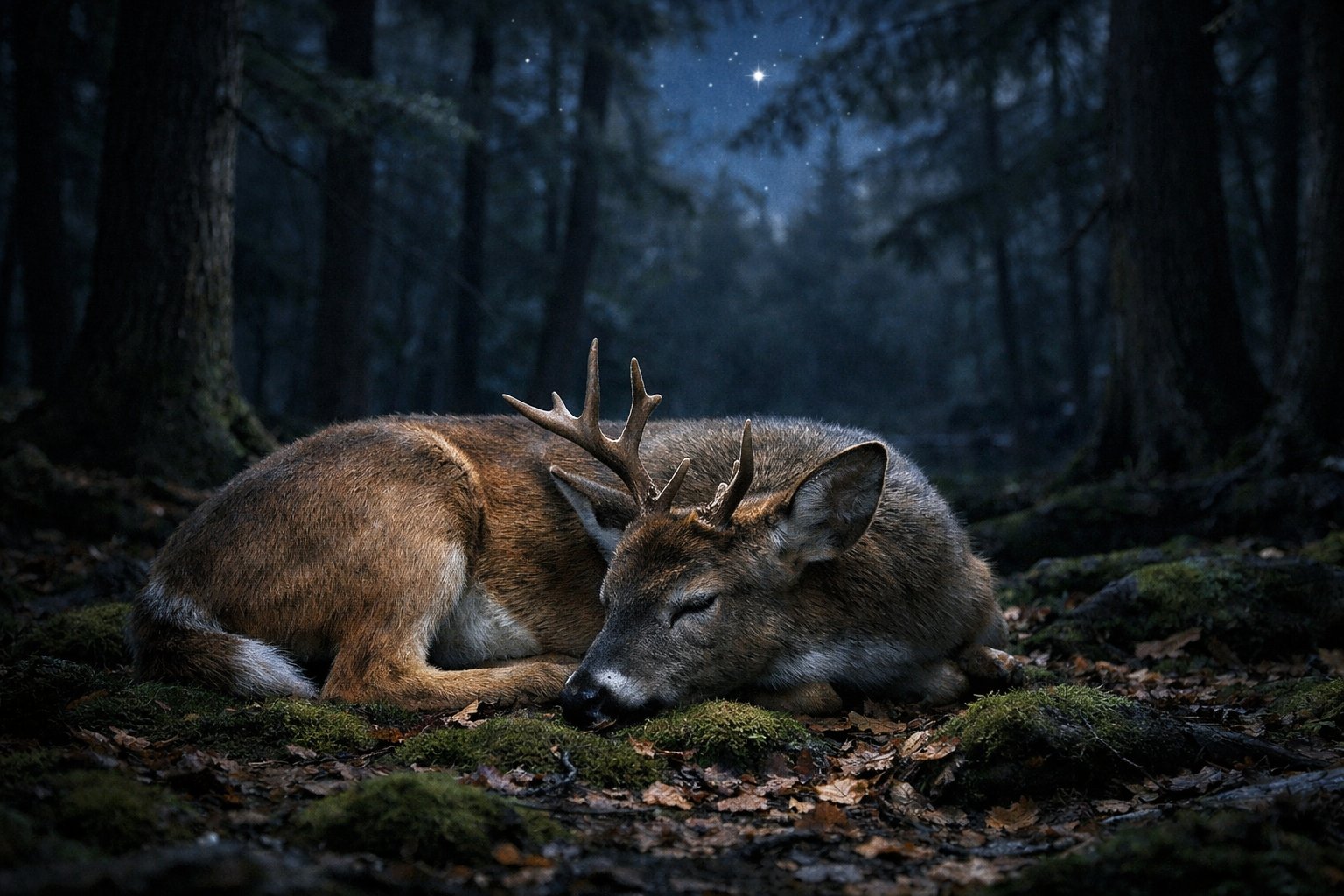
Let’s talk about why deer pick hidden bedding spots, how their short sleep cycles work, and what makes them change up their routines. Once you know this stuff, you’ll have a better shot at spotting deer activity and knowing when they’re likely to move.
Do Deer Sleep at Night?

Deer don’t follow one long sleep like humans do. They rest in short bursts, stay alert, and switch up habits depending on light, safety, and food.
Nighttime Resting Patterns
Deer usually sleep in short, light bursts both day and night. You might see them bed down for a 20–60 minute nap, then get up to graze or scan the area.
These quick naps mean deer are always ready to bolt if a predator or human shows up. When night falls, deer sometimes rest a bit longer, especially if the area’s quiet and there aren’t many people around.
In places with hunters or lots of traffic, deer tend to move and feed more at night, then catch up on sleep during the day. Their curled-up posture, with legs tucked under, leaves behind shallow hollows and trampled grass—pretty handy if you’re tracking them.
Crepuscular vs. Nocturnal Behavior
Deer are mostly crepuscular; they’re up and about at dawn and dusk. You’ll probably spot them feeding in that low light before sunrise or just after sunset.
This pattern helps them dodge both daytime and nighttime predators. But if people or predators are out during the day, deer will switch to being more active at night to avoid trouble.
It’s interesting how flexible they can be. Some deer mix crepuscular and nocturnal activity, following a polyphasic sleep cycle. That just means they have several short periods of rest and activity instead of one big chunk of sleep.
Factors Affecting Night Sleep in Deer
Predators, people, and food all affect when and where deer sleep. If you hunt or hike in an area a lot, deer will get more nocturnal and hide in thicker cover during the day.
Trail cameras can show you how their movement times shift. Seasons play a part too.
Winter makes deer rest longer in the day to save energy. During fawning season, does pick hidden bedding spots and bed down more often at night to protect their fawns.
Light pollution and busy roads can mess with deer routines as well. Bright lights push them to stay active later, and traffic stresses them out, breaking up their usual rest.
If you’re studying deer sleep or planning to watch wildlife, these are things you’ll want to keep in mind.
How, When, and Where Deer Sleep

Deer take short rests and pick spots where they can stay alert and make a quick getaway if needed. They tuck in their legs and keep their senses sharp, often changing up their patterns with the season, weather, or human presence.
Deer Sleep Habits and Positions
Deer sleep in short stretches throughout the day and night. You’ll see them lying down with legs folded under, which helps them keep warm and leap up fast if danger shows up.
They don’t really sleep standing up. Sure, they can doze lightly on their feet, but deep sleep only happens when they’re lying down. Most of the time, that deep sleep is pretty brief—prolonged REM sleep is rare for deer and their relatives.
Sleep length can vary by species and situation. White-tailed and mule deer grab a bunch of short naps that add up to several hours each day.
Bigger deer like elk and moose do the same, though they might take longer quiet periods if they feel safe.
Typical Bedding Areas
Deer choose bedding sites that hide them and give a fast escape route. You’ll usually find them in evergreen thickets, tall grass, brushy edges, or behind small hills.
These spots block wind and keep them out of sight while still letting them watch for danger. In winter, deer bed down in sheltered places to stay warm and avoid snow.
Near food sources like fields or oak ridges, they’ll bed closer to where they eat. In neighborhoods, you might even find them tucked into thick shrubs or tiny woodlots.
If you’re looking for bedding areas, check for flattened grass, a shallow “bed” depression, or deer droppings. Fresh beds have sharply pressed-down plants and not much leaf cover.
Group and Solitary Rest Behavior
Deer can bed alone or in groups. It really depends on the season and how risky things feel out there.
You’ll often spot does bedding with their fawns. They stick together for that extra bit of protection.
Bucks, on the other hand, tend to bed alone. This happens a lot in the summer or during the rut.
When deer bed in groups, they actually take turns staying alert. One keeps watch while the others relax a bit.
That way, each deer doesn’t have to be on edge the whole time. It’s a clever way to boost the group’s safety.
Even in groups, deer keep some space between each other. If something startles them, everyone wants a clear escape route.
Solitary bedding pops up where there isn’t much cover. Sometimes, a deer just wants to avoid food competition.
If people are around, deer might switch things up. They’ll bed down at night or hide in thicker spots, adjusting their habits to dodge both humans and predators.


