
Most people expect deer to stick to plants, but sometimes they’ll surprise you and eat meat if the opportunity pops up. Deer usually munch on leaves, grasses, and nuts, but sometimes they’ll go for carrion, eggs, or even small animals to snag extra protein and minerals. That odd behavior might shift how you see their diet and survival tactics.
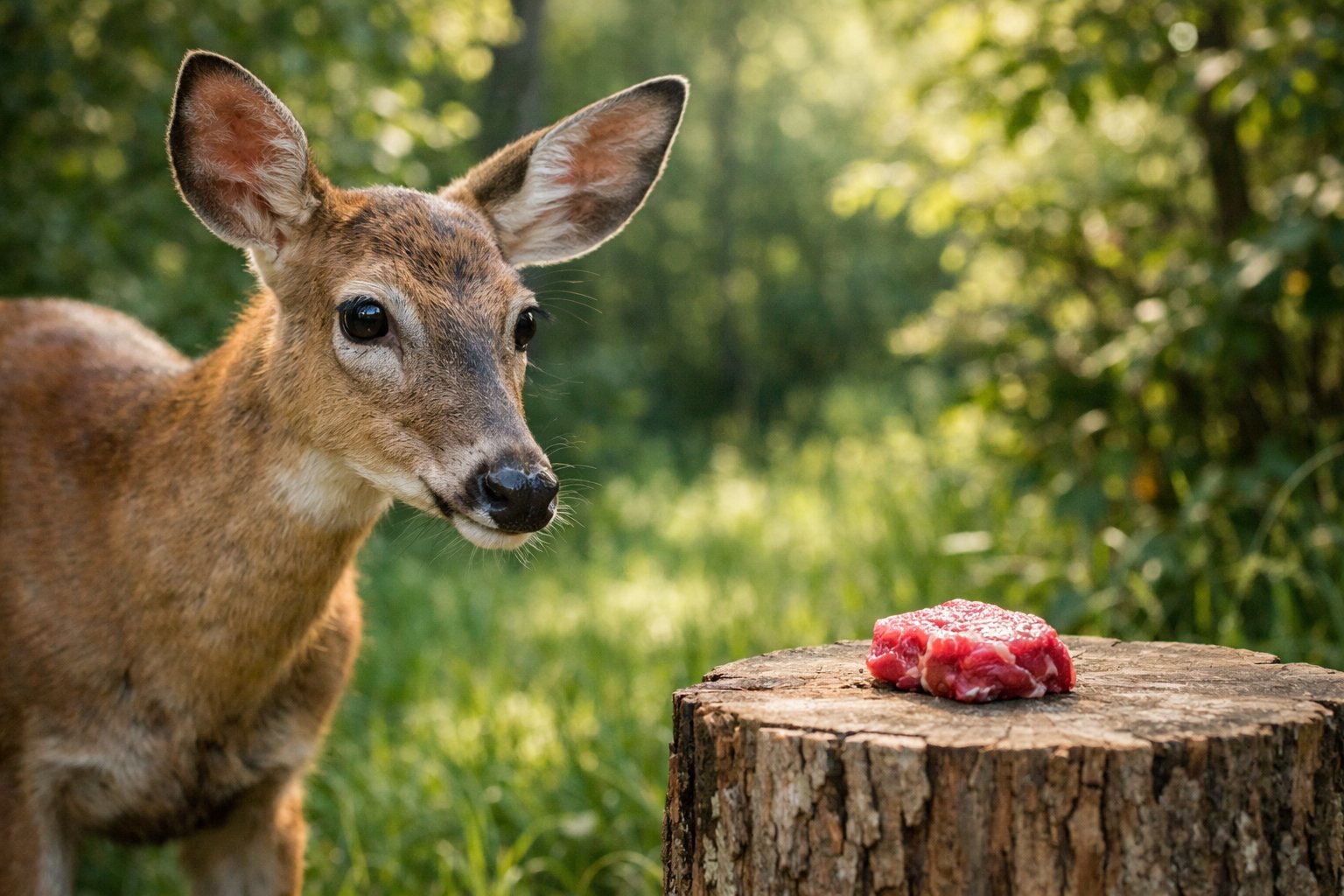
Let’s dig into real cases and talk about why deer might turn to meat every now and then. You’ll get a sense of what drives this choice and where it happens most, so maybe next time you’ll spot the signs—or at least wonder why a deer isn’t just eating leaves.
Can Deer Eat Meat? Documented Behavior and Evidence

You can find real examples of deer eating animal-based stuff when plants or minerals run low. The stories range from scavenging big carcasses to picking up small things like eggs or dead fish.
Rare Cases of Deer Eating Meat
Scientists and trail cameras have caught white-tailed deer feeding on carcasses and animal remains. These moments don’t happen often, but they’re well documented, usually when winter food is scarce or minerals are lacking during antler growth.
Deer don’t act like predators. They just grab easy meals—roadkill, gut piles from hunters, things like that. Researchers have seen one deer or a small group feed for a bit, then wander back to browsing on plants.
Keep in mind, this is rare because a deer’s rumen and gut bacteria are built for digesting plants. Sometimes, eating meat gives them a boost of protein, calcium, or phosphorus for antlers, but it’s not something they rely on.
Animals and Foods Deer Consume
When deer eat animal stuff, the list stays pretty short. You’ll find reports of them eating bird eggs, dead fish, tiny mammals like mice, snakes, and carrion from animals like rabbits or raccoons. They also lick bones or shed antlers for calcium and phosphorus.
Plants still make up the bulk of their diet—acorns, nuts, fruit, leaves, grasses, and forbs. You might spot a deer sampling a dead animal or egg, but mostly, it’s munching acorns or browsing. This mix helps them get protein and minerals that are tough to find in some places.
If you catch deer eating weird things near your place, think about local shortages or poor soils before assuming they’ve changed their diet.
Opportunistic Feeding and Scavenging
Deer just act on the moment—they grab what’s available. Scavenging happens near water where dead fish wash up or along roads where carrion turns up. Sometimes, they’ll check out hunter gut piles, too.
They usually act pretty cautious, sniffing and nibbling before eating. After that, they’ll go back to their usual leaves and grasses. This kind of meat-eating helps in tough times, but their guts still prefer plants for daily energy and health.
Want more examples or camera evidence? Look up field studies and documented reports on deer scavenging.
Why Deer Sometimes Eat Meat: Dietary Needs And Environmental Factors

Deer stick to plants most of the time, but certain situations push them to eat animal matter. Let’s talk about why that happens, what nutrients they’re after, and how the seasons affect their choices.
Nutritional Deficiencies and Mineral Needs
Deer need protein, calcium, and phosphorus for things like growth, antlers, and lactation. Plants can run low on calcium and phosphorus, especially in late winter when fresh shoots or mineral-rich greens are missing. Sometimes you’ll spot deer chewing on bones, eating carrion, or checking out hunter gut piles for those minerals and some extra protein.
Their four-chambered stomachs are made for fermenting plant fiber, so meat isn’t necessary for digestion. Still, animal matter gives them quick fat and energy when plants aren’t cutting it. It’s more of a survival trick than a real diet change.
Seasonal Variations and Food Scarcity
Late winter and early spring can make life tough—snow and frozen ground block access to tender plants and natural salt licks. During these months, deer might face energy gaps and mineral shortages. You’ll see them browsing more twigs and woody plants, and sometimes turning to carrion or fish washed up on shore.
Lactating females and young fawns also struggle when food is scarce. If you notice deer crowding around salt licks or bone piles, it’s usually about seasonal needs, not a sudden taste for meat. Wildlife managers keep an eye on these habits to cut down on human-made attractants and keep deer eating what they’re supposed to.
Impact of Behavior on Deer Health
Sometimes, deer eat meat to get a quick boost of protein and calories. This can help them get through tough times or support lactation.
But if they start depending on meat or human-provided carcasses too often, it changes how they act. They might face higher disease risks and upset the balance between predators and prey in the area.
When deer keep coming back to unnatural food sources, they tend to gather in groups. That makes it easier for parasites and diseases like chronic wasting disease to spread.
If you manage deer habitat by improving forage quality and keeping natural mineral sites available, you help them stick to their plant-based diet. This also cuts down on risky scavenging.
Want to dig deeper? Reports have documented deer feeding on carrion and bone piles, especially when minerals are scarce or during tough seasons. These sources explain more about why deer sometimes turn to meat: https://scienceinsights.org/do-deer-eat-meat-the-truth-about-their-diet/.


