
If you hit a deer in the UK, pull over safely, switch on your hazard lights, and check for any injuries. Call the police if the deer is on or near the road so trained teams can handle the scene and the animal.
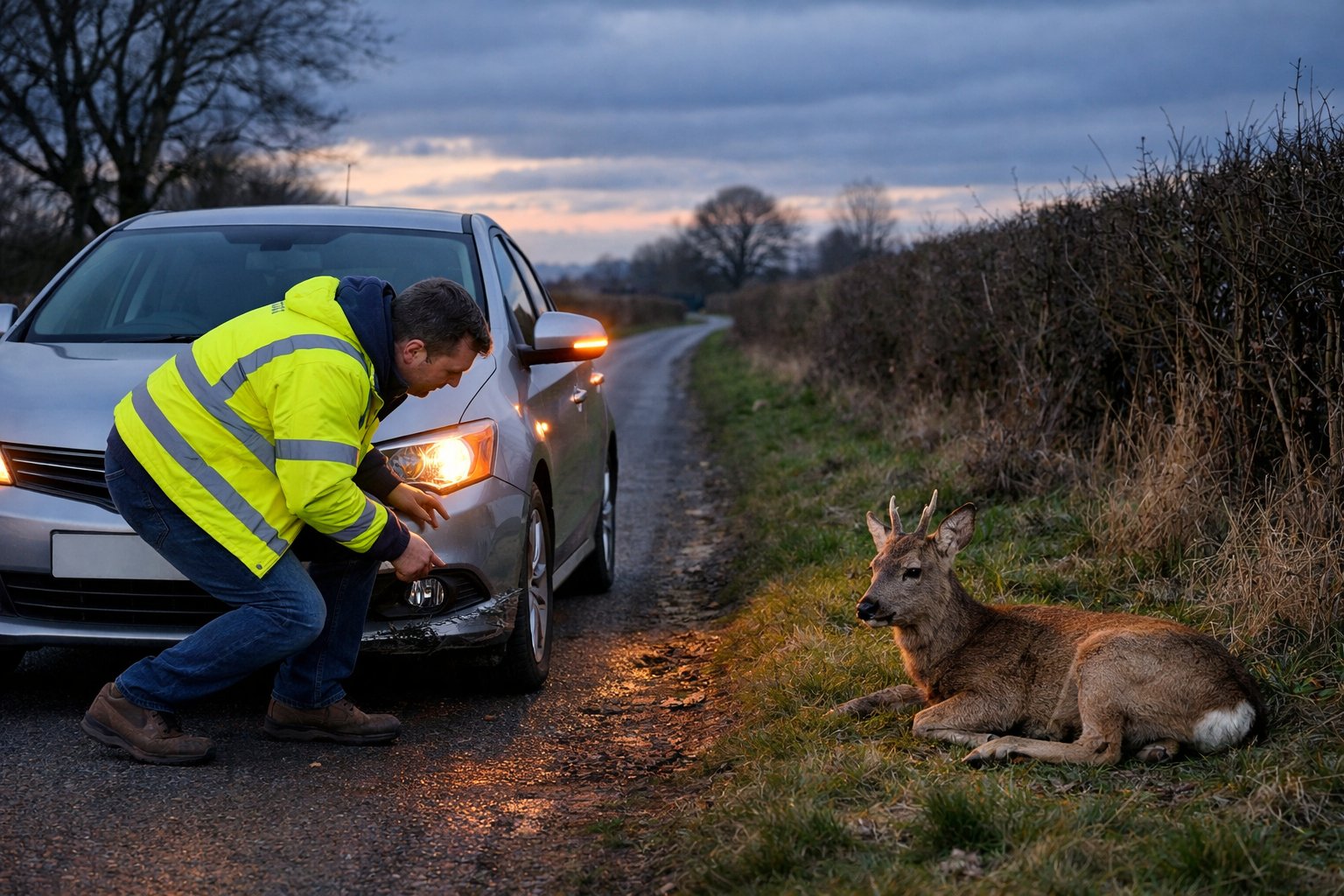
Take a look at your car for damage and let your insurer know, especially if you’ve got comprehensive cover that could help with repairs. This article’s here to guide you through calling emergency services, handling the scene, and understanding what your insurance and the law mean for you.
You’ll also find advice on reporting the incident, when to get the police involved, and some straightforward tips to help you avoid deer collisions in the future.
What to Do If You Hit a Deer in the UK

Stop as soon as it’s safe, check if everyone’s okay, and report the incident if the deer or your car is causing a hazard. Don’t go near an injured deer—it might kick or bolt and make things worse.
Here’s what you should do next to keep yourself safe and get the right help.
Immediate Safety and Stopping Procedures
Pull over when you can do so safely. Put your hazard lights on to warn other drivers and try to move off the road if you can do it without risking more damage.
Park up, handbrake on, and if it’s cold, leave the engine running to keep the heating going. If you’ve got a high-vis jacket, throw it on before stepping out.
Don’t try to lift or move a large deer. Keep kids and pets inside the car. If the deer is blocking the road and it’s dangerous, ring 999 and let the police know about the hazard.
Assessing People and Vehicle Damage
Check yourself and your passengers for any cuts, shock, or pain in the neck or chest. If someone’s badly hurt or knocked out, call 999 and ask for an ambulance right away.
Take a look at your car for obvious damage before driving off. Check the lights, radiator, tyres, and look for any leaking fluids. If the airbags have gone off or steering feels weird, don’t risk it—get recovery sorted.
Snap some clear photos of the scene, the damage, and where it happened. These will help with insurance later. Let your insurer know as soon as you can—comprehensive policies often cover deer collisions, but third-party only usually doesn’t.
How to Handle an Injured Deer
Don’t touch or try to move an injured deer. Even the small ones can hurt you if they’re scared or in pain.
If the deer’s alive and near the road, call the police so they can get an expert out. Loads of local wildlife rescue groups and the RSPCA work with police and can offer advice or send someone.
If the animal’s dead and it’s not a hazard, you might need to report it to your local council or log it on sites like Deer Aware. If the deer’s putting traffic at risk, go with police advice instead of trying to sort it out yourself.
Who to Contact After a Deer Vehicle Collision
Call 999 if someone’s seriously hurt or the deer is blocking the road. Ask for the police if the animal’s on or near the carriageway so trained teams can help.
Let your insurer know as soon as possible and send them photos and details about where it happened. If no one’s hurt and the animal’s off the road, you can report the collision to Deer Aware to help with national records.
If the deer’s injured, contact local wildlife rescuers or the RSPCA through the police. Jot down times, the location, and any names of officers or rescue teams—these details are handy for insurance and any follow-up.
Legal, Insurance, and Prevention Advice for Deer-Related Accidents
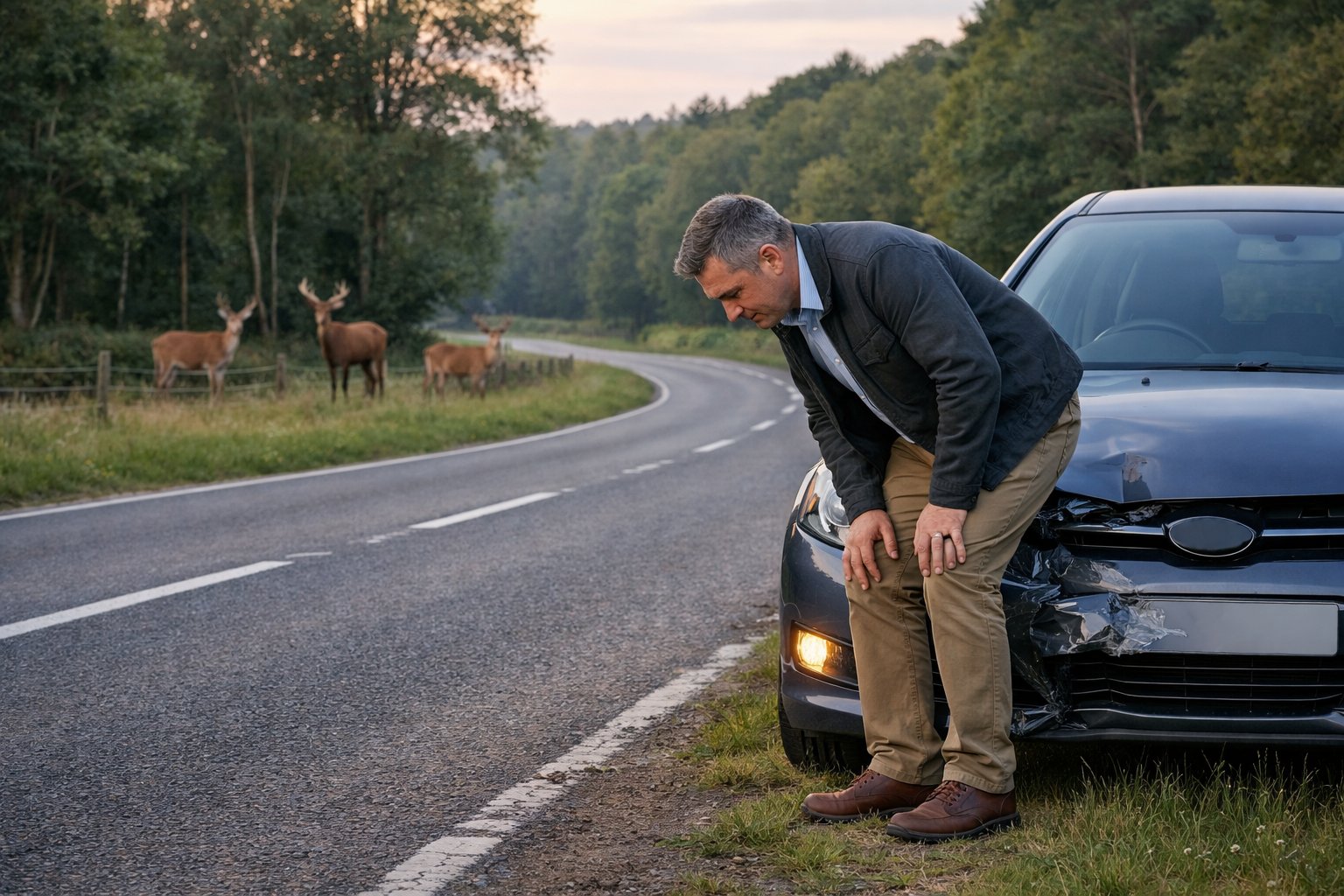
It’s good to know what the law expects, how insurers usually handle wildlife hits, and what you can do to lower your risk when driving in deer country.
UK Law on Deer Road Collisions
You won’t face criminal charges just for hitting a wild deer in Britain. Deer count as wild animals, not “vehicles” or property under normal road collision rules.
But if you injure someone else, drive recklessly, or skip reporting serious injury or major damage, you could land in legal trouble.
The Deer Act 1991 covers offences about deer protection and poaching, but not road collisions. Local police might show up if there are injuries or big damage.
The British Deer Society has advice on dealing with injured deer and legal questions, so if you’re unsure, reach out to them or the police.
Reporting and Insurance Implications
You must stop if anyone’s hurt and call 999 for police or ambulance. If it’s just your car and a deer, report it to police non-emergency 101 if there’s a lot of damage or if the animal’s causing a hazard.
Comprehensive insurance usually covers animal damage. If you make a claim, insurers will probably want photos, the location, and a police or incident number if you’ve got one.
Hitting a deer is usually treated as a non-fault, “comprehensive” incident, so your no-claims bonus might be fine—but check your policy and talk to your insurer to see how a claim could affect your premiums.
How to Avoid Hitting a Deer
Drive at a sensible speed where deer are likely to pop up. Slowing down gives you more time to brake safely, and you won’t need to swerve.
At night, use your full beam when it’s safe and scan both sides of the road for those tell-tale reflective eyes. If you spot one deer, there’s probably more—British deer often stick together.
Don’t swerve sharply; braking in a straight line is safer and helps you avoid losing control or hitting oncoming traffic. If you have to steer, do it gently and try to slow down first.
Peak Times and High-Risk Areas
Deer tend to dart out at dawn and dusk, especially during the rut in autumn or when fawns arrive in spring. You’ll want to stay extra alert between October and January—deer get restless and wander near roads more often then.
Keep an eye out for deer crossing signs, wooded edges, or river valleys. These spots attract British deer all the time.
If you drive the same rural roads a lot, you’ll probably notice certain areas where deer pop up again and again. Slow down when you reach those stretches.
Sometimes the local council or wildlife groups will put out seasonal alerts. It’s worth checking those if you want a heads-up.


