
Usually, a doe carries her fawn for about six to seven months. Most deer pregnancies last roughly 190–210 days, so births almost always happen in late spring or early summer.
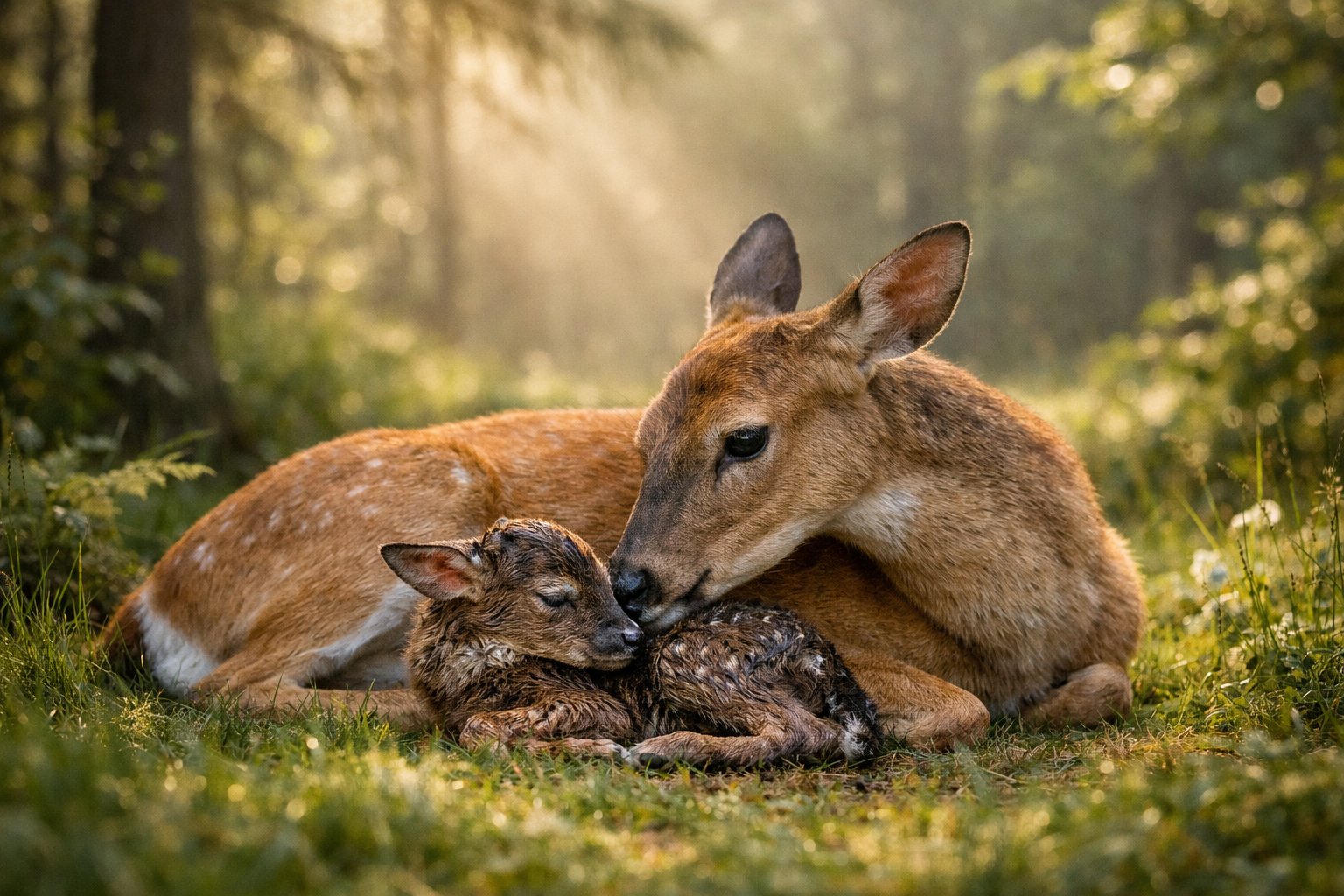
Curious about when fawns show up, how many a doe might have, or what happens right after birth? This post covers the timing, the birth process, and how mothers care for their young.
You’ll find clear facts, tips for spotting fawns, and ways to help without causing harm.
How Long Does a Deer Have a Baby?

Let’s talk about how long deer carry their young, which species take longer or shorter, and when most fawns are born. Some things can change pregnancy length, too.
Typical Deer Gestation Period
Most deer species carry their young for about 200 days.
White-tailed deer, which are common in North America, usually have a gestation period between 190 and 210 days. That’s about six to seven months from conception to birth.
A doe might have a single fawn or twins, depending on her age and health. First-year does usually have one fawn, while older does tend to have twins.
Gestation length decides when fawns show up in spring and early summer, right when food and shelter are better for newborns.
Species Differences in Gestation
Different deer species have small but important differences in gestation time.
White-tailed deer average around 200–210 days. Mule deer fall close, at about 190–200 days. Fallow deer and some European species can go a bit shorter or longer, depending on subspecies and climate.
Larger deer species sometimes add a few days to pregnancy. These differences help each species time births with local food and weather.
If you’re working in wildlife care or management, you’ll want to check species-specific guides for exact ranges and breeding details.
Timing of Deer Births
Most fawns arrive in late spring or early summer.
In temperate North America, you’ll see births from April through July, with a peak in June for white-tailed deer.
Does mate in the fall, so embryonic development lines up with spring plant growth. That’s when does need good nutrition for milk production.
Knowing this timing helps you avoid disturbing hidden fawns and supports local conservation during those critical weeks.
Factors Affecting Pregnancy Duration
Nutrition, age, and stress can all shift how long a doe carries her fawn.
A healthy, well-fed doe usually carries her pregnancy to term, while poor nutrition can lead to smaller fawns or even pregnancy loss.
Environmental factors like harsh weather, predators, or human activity can affect birth timing and fawn survival.
Disease and genetics matter too, so local populations sometimes show slightly different average gestation lengths.
If you want more details about white-tailed and mule deer pregnancy, check out guides on deer gestation or local wildlife resources like this deer gestation periods.
What Happens When Baby Deer Are Born?
Here’s what newborn fawns do, how long they stick with their moms, what they eat, and how does help them survive.
Fawn Birth and Early Behavior
When a doe gives birth, she usually finds tall grass or thick brush to hide her fawn. Birth happens quickly—the fawn often stands within minutes and manages to walk within a few hours.
Newborn fawns have spots and a soft coat that help them blend into the plants.
The doe licks the fawn to clean off birth fluids and help it breathe. She might eat the afterbirth to recover nutrients and avoid attracting predators.
For the first week, the fawn lies very still and quiet while the doe heads off to feed.
This hiding period protects the fawn from foxes, coyotes, and birds of prey.
How Long Fawns Stay With Their Mothers
Fawns usually stay with their mother for several months.
Most rely on their doe for milk and protection through the summer.
By 2 to 3 months old, fawns start moving around more and join their mother during feeding.
Weaning begins at about 4 to 6 months as the doe nurses less.
Many fawns become independent enough to survive alone at 6 to 8 months.
Still, they often stick around until the doe gives birth again the next year.
If a wildlife rehabilitator raises an orphaned fawn, they usually plan releases to match this natural timeline.
Fawn Diet and Feeding
For the first few weeks, fawns drink almost nothing but their mother’s milk.
This milk gives them fat, protein, and antibodies.
At first, nursing happens every few hours, then less often as the fawn grows.
Around 2 weeks old, fawns start nibbling grasses, leaves, and shoots.
By one month, they eat more plants but still rely on milk.
At 4 to 6 months, they mostly eat vegetation and finish weaning.
If you find a fawn, don’t try to feed it—improper food or handling can really hurt its chances of survival.
Survival Strategies and Mother’s Care
The doe relies on hiding, camouflage, and carefully timed visits to protect her fawn. You might notice she leaves the fawn alone during the day so she can feed, then sneaks back to nurse at certain times.
By doing this, she keeps scent and movement to a minimum—predators are less likely to pick up on them. Fawns stay perfectly still and their spotted coats blend right in, making them tough to spot.
If a predator comes close, the doe sometimes tries to draw it away or even steps in to defend her fawn. If you stumble across a fawn by itself, don’t rush to help. Only contact a licensed wildlife rehabilitator if the fawn looks injured or you’re sure it’s orphaned. Otherwise, best to leave it be; the doe will probably come back.


