
Let’s get right to it—here are five facts about deer that’ll quickly show you how they live, what they look like, and why they matter. Deer belong to the Cervidae family, come in all sorts of species, and stand out with fast-growing antlers, sharp senses, and a pretty flexible diet. If you want a roadmap, that’s basically it.
As you keep reading, you’ll see why those traits matter both for ecosystems and for people. There are some surprising details about antlers, senses, and behaviors that make deer, well, a bit more interesting than you might think.
Five Fascinating Facts About Deer

You’ll see how deer rely on antlers, smell, spots, digestion, and physical skills to survive and raise the next generation. Each trait plays a part in finding food, dodging predators, and impressing mates.
Deer Antlers: Growth, Shedding, and Uses
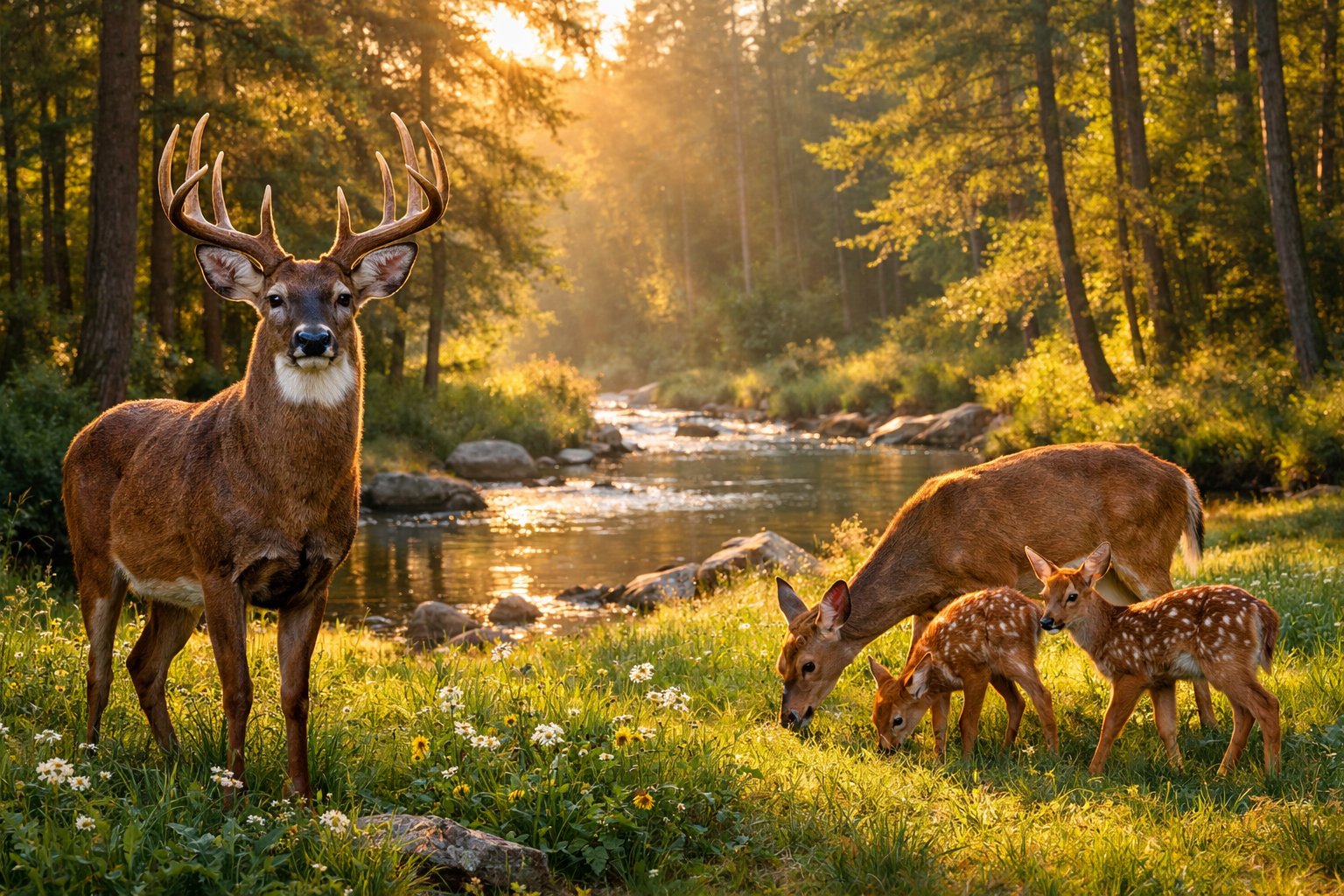
Most male deer (bucks) grow antlers, and in a few species like caribou, females do too. Antlers start out covered in soft, blood-rich velvet and shoot up fast in spring and summer.
Species, age, and nutrition all affect how quickly antlers grow. If a buck eats well and stays healthy, he’ll likely grow bigger antlers.
During the rut, bucks use antlers to spar with rivals and show off to does. After breeding season, antlers loosen at the base and drop off.
Losing antlers takes a load off and lets new, sometimes larger, antlers grow next year. People often check antler size to guess a buck’s age or health—though it’s not always a perfect science.
Incredible Sense of Smell and Communication
A deer’s nose—honestly, it’s one of their best assets. Deer pick up scents from far away to find food, sense danger, and track down mates.
They’ve got scent glands on their legs, faces, and even between their hooves. Bucks and does use these glands to mark trails, claim territory, and send out mating signals.
Deer leave chemical messages with urine and droppings, which stick around for a while. When they’re alarmed, they might raise their tail to flash white or stomp to warn others.
Their sense of smell teams up with sharp hearing and a wide field of vision to help them spot predators like coyotes and wolves.
Spotted Fawns and Camouflage Survival Tactics
Fawns wear white spots that break up their outline in the dappled sunlight. When a fawn is tiny, its mother usually hides it in tall grass or brush while she’s off feeding.
Those spots, plus staying totally still, make it hard for predators to notice the fawn.
Mothers come back often to nurse and lick the fawn clean, removing any scent. As fawns get older, their spots fade and they start following their mom to learn how to eat and escape danger.
This camouflage trick is especially important where foxes, bobcats, or hawks might be lurking.
Deer as Herbivores With a Four-Chambered Stomach
Deer eat plants—lots of them. They’re ruminant herbivores, which means they have four stomach chambers to break down tough greens.
You’ll find them munching on leaves, twigs, fruits, nuts, and grasses. Their stomachs let them ferment these foods, spit up cud, and chew it again to get every bit of nutrition.
This system helps deer survive on woody plants during harsh winters when softer foods are gone. Good diet supports antler growth, winter fat, and healthy fawns.
Different deer species prefer different plants, so where they live and what grows there really shapes how healthy the local deer are.
Deer Speed, Jumping, and Swimming Abilities
When danger shows up, deer bolt. Many species can sprint up to 30–35 mph for short bursts and leap over fences or brush more than 8 feet high.
Their long legs and strong back muscles give them quick takeoff and high jumps.
Deer aren’t just fast on land—they swim surprisingly well. They’ll paddle across rivers or lakes if they have to escape predators or reach new areas.
With their wide field of vision and a special layer in their eyes for low-light, deer move pretty confidently at dawn and dusk. If you’re out on the trails or driving at those times, it’s worth remembering just how quick and unpredictable they can be.
Diversity and Significance of Deer
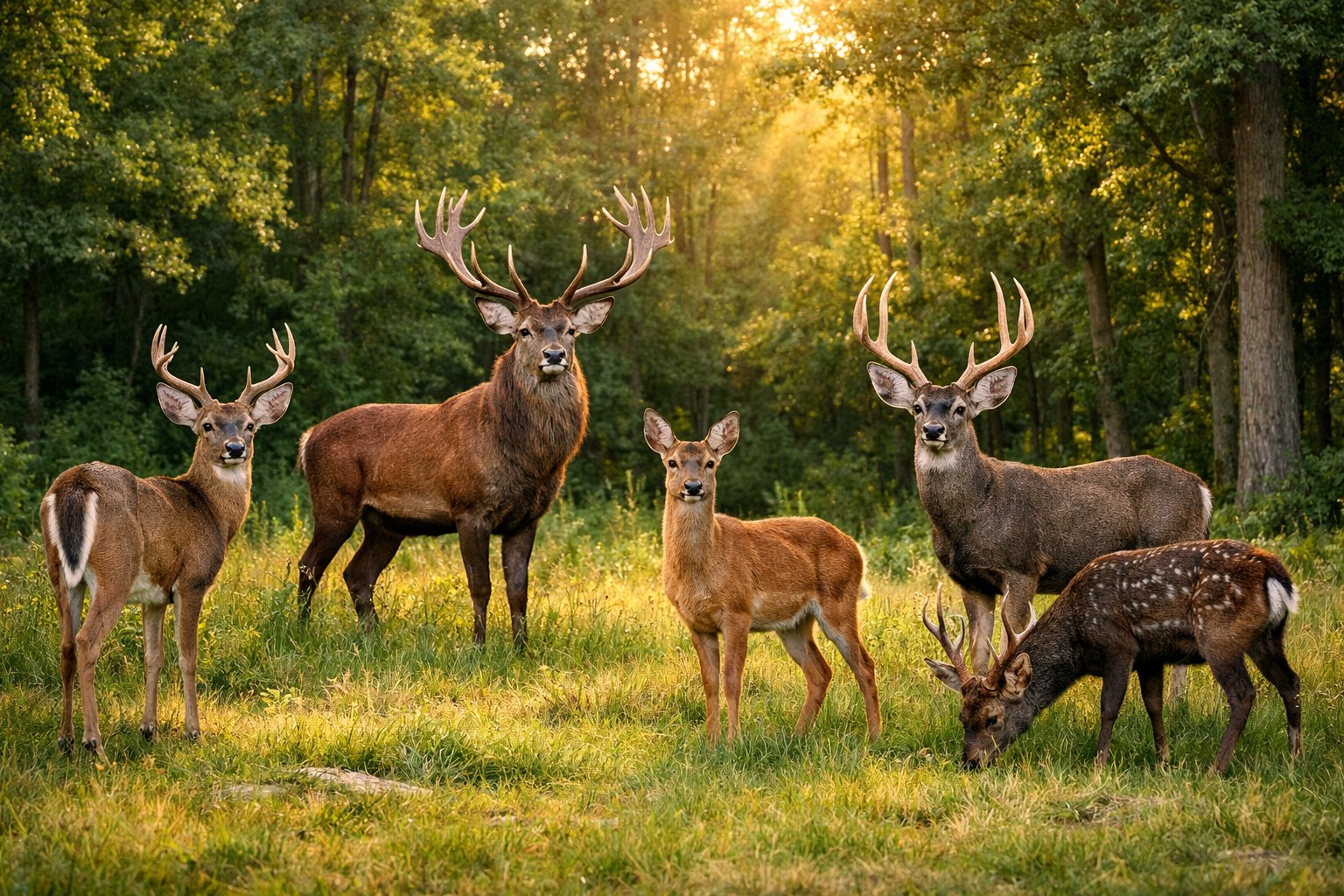
Deer come in all shapes and sizes, from the tiny pudu to the enormous moose. You’ll find them across North America, Europe, Asia, and more, shaping forests, fields, and even cities with their eating habits and movements.
Types and Distribution of Deer Species
Members of the Cervidae family pop up everywhere—from Arctic tundra to tropical forests. Moose, the biggest, roam northern North America and Scandinavia.
Red deer and elk (wapiti) cover Europe, Asia, and parts of North America. In the U.S., white-tailed deer are everywhere—woodlands, suburbs, you name it—while mule deer stick to open, rugged places.
Tiny species like pudu and muntjac exist, and then there’s the water deer, which skips antlers and sports tusk-like teeth instead. Reindeer (caribou) migrate huge distances across the Arctic.
You’ll also spot sika, roe, hog deer, and all sorts of local types that have adapted to their own habitats and climates.
Deer’s Role in Ecosystems and Interactions With Humans
Deer shape plant life by browsing young trees and shrubs, which changes what grows in forests and parks. Predators like wolves and mountain lions count on deer for food, keeping things balanced.
In towns and suburbs, more deer can mean more car accidents and garden damage. Hunting and wildlife management try to keep numbers in check.
Deer carry ticks that sometimes spread Lyme disease, so how many deer live nearby can affect public health. And of course, thanks to movies like Bambi, lots of people feel a mix of affection and worry about deer—especially when it comes to safety and habitat.
Unique Deer Adaptations and Record-Holders
Deer show off some pretty fascinating physical and behavioral adaptations if you look closely. Most males grow antlers, and they regrow them surprisingly fast every year. That’s a serious signal of fitness during the rut.
Reindeer actually break the mold—females grow antlers too, which is pretty rare. White-tailed deer raise their tails to warn each other, while mule deer use a wild, bounding leap called stotting.
The moose takes the crown for being the biggest and heaviest of all deer. On the other hand, pudu barely reaches your knee—they’re the tiniest in the family.
Caribou migrate for thousands of miles, which sounds exhausting, honestly. Meanwhile, urban white-tailed deer just shift their routines to dodge people.
These quirks help deer handle life in forests, tundra, wetlands, and even at the edge of cities.


