
Ever spot a deer at dusk and wonder what really makes them stand out from other animals? Here are five quick facts that reveal how deer use antlers, speed, scent, and even odd teeth to survive all over the world. These details give you a solid feel for deer behavior and biology—before you get lost in the deeper stuff.
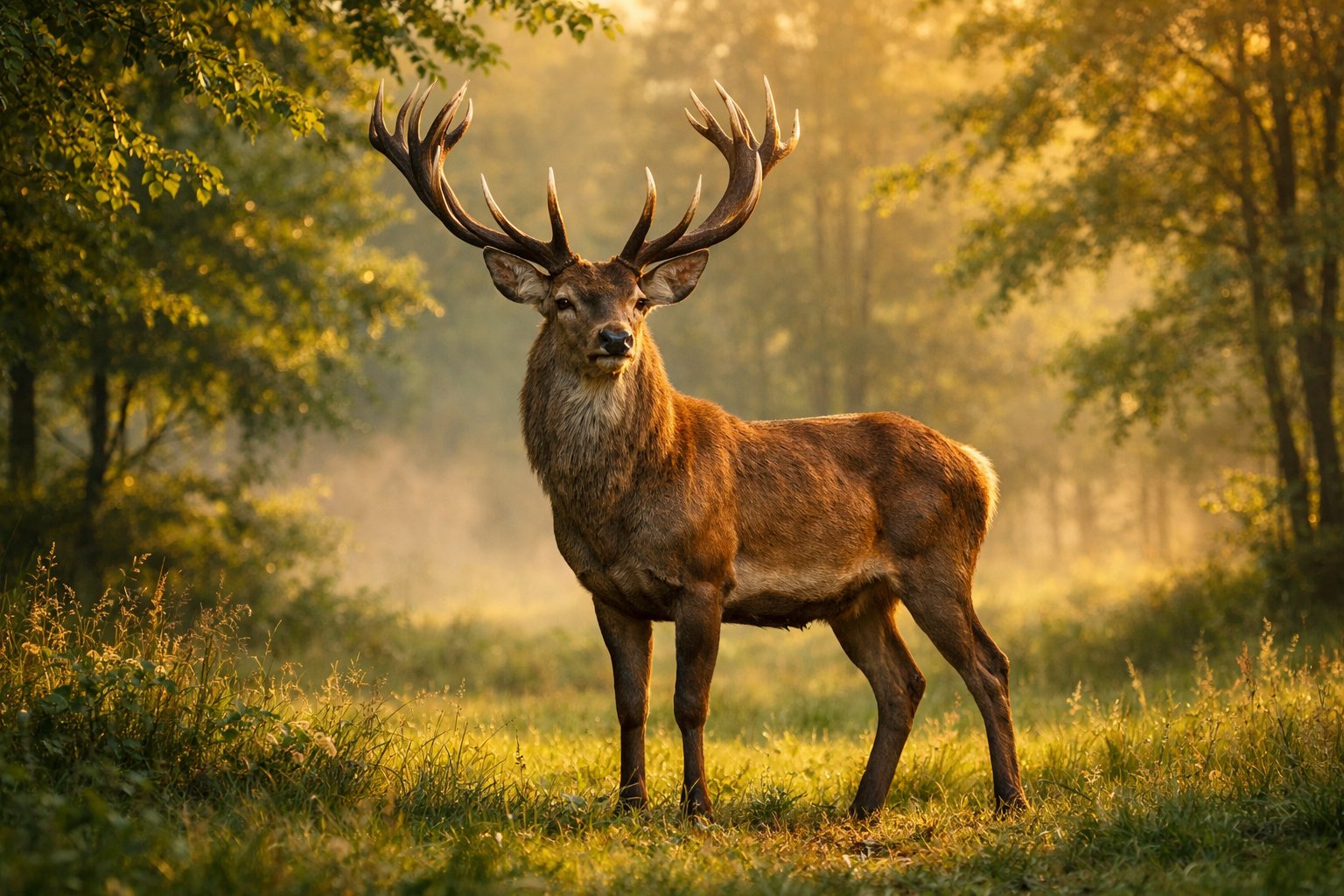
Let’s jump in. You’ll find short, quirky facts about antlers, senses, diet, and the wild variety of deer species.
Some deer don’t even have antlers—or they’ve got sharp canine teeth instead. These differences actually help them thrive in all sorts of places.
Five Fascinating Facts About Deer

Deer rely on antlers, sharp senses, and clever camouflage to make it through each day. They also use athletic skills and a unique digestive system to shape their lives.
Antlers: Growth, Shedding & Unique Features
Antlers grow and fall off every year as part of a deer’s life. In most species, bucks (males) grow antlers for the rut, or mating season, so they can compete for does.
Antlers start as soft, “velvet” bone covered in skin and blood vessels. That velvet actually feeds the bone as it grows—sometimes an inch a day if the deer’s healthy.
Once antlers finish growing, the velvet peels off to reveal hard bone. After the rut, hormones trigger the antlers to drop off.
A buck’s age and diet show up in the size and branching of his antlers. Some species, like reindeer, actually grow antlers in both sexes.
Deer use antlers for displays, sparring, and sometimes even for defense.
Remarkable Senses: Smell, Hearing & Vision
Deer depend on their senses to spot danger and find food. Their sense of smell is amazing.
Scent glands on their legs and faces help them mark territory and signal when they’re ready to mate. That keen nose usually warns them about predators before anything else.
Deer can rotate those big ears to catch faint sounds, so their hearing is sharp. Their wide field of vision—almost 300 degrees in some species—lets them spot movement at the edges.
A reflective layer in their eyes (the tapetum lucidum) improves night vision, though fine detail gets a bit blurry. So, deer notice motion and scent more than tiny details.
Baby Deer: Fawn Camouflage & Early Development
Fawns depend on camouflage and stillness to survive those first tricky weeks. Their spotted coats break up their shape in dappled sunlight.
Most of the time, you’ll never see a hidden fawn—it stays perfectly still while its mother feeds nearby. This hiding trick keeps predators away.
Fawns get on their feet and start walking within hours after birth. They nurse for months but start nibbling plants after just a few weeks.
Does come back often to nurse and clean their fawns. The spots fade as the fawn grows up.
Early survival really depends on good cover, enough food, and dodging ticks or disease.
Athletic Abilities: Speed, Jumping & Swimming
Deer don’t just stroll—they move fast to escape threats or find food. Take the white-tailed deer, for example; it can sprint up to 30–35 mph in short bursts.
They leap and zig-zag to confuse predators. Powerful hind legs let them jump fences or obstacles—sometimes 8–10 feet in a single bound.
Surprisingly, deer swim pretty well too. They’ll cross rivers or lakes with steady strokes.
Swimming lets them reach islands, escape danger, or move between feeding spots. These athletic moves make deer tough to catch, especially when they mix speed, jumping, and quick turns.
Deer Diet & Digestive System
Deer eat plants and have a four-chambered stomach, just like cows. Their diet shifts with the seasons—tender shoots and leaves in spring, fruits and nuts in summer and fall, then twigs and buds in winter.
This variety helps them fatten up before the lean months hit. As ruminants, deer regurgitate and rechew their food (called cud) to break down tough plant fibers.
Microbes in their stomach help ferment the plants and pull out nutrients. Good nutrition affects everything from antler growth to fawn survival.
Well-fed bucks usually grow bigger, more complex antlers.
Diversity in Deer Species and Their Global Adaptations
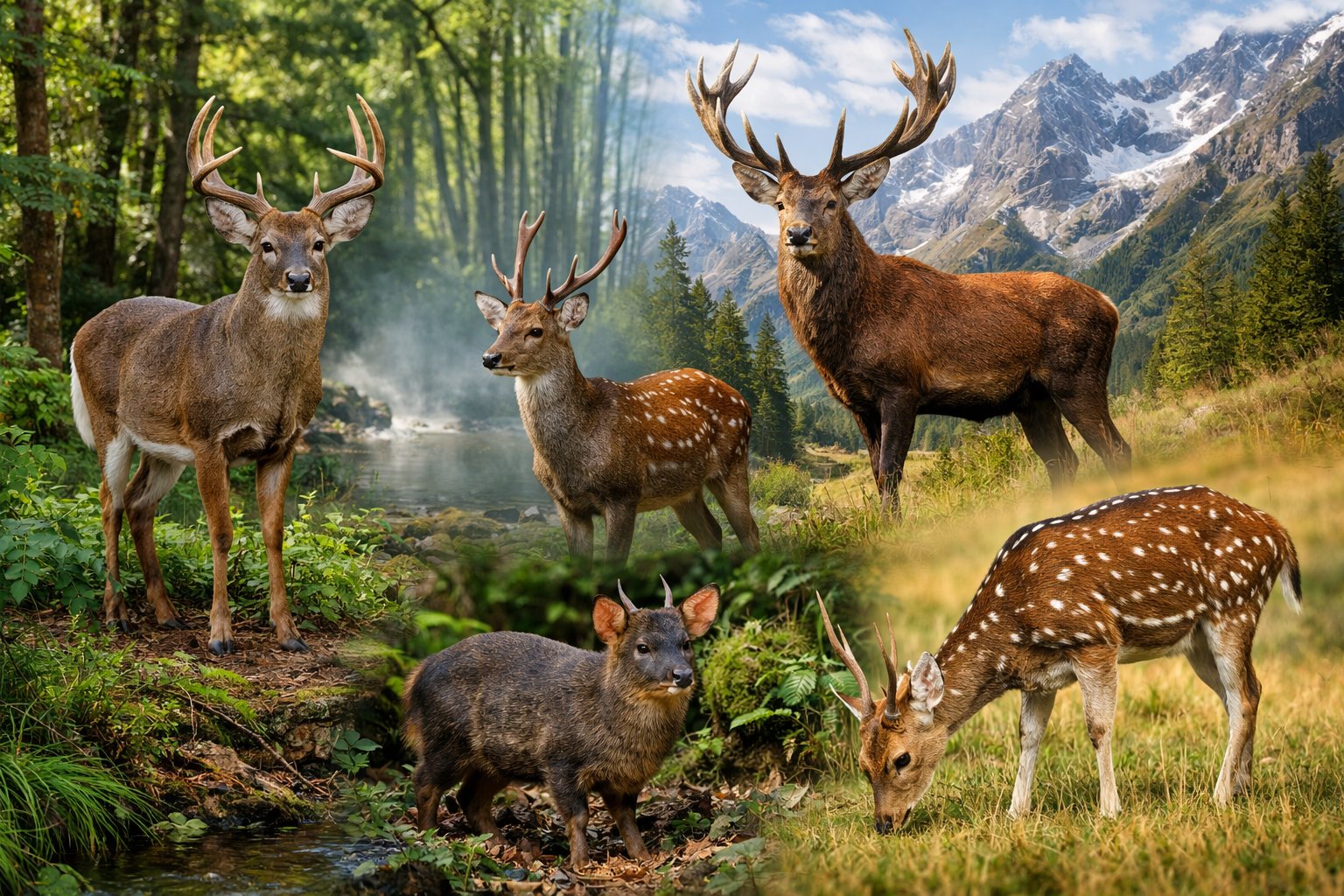
Deer come in all shapes and sizes—from massive moose to tiny pudu. You’ll find them everywhere, from Arctic tundra to tropical forests.
Their size, antler style, and behavior shift based on climate, predators, and food sources.
Types of Deer: From Moose to Pudu
There are about 50–55 living species in the Cervidae family. Moose top the size chart, standing over 2 meters at the shoulder.
Pudu, on the other hand, barely reach 30–40 cm tall. In North America, you’ll mostly see white-tailed deer and mule deer.
Europe and Asia have their own stars—red deer and roe deer. Reindeer (caribou) in cold places grow thick fur, and both males and females often sport antlers.
Some Asian deer, like sika and hog deer, show strong local quirks. A few, like water deer and muntjacs, have tusk-like canines instead of big antlers.
Each species has tweaked its body size, coat, and antlers to fit its home and how it mates.
Where Deer Live: Habitats & Distribution
Deer live on every continent except Australia and Antarctica. You’ll spot them in North American forests, European woods, Asian mountains, and South American rainforests.
Moose prefer boreal wetlands and deep snow. Reindeer migrate across tundra and taiga.
Pudu hide out in dense Andean forests. Where deer live shapes what they eat—browsers munch leaves and shrubs, while grazers go for grasses.
Humans have pushed deer into suburbs, which leads to more deer-vehicle collisions and changes in local ecosystems. Predator pressure—from wolves to big cats—also shapes where deer thrive and how many stick around.
Social Life: Herds, Mating & Communication
Deer social lives really change by species and even by season. Some, like reindeer and elk, gather in big herds to migrate or stay safe from predators.
Others? Muntjacs and pudus mostly keep to themselves. When mating season rolls around, males fight with their antlers and show off to prove who’s stronger.
You’ll spot displays, hear roaring, or notice scent marking as they try to attract mates and warn off other males. Does step up too—they use calls, scent, and even their posture to protect their fawns.
Predators like wolves, cougars, and, yes, humans, keep deer on alert and often push them to group together. If you live somewhere with lots of deer, you might notice more run-ins with cars or problems for farmers.
So, herd size doesn’t just matter to the deer—it can actually affect your everyday life and the whole local ecosystem.
- Key trait differences: antlers vs. tusks, large vs. small body size, migratory vs. resident.
- Notable species to learn more about: moose, reindeer/caribou, elk, red deer, roe deer, white-tailed deer, mule deer, pudu, water deer.


