
Deer don’t sleep all at once—they take short naps that add up to about 3 to 6 hours a day. Most of these naps last just a few seconds or minutes, so they can jump up and run if there’s danger nearby.

It’s interesting how deer break up their sleep into tiny pockets. They pick their resting spots carefully, and group bedding really helps them stay safer.
This article dives into their daily rhythm, how weather or predators shake up their habits, and what makes a good deer bedding spot—especially if you want to see them without scaring them off.
Watch for some straightforward tips on when deer move most and where they hide out during the day.
How Long Do Deer Sleep and What Are Their Sleep Patterns?

Deer grab sleep in short bursts, day and night. They mix light dozing with quick dips into deeper sleep, always keeping one ear open for trouble or sudden changes in the weather.
Average Daily Sleep Duration for Deer
Most adult deer rack up about 4 to 5 hours of sleep a day, but never in one long stretch. They just stack up a bunch of short naps to hit that total.
Fawns, though, sleep a lot more. For their first weeks, a fawn might be bedded most of the day and sleep up to 90% of the time. That helps them grow and gives the mother some freedom to feed or move around.
Deer do reach REM sleep, but only for short bursts—maybe 20 to 30 minutes total in a day. They probably dream less than humans, but REM still happens.
Fragmented and Polyphasic Sleep in Deer
Deer sleep in a polyphasic way, meaning they take many naps instead of one big sleep. Each nap might last just seconds or a few minutes.
This choppy sleep lets them stay ready to bolt. You’ll often notice deer with heads up or ears flicking, always scanning for danger. When they finally lie all the way down, naps get a little longer, but they still wake up often to check things out.
Deer shift their bedding spots and wake up a lot. Their sleep style really puts safety over deep rest. Even in deeper sleep, they snap awake fast if anything feels off.
Differences Between Deer and Human Sleep
People need about 7 to 9 hours of sleep in one go, but deer don’t work that way. Humans rely on those long REM and deep sleep cycles to recharge, while deer spread out their recovery over lots of short naps.
Humans sleep when it feels safe; deer sleep when they can, based on risk and light. Deer get most active at dawn and dusk, so they rest more outside those times. You sleep in a big block, but deer break it up and stay on alert.
There’s a physical side, too—fawns curl up and freeze, while adults might bed with heads up. That’s not a sleep disorder, just smart survival.
Factors That Affect Deer Sleep Duration
Predators really cut into a deer’s sleep. Where wolves, coyotes, or people are around, deer take shorter, more frequent naps and hide in thicker cover.
Season and weather come into play as well. In winter, deer move less and may bed down longer to save energy. During the rut, bucks barely sleep while chasing does.
Habitat and food matter. If deer feel safe and there’s plenty to eat, they’ll sleep longer and return to favorite bedding spots. Urban deer sometimes nap right in people’s yards if they feel secure enough.
How Deer Sleep: Behaviors, Locations, and Group Dynamics
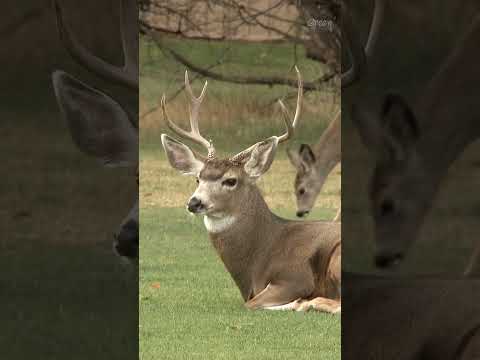
Deer rest in short naps and occasional deeper sleeps. They look for hidden spots that offer cover, good sightlines, and a quick way out if needed.
Typical Sleeping Positions and Behaviors
Deer usually lie with their legs tucked under them, making a shallow oval in the grass or leaves. Sometimes they tuck their head to the side or rest it on their flank when they feel safe enough for deeper sleep.
Most of their sleep is light, broken into lots of tiny naps that last just a few minutes. Deep sleep only happens in really safe bedding and lasts maybe 10 to 30 minutes. Even then, deer keep their ears and nose working. That way, they can catch any hint of a coyote, bobcat, or person nearby.
Where Do Deer Sleep and Choose Their Bedding Spots?
Deer pick bedding spots that offer cover and a clear escape route. You’ll find them in tall grass, brush thickets, along conifer edges, ridge tops, or field edges. In wetlands, they sometimes bed in cattail patches or on little islands for extra safety.
Wind direction matters, too. Deer often face into the wind to sniff out danger. In winter, they like south-facing slopes or evergreens for warmth. Bucks, does, and fawns don’t always bed together—they pick spots based on size, food, and how risky things feel.
Do Deer Sleep Standing Up or With Their Eyes Open?
Deer rarely sleep standing for long. You might catch them dozing on their feet, but real sleep happens when they’re lying down. Standing naps let them react fast, but don’t give them deep rest.
Sometimes, deer sleep with their eyes partly open during light naps. Their eyelids might droop but not fully close unless they’re in deep sleep. Only in very safe bedding will they close their eyes and tuck their head in.
Do Deer Sleep in Groups or Alone?
Social habits shift depending on age and sex. Does tend to bed down close to each other, especially when fawns are around.
When deer group up to rest, they get better at spotting predators. Some keep watch and listen while others nap.
Bucks prefer solitude and usually pick out isolated spots or settle on higher ground. Fawns tuck themselves away in thick vegetation, counting on their mothers for safety.
If there’s a lot of disturbance in an area, deer scatter out and bed alone more often to avoid being noticed. Whether deer like white-tails or mule deer rest in groups or solo really depends on the habitat and how much pressure predators put on them.


