
Most people don’t expect a deer to charge. But it happens—especially if you’re near a fawn or during the rut.
Try to stay calm. Make yourself look big, and put something between you and the deer. If the animal makes contact, fight back and protect your head and neck. This simple plan might cut your risk of serious injury.
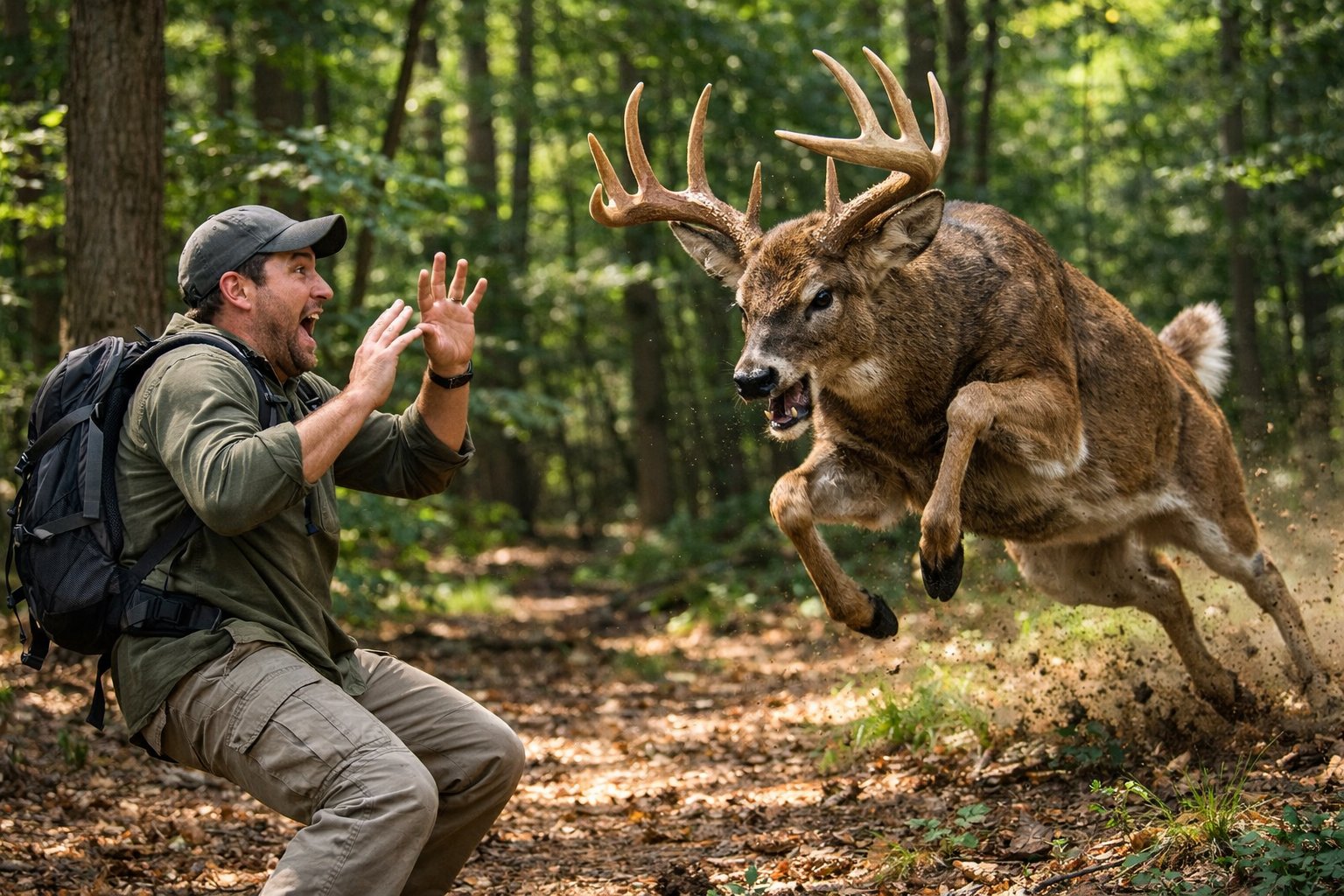
Look for warning signs like stomping, snorting, or a raised tail. These mean you’re too close.
Move away slowly. Keep pets leashed. Never feed or corner deer, and you’ll avoid a lot of trouble before it even starts.
Immediate Actions If a Deer Attacks
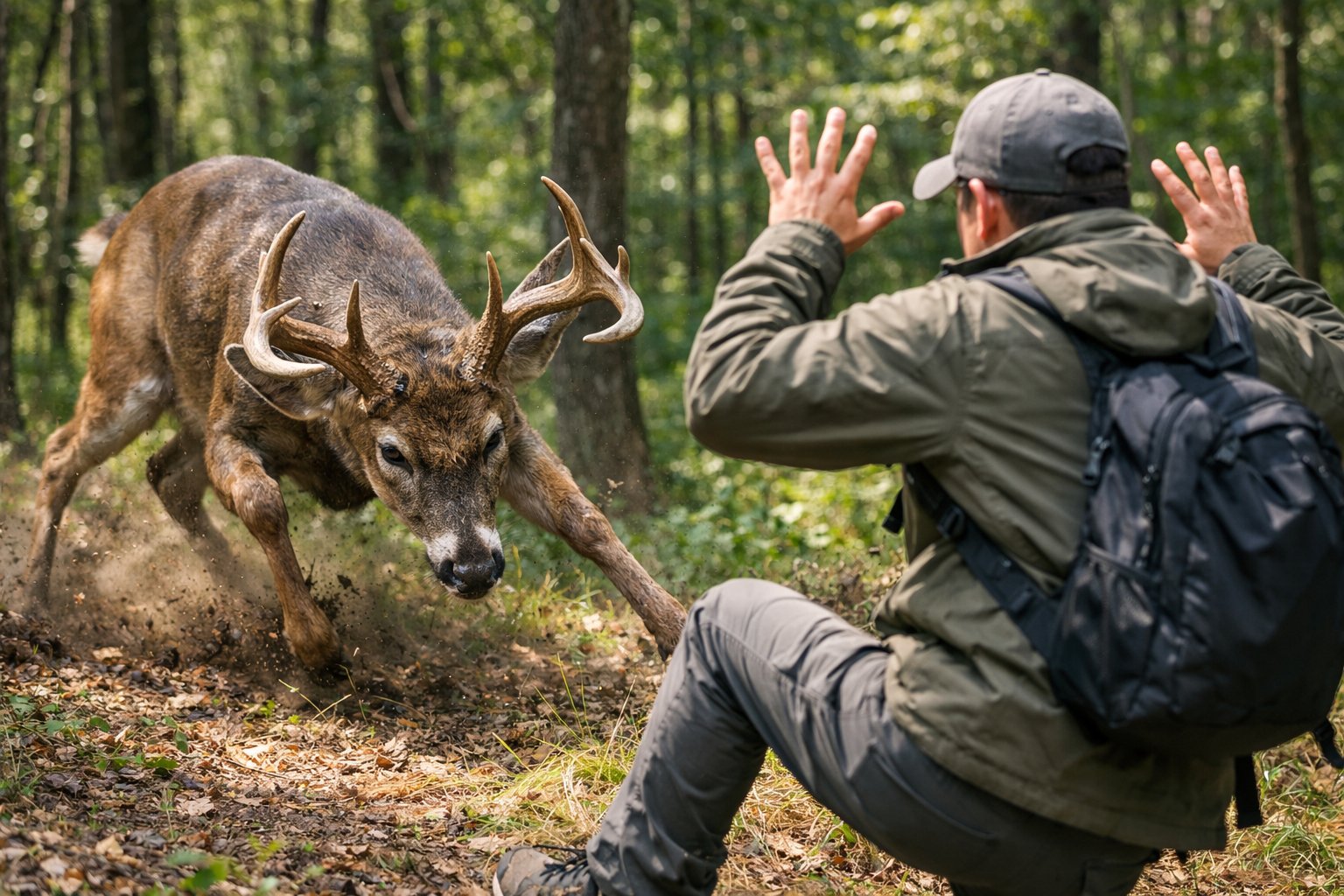
If you can, move to cover. Make yourself look large.
Protect your head and vital organs. Use anything—your backpack, jacket, or even a stick—to keep the deer from hitting you directly.
Recognizing Aggressive Deer Behavior
Pay attention to warning signs before a deer charges. If you see a deer stomping a front foot, snorting, pinning its ears, or raising its tail, it’s agitated.
Bucks might lower their heads and paw the ground during the rut. Does will often focus on a nearby fawn and may move between you and the fawn, or just stare you down.
Distance really matters. If a deer is within 30–50 feet and acting this way, start backing away slowly while facing the animal.
Don’t make sudden turns or run. That can trigger a chase.
If the deer comes at you fast, shout and wave your arms to look bigger.
Reacting to a Charging Buck
Bucks with antlers are the biggest threat. If a buck charges, get a solid object—tree, car, rock—between you and the deer right away.
Use your backpack or jacket as a shield to block or soften the blow.
If there’s nothing to hide behind, move sideways. Sidestepping might throw off the buck’s aim.
If you can’t avoid contact, cover your head and neck first. If you have to fight back, aim for the deer’s face or eyes.
Once the deer leaves, get medical help for any wounds, punctures, or deep bruises.
Defending Yourself Against a Doe
A doe will use her hooves and weight. If she charges, try to get to higher ground or climb onto a stump, fence, or vehicle if you can do it safely.
Stand firm and face the doe. Don’t turn your back—that just gives her an opening.
If you get knocked down, curl up tight and cover your head, neck, and stomach. Use your arms to protect your skull.
If you have something handy—stick, bag, umbrella—use it to push the deer’s face away.
After she leaves, check yourself for broken bones or serious pain. Get medical care for punctures or heavy bruises.
Protecting Children and Pets During an Attack
Keep kids close. Lift small children onto your chest or put them behind your legs so you can shield them.
Shout clear commands to get everyone to move slowly toward cover. Don’t let kids run—sudden movement can make a deer charge.
Call pets in and leash them right away. If your dog or cat is near a fawn, the doe may attack to protect it.
Put yourself between the pet and the deer if you can, and use a barrier to block the animal.
If your pet gets hurt, wait until it’s safe to separate them from the deer, then get to a vet right away.
Helpful links: you can learn more about why deer get aggressive at The Institute for Environmental Research, and there are some practical defensive tips at Biology Insights.
Preventing and Avoiding Deer Attacks

Stay alert in areas where deer live. Give them plenty of space.
Keep pets close. Don’t feed deer, and try not to do things that attract them to your yard.
Understanding When Deer Are Most Dangerous
Deer get most dangerous during the fall rut and in spring when does protect their fawns.
During the rut, bucks act aggressive and often ignore people. In spring and early summer, does hide their fawns and may charge if you or your dog come too close.
Watch for seasonal timing in your area. In many parts of the U.S., rutting peaks in October–November, and fawning happens in May–June.
Change your habits during those months—maybe walk or let pets out at different times.
Try to avoid dusk and dawn, when deer come out to feed. If you’re driving, slow down on roads with deer crossing signs during those hours.
Tips for Preventing Deer Encounters
Stay at least 50 yards from any deer you see. Don’t feed deer or leave out food that attracts them.
Feeders, compost, and fruit trees can bring deer into your yard.
Put up fencing at least 8 feet high if you have a small yard. Plant shrubs like boxwood or lavender that deer don’t like.
Use commercial repellents on plants, but follow the directions for safety.
When walking, make some noise—talk, clap, or even use a bell—so deer have a chance to move away before you get close.
Keep dogs leashed and under control. Dogs often make deer charge.
If a deer starts stomping, snorting, or pinning its ears, back away slowly and leave the area.
Recognizing Signs of Sick or Injured Deer
You might notice a sick or injured deer acting strangely. Sometimes, they’ll walk in circles, drool, stagger, or have obvious wounds.
Deer with chronic wasting disease (CWD) often look thin, drool a lot, and seem to lose their natural fear of people. If a deer’s doing any of this, don’t go near it.
If you spot a wounded deer, keep everyone—including pets—at a safe distance. Then, reach out to your local wildlife management or a wildlife rehab center.
When you contact them, share details like where you found the deer, what symptoms you saw, and photos if you can safely get them. Wildlife officials will figure out the next steps, whether that’s intervention or removal.


