
Ever come across empty kibble bowls or ripped bags and wonder if deer got into them? Yeah, deer will eat dog food if they find it—especially in colder months or in places where their usual food is hard to come by.
Feeding dog food to deer messes with their health and can change how they act, so it’s best not to leave pet food where wild animals can reach it.
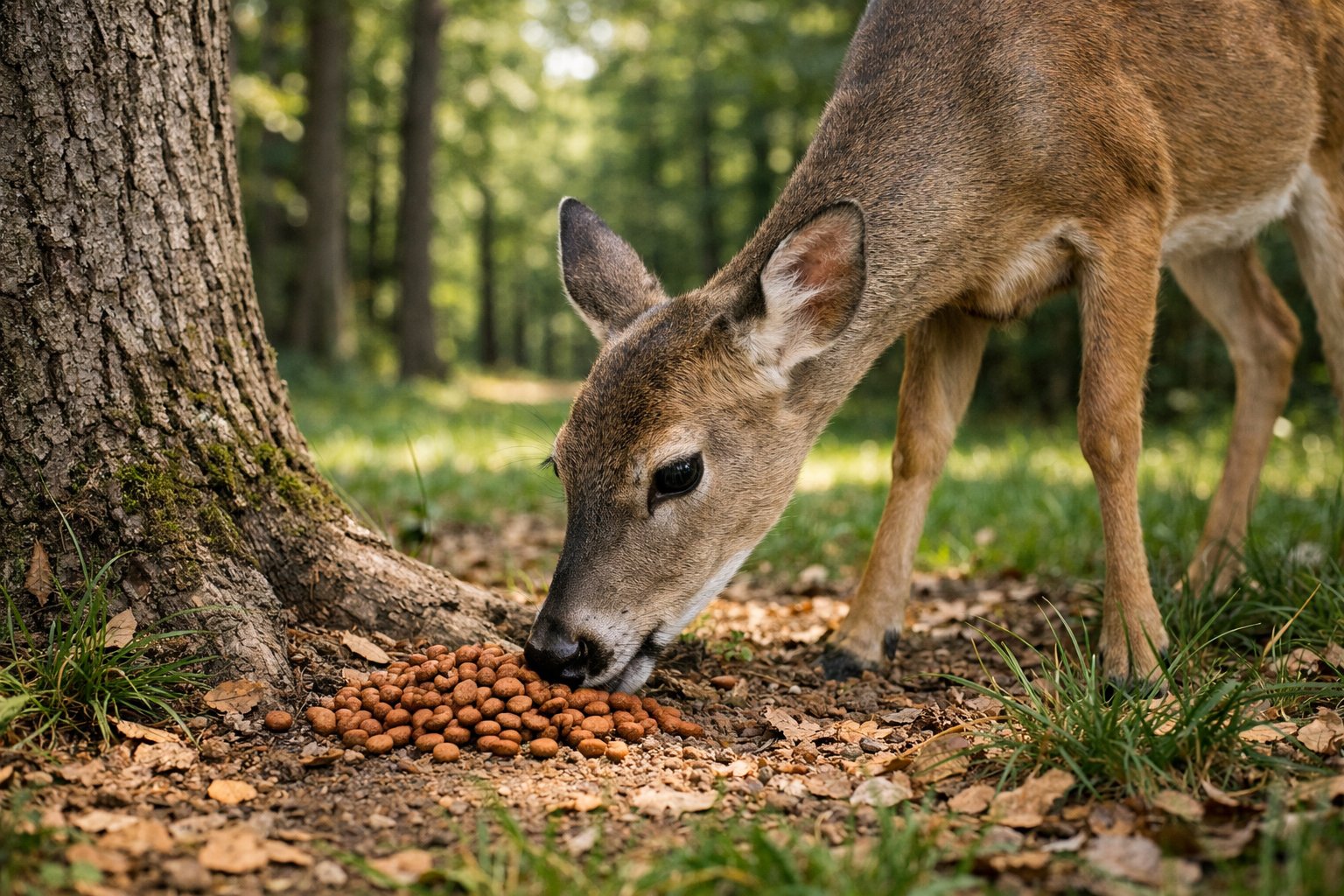
Let’s dig into why deer sometimes eat dog food, what risks that brings for both deer and your pets, and how you can keep it from happening. There are some simple things you can do around your place to protect wildlife and your pet’s food.
Do Deer Eat Dog Food?

Deer will try a lot of human foods when they’re hungry, and dog food can end up on that list. If kibble or wet food is easy to reach, they’ll sample it, but that doesn’t mean it’s good for them.
Why Deer Are Attracted to Dog Food
Deer follow their noses and look for calories. Dry kibble gives off a strong, lingering scent that can draw deer into a yard, especially at night.
If you leave a bowl out after your dog eats, that leftover smell plus easy calories makes it pretty tempting for a hungry deer.
Deer are curious and like to browse, so novelty grabs their attention. If they find dog food once, they’ll probably show up again.
That can change how they move around and make them a bit too comfortable near people.
Predators also factor in. If dog food smells meaty, it can attract raccoons, coyotes, or foxes. Those guys might scare deer off or make them avoid certain spots.
It’s smart to secure pet food so you don’t end up with repeat visits and a parade of wildlife you didn’t invite.
Forms of Dog Food Deer May Consume
Deer are most likely to eat dry dog food (kibble). Kibble is easy for them to pick up, it falls into the grass, and the smell sticks around.
You might catch signs like empty bowls or scattered kibble if deer come by.
Wet canned food doesn’t get eaten as much. The strong, meaty smell can turn deer off and bring in carnivores instead.
If deer go for wet food, it’s probably because they’re desperate and can’t find much else.
Leftover bits or spilled food mixed with fruit or veggies can catch their eye.
Deer will eat some of the plant stuff in kibble, but processed food doesn’t have the right fiber or microbes for a deer’s rumen, so it can mess with their digestion.
Deer Behavior Around Human Food Sources
Deer act pretty cautious near people’s homes. You’ll usually spot them at dawn or dusk, sneaking in when it’s quiet.
If they find dog food, they creep up, grab a few bites, and stay alert for danger before eating more.
When deer keep finding easy food, they get bolder. They’ll feed closer to houses or show up at the same time each day.
That kind of behavior raises the risk of car accidents and disease spreading between animals.
Want to stop the visits? Bring bowls inside, keep pet food off the porch, and stash leftovers.
Just a few changes can shift deer habits fast and make it less likely they’ll start relying on dog food.
Why Deer and Dog Diets Are Different
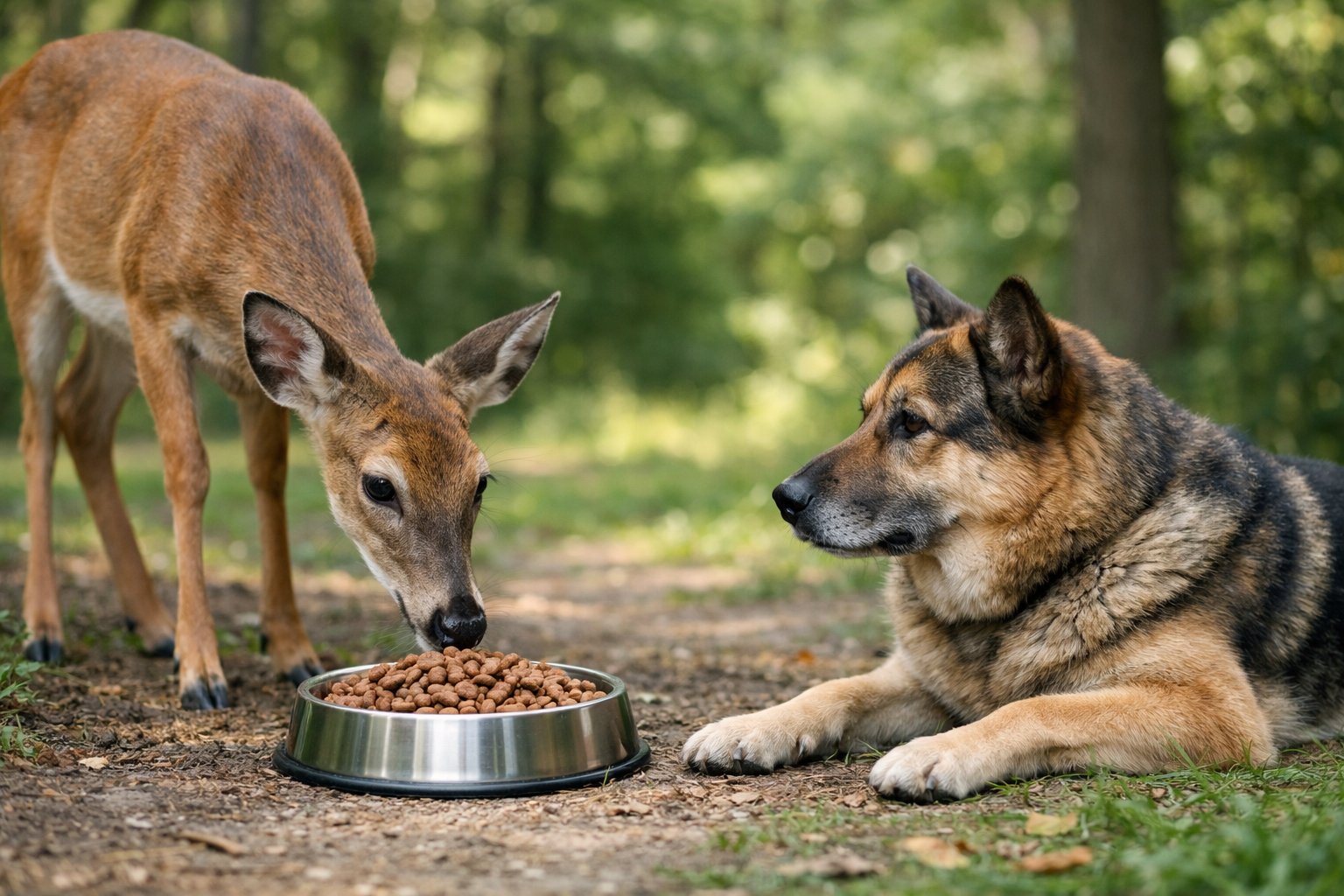
Deer mostly eat plants and need a lot of fiber and certain minerals. Dogs eat more protein and fat, and they need a different balance of vitamins.
Those differences really matter for their digestion and health.
Natural Diet of Deer Versus Dogs
Deer stick to a plant-based menu. They munch on grasses, forbs, clover, alfalfa, leaves, twigs, fruits, berries, nuts like acorns, some corn, and even the occasional mushroom.
What they eat depends on the season—spring and summer mean more leafy greens and young shoots, while fall brings nuts and acorns to help them bulk up for winter.
You’ll usually see deer browsing shrubs and trees instead of grazing like cows.
Dogs, on the other hand, are omnivores. Dog food mixes animal protein, fats, grains, and added vitamins.
Your dog’s food is made to give steady energy and help keep muscles strong. Deer just don’t need all that animal protein or extra fat, so dog food doesn’t really fit what deer should eat.
Digestive Systems and Nutritional Needs
Deer have a ruminant stomach with four chambers. That setup helps them break down tough, high-fiber plant foods with the help of microbes.
They need plenty of fiber and slow-burning carbs. The right minerals—like calcium, phosphorus, and trace elements—are crucial for antler growth and having healthy fawns.
Sudden changes in what they eat can mess up their gut microbes and cause digestive trouble.
Dogs have a single-chamber stomach and a shorter gut.
They digest protein and fat quickly. Dog food is made for that kind of stomach, not for deer’s special microbes.
If you feed dog food to deer, they miss out on the fiber and minerals they need for antlers and overall health.
Health Risks of Feeding Dog Food to Deer
Dog food can upset a deer’s stomach. Without enough fiber and with too much protein or fat, deer can get diarrhea, bloating, or even worse problems like rumen acidosis.
Feeding them dog food over and over can lead to weight issues and mess with their ability to grow antlers or have healthy babies.
Deer can also get bacterial imbalances, like enterotoxemia, if they eat a lot of concentrated feed.
If people feed deer, it can make them hang around yards, get hit by cars more often, and spread diseases among each other.
If you care about deer, keep dog food away from them and don’t let it become part of their routine.
Safe Alternatives for Feeding Deer
If you’re hoping to help deer, try offering foods that are closer to what they’d find in the wild. Plant some native shrubs, maybe a few fruiting trees, or even patches of clover.
You can also put out mineral blocks or salt licks made for deer. These give them important minerals like calcium and phosphorus, which help with antler growth.
If you see fallen acorns or nuts, just leave them where they are if it’s safe. Deer will find and eat them naturally.
Skip the corn, large amounts of grain, or dog food—those aren’t good for deer on a regular basis. If you want to give a treat, a few apples or pears once in a while is fine, but don’t let it replace their usual wild food.
If you’re not sure what to plant or provide in your area, try reaching out to a local wildlife or conservation group. They can give you advice that’s specific to your region.
Want more details on why dog food isn’t a great idea? Check out advice from wildlife experts, like the info in Will Deer Eat Dog Food? (https://welovedoodles.com/will-deer-eat-dog-food/).


