
You might be surprised which meat actually fits your goals best. If you’re after fewer calories and less fat, venison often wins out. But if you want easy, reliable protein and selenium, chicken is usually the simpler choice.
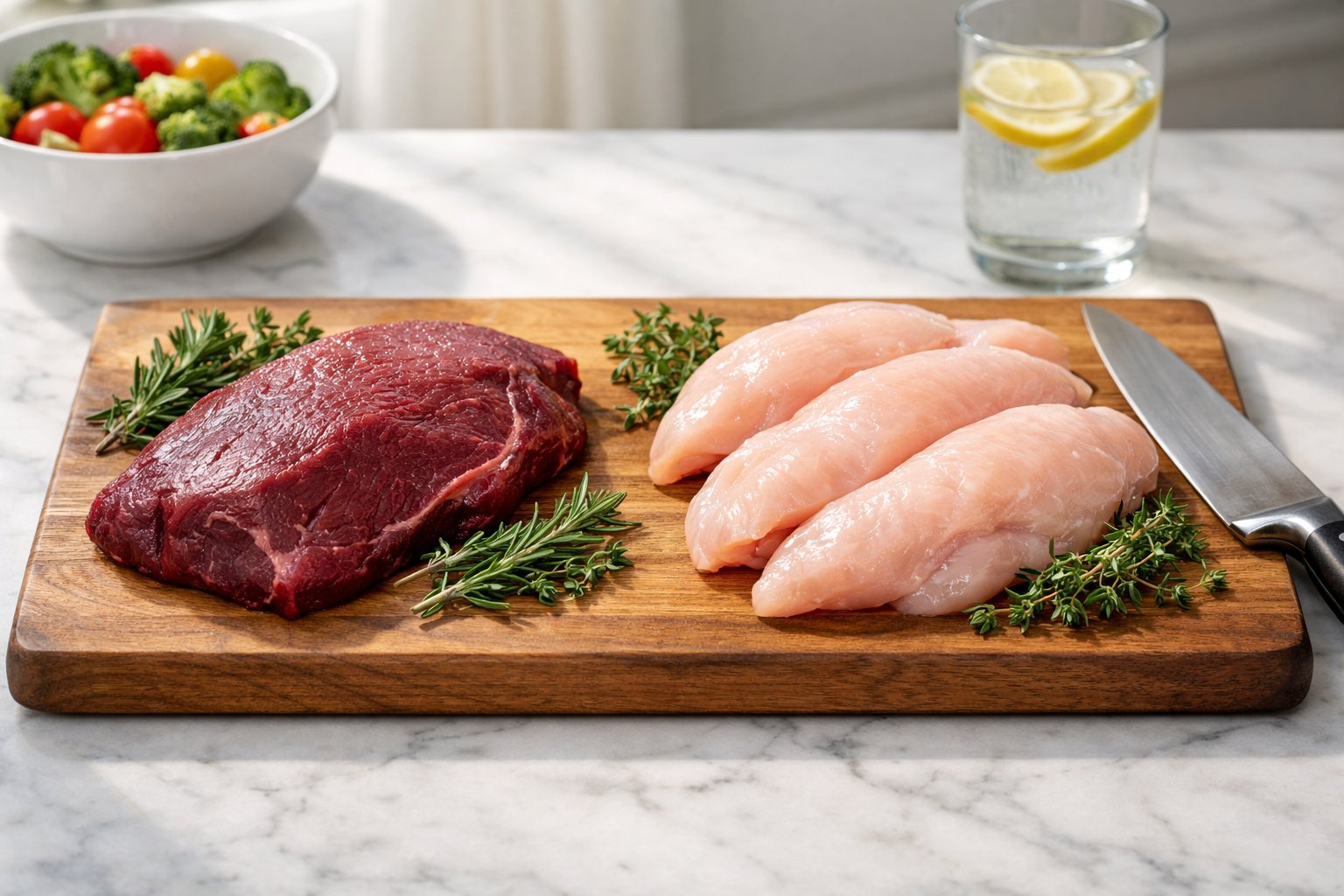
Venison generally gives you leaner meat with more iron and B12, while chicken packs in more protein per serving and is, honestly, just everywhere. Which is healthier? It really depends on what you’re after.
Let’s dig into a clear, side-by-side look at nutrients and some real-world health notes so you can pick the meat that fits your diet, cooking style, and health needs.
Nutritional Comparison of Deer and Chicken

Deer (venison) and chicken really differ in fat, iron, and a few B vitamins. You’ll find venison is super lean, higher in iron and vitamin B12. Chicken, on the other hand, often has more total fat and selenium, depending on the cut and if you leave the skin on.
Protein, Fat, and Calorie Differences
Both venison and chicken deliver high-quality protein, but their calorie and fat numbers are pretty different. For every 100 g, venison tenderloin usually gives you about 30 g protein and just 2–3 g fat.
Chicken with skin or dark meat can have 25–27 g protein and 10–14 g fat. So venison actually gives you more protein for each calorie and fewer calories overall.
If you’re counting protein density, venison often provides about 20 g protein per 100 kcal, while fattier chicken cuts land closer to 11 g per 100 kcal.
Chicken breast (skinless) gets closer to venison in terms of fat and calories. Thighs or skin-on pieces bump up the fat and energy.
If you want lower calories and more protein per calorie, pick lean cuts.
Vitamins and Minerals in Both Meats
Venison stands out for iron and vitamin B12. A typical venison portion has more iron and B12 than chicken, which is great if you’re trying to avoid iron deficiency anemia.
Venison also tends to have higher zinc, copper, phosphorus, and some B vitamins like B1 and B6.
Chicken brings more selenium and does well with niacin (vitamin B3), especially in breast meat. Both meats give you a complete set of amino acids, plus good phosphorus and potassium.
If you need iron or B12, venison takes the lead. If you care more about selenium or niacin, chicken probably fits better.
Types of Fat: Saturated, Unsaturated, and Omega-3
Fat type matters more than the total amount for health. Venison stays low in total fat and has less saturated fat than many chicken cuts, especially if you keep the skin on chicken.
For example, venison only has about 1.1 g saturated fat per 100 g, while some chicken cuts reach around 3.8 g.
Chicken usually has more monounsaturated and polyunsaturated fat, with small amounts of omega-3 and omega-6, depending on the bird’s diet and the cut.
Venison barely contains omega-3 compared to fatty fish, but it’s still a lean choice with a good unsaturated-to-saturated ratio.
Choose lean venison or skinless chicken if you want less saturated fat. For more polyunsaturated fats, look at certain chicken cuts or just cook with oils high in unsaturated fats.
Nutritional Value by Cut and Preparation
Cut and cooking style can really change the nutrition. Skinless chicken breast (grilled or roasted) drops calories and fat, making it more like lean venison.
Chicken thighs or fried chicken add fat, saturated fat, and calories. Venison tenderloin or loin stays lean if you broil or roast it.
Frying always raises calories and saturated fat, no matter the meat. Marinating, trimming visible fat, and removing chicken skin can cut down fat and calories.
Braising or stewing with added fats will increase total energy. If you want max iron and low fat, pick venison loin and broil or roast it.
If you’d rather have lower iron but more selenium and easy shopping, go for skinless chicken breast cooked without added fat.
For a direct nutrient comparison, check out this in-depth table for venison vs chicken at FoodStruct: Deer meat vs. Chicken meat — In-Depth Nutrition Comparison (https://foodstruct.com/nutrition-comparison/deer-meat-vs-chicken-meat).
Health Benefits and Considerations

Deer meat and chicken both give you lean protein and important vitamins, but they’re not the same in iron, B12, fat type, or environmental impact.
Pick based on your iron needs, fat preferences, food safety worries, and whether you want wild or farmed meat.
Advantages of Deer Meat for Your Diet
Venison is super lean and high in iron and vitamin B12, which help your red blood cells and energy. If you have low iron or want a lower-fat diet, venison gives you more iron and B12 per serving than most chicken cuts.
Venison also comes in lower in calories and total fat, so it can help with weight control or a low-cholesterol diet. Its omega-3 and micronutrient profile can support your immune system and metabolism, especially if you eat it with veggies and whole grains.
If you pick wild venison, you skip routine antibiotics and some intensive farming stuff. Just remember to cook venison fully and check local advisories about chronic wasting disease (CWD) in deer.
Advantages of Chicken for Your Health
Chicken, especially breast meat, has less saturated fat and more unsaturated fats, which can help your heart and cholesterol if you swap out fattier meats.
It provides niacin (vitamin B3) and selenium, which help with metabolism and antioxidant defenses.
Chicken is super versatile and usually easier to portion and cook for steady protein intake, which helps you hit your daily protein goals for muscle and immune support.
Store-bought chicken gives you predictable nutrition and plenty of options for lower-calorie meals.
To lower the risk of foodborne illness, handle raw chicken carefully and cook it to safe temps. That’s the best way to avoid salmonella and other bugs.
Potential Health Risks and Safety Concerns
Both meats can carry food-safety risks if you don’t handle them right. Raw chicken often carries salmonella and Campylobacter.
Keep it cold, use separate cutting boards, and cook to 165°F (74°C) to stay safe. Venison can carry bacteria too, so make sure it reaches a safe internal temperature.
Wild venison has its own challenges: chronic wasting disease (CWD) affects deer in some places. Follow local testing rules and don’t eat meat from animals that test positive.
Farmed venison might lower CWD risk but could bring up concerns about farming and antibiotics.
Antibiotic resistance is more likely with conventionally farmed animals treated with antibiotics. If you want to lower your exposure to pathogens and drug-resistant bacteria, choose inspected, tested, and properly handled meat.
Environmental Impact and Sustainability
If you get wild venison from responsible hunting, it can actually be a sustainable food choice. It doesn’t need much farming input, and it even helps with wildlife management.
Hunters who stick to proper limits keep deer populations in check. That way, they also help reduce crop damage in some places.
Chicken production? Well, it really depends. Some intensive poultry farms have a bigger environmental footprint because of the feed, land, and waste involved. Still, chicken often uses less land and water than beef, which is worth noting.
Farmed venison is a different story. Farmers need to provide feed and build infrastructure, so it’s not quite the same as wild game when it comes to sustainability.
If you care about sustainability, try to find local, well-managed sources. Check farm labels, pay attention to hunting regulations, and look for producers who limit antibiotics and treat their land and animals well.


