
You’ll spot deer around dawn and dusk, but during the day, they tuck themselves away in quiet, hidden places to rest and stay safe. Deer like to sleep in dense brush, tall grass, or under evergreens, where they can see, smell, and make a quick getaway if danger shows up.
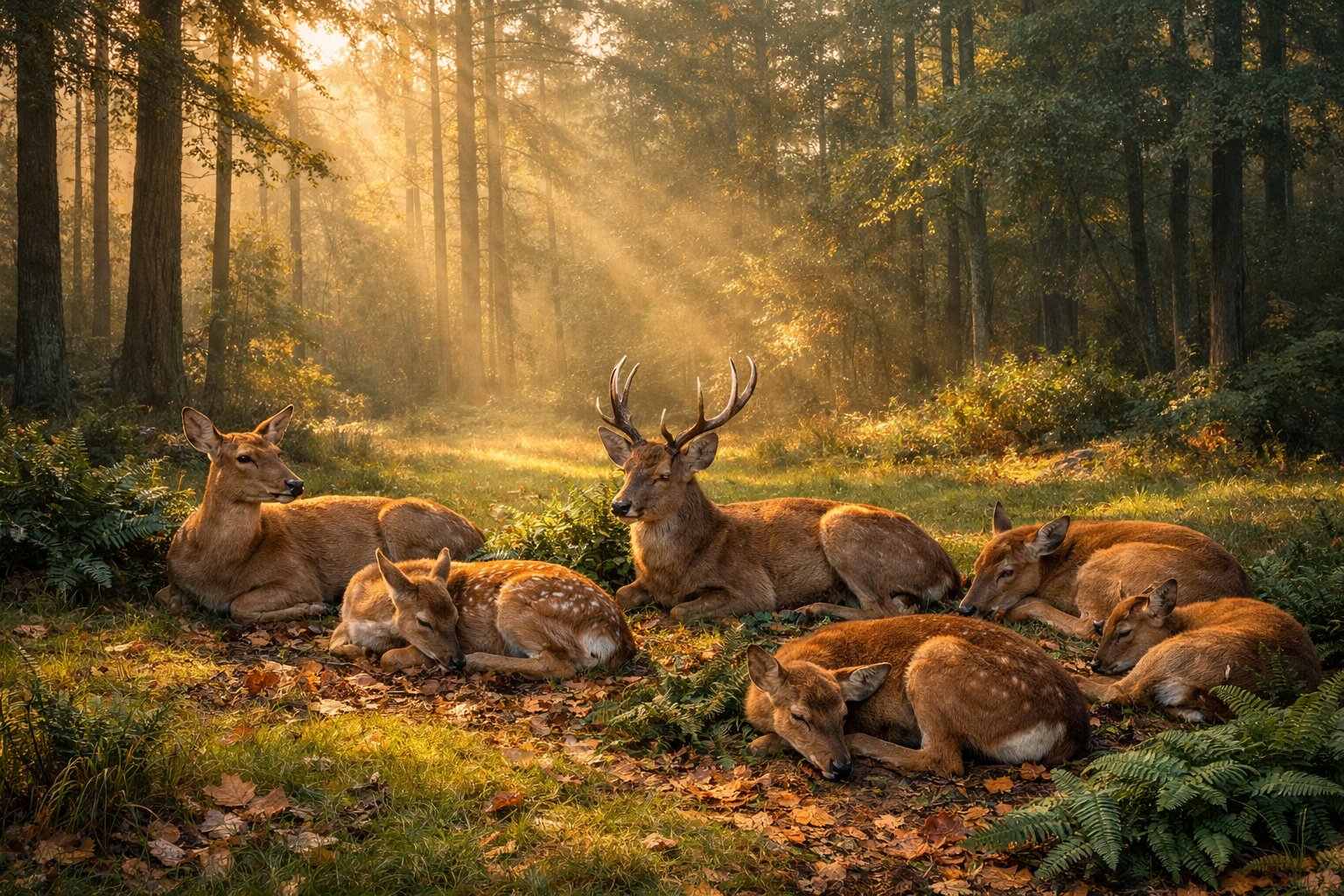
Let’s dig into why deer pick certain beds, how bucks, does, and fawns sleep differently, and how seasons and weather mess with their choices.
This might help you spot bedding areas, understand deer behavior, and catch the subtle clues they leave behind.
Where Do Deer Sleep in the Wild?

Deer pick beds that offer cover, good sightlines, a wind advantage, and a quick escape route.
You’ll notice patterns based on habitat, sex, and season that make it easier to find where they might bed down.
Typical Bedding Areas by Habitat
In forests and woods, deer often bed under conifers, behind fallen logs, or on ridge benches. These spots give them shelter and a view.
Look for small oval depressions and flattened grass near timber edges.
In grasslands or CRP fields, deer curl up in tall grass clumps and brush islands, usually near field edges.
You’ll see bent, flattened vegetation but not much broken stuff.
Along farm fields, check unharvested rows, fencerows, and ditch lines close to food sources.
Wetlands and swamps offer thick cover and fewer predators, so deer bed on small hummocks or in cattail pockets.
In the suburbs, overgrown yards and drainage ditches can act like tiny thickets.
Use binoculars and keep your distance—deer don’t stick around if you get too close.
Differences Between Buck Beds and Doe Beds
Bucks usually bed alone in more isolated or higher spots that are tough to sneak up on.
Their beds are bigger, oval-shaped, with one clear entry or exit.
Bucks prefer ridge points and leeward slopes, so they can see and smell trouble before it gets near.
Does tend to bed in groups, especially with fawns around.
Their beds are smaller and rounder, tucked into thicker cover near food so they can nurse and watch together.
Fawn beds blend in well with tall grass or brush, usually close to the doe’s area.
During hunting season, bucks move more at night and change beds often to dodge pressure.
Does will shift beds too, but usually stay closer to steady food and thicker cover to protect their young.
Seasonal Changes in Bedding Locations
In summer, deer hide in dense, cool spots—tall grass, thick brush, and shady timber edges.
Fawns stay hidden in lush summer growth while does feed nearby.
In winter, deer pick south-facing slopes, cedar and pine windbreaks, and leeward hollows.
These places cut the wind and keep them near food, so they don’t burn too much energy moving.
Snow pushes deer into lower, sheltered pockets and close to evergreens.
During the rut and hunting season, they move beds more often.
Human activity drives them into heavier cover or makes them more nocturnal.
You might need to scan edges, swamps, and thickets at dawn or dusk to spot their bedding areas.
How and When Do Deer Sleep?

Deer rest in short bursts, always keeping alert.
They pick beds that hide them but still let them see or smell danger coming.
Let’s talk about how their daily sleep fits into their routine, how many hours they get, and whether they lie down or stand up while resting.
Deer Sleep Cycle and Patterns
Deer are crepuscular—they feed at dawn and dusk, then rest during the day and night between moving around.
Their sleep comes in short naps, with just a few deep-sleep bursts.
You’ll see deer take micro-naps for a few minutes, all while their ears and nose keep working.
They only get into deep sleep in thick cover where they feel safe, and those naps last about 15–30 minutes.
Does with fawns wake up often to check on their young.
Bucks tend to sleep alone and change beds more when hunting pressure is high.
Wind direction matters; deer often face into the wind so they can catch scent of predators.
How Long Do Deer Sleep Each Day?
Most deer get about 8–12 hours of rest in a day.
Only about 2–3 hours of that is deep, uninterrupted sleep—the rest is just light napping.
Rest time changes with the season and risk.
In winter, they pick sunny, sheltered beds to save energy and stay warm.
Where hunters or predators are around, deer use thicker cover and cut down on daytime sleep.
If you look for bedding spots, tracks, and fresh droppings, you’ll get a good sense of where they actually rest.
Do Deer Sleep Standing Up or Lying Down?
Deer almost always lie down when they sleep. Curling up in a small bed helps them hide and stay warm.
You might spot oval depressions in grass or leaves where deer have bedded again and again. Sometimes, they’ll freeze on their feet for a moment to check for danger.
But honestly, they don’t actually sleep while standing. Fawns usually stay very low and still, blending in while their mothers feed nearby.
Bucks and does leave different bed shapes. Bucks tend to make bigger, stretched-out depressions, while does and fawns leave smaller, rounder ones.
If you’re hoping to find a bedding spot, keep an eye on the edges of thick cover or look at openings that face into the wind.


