
A broken leg can leave a deer struggling to move, find food, and escape predators. The outcome really depends on the injury and where it happens.
If the fracture is simple, and the deer avoids predators while having easy access to food and shelter, it might heal or adapt and survive. But if the break is severe or compound, the deer usually faces a much lower chance of survival.
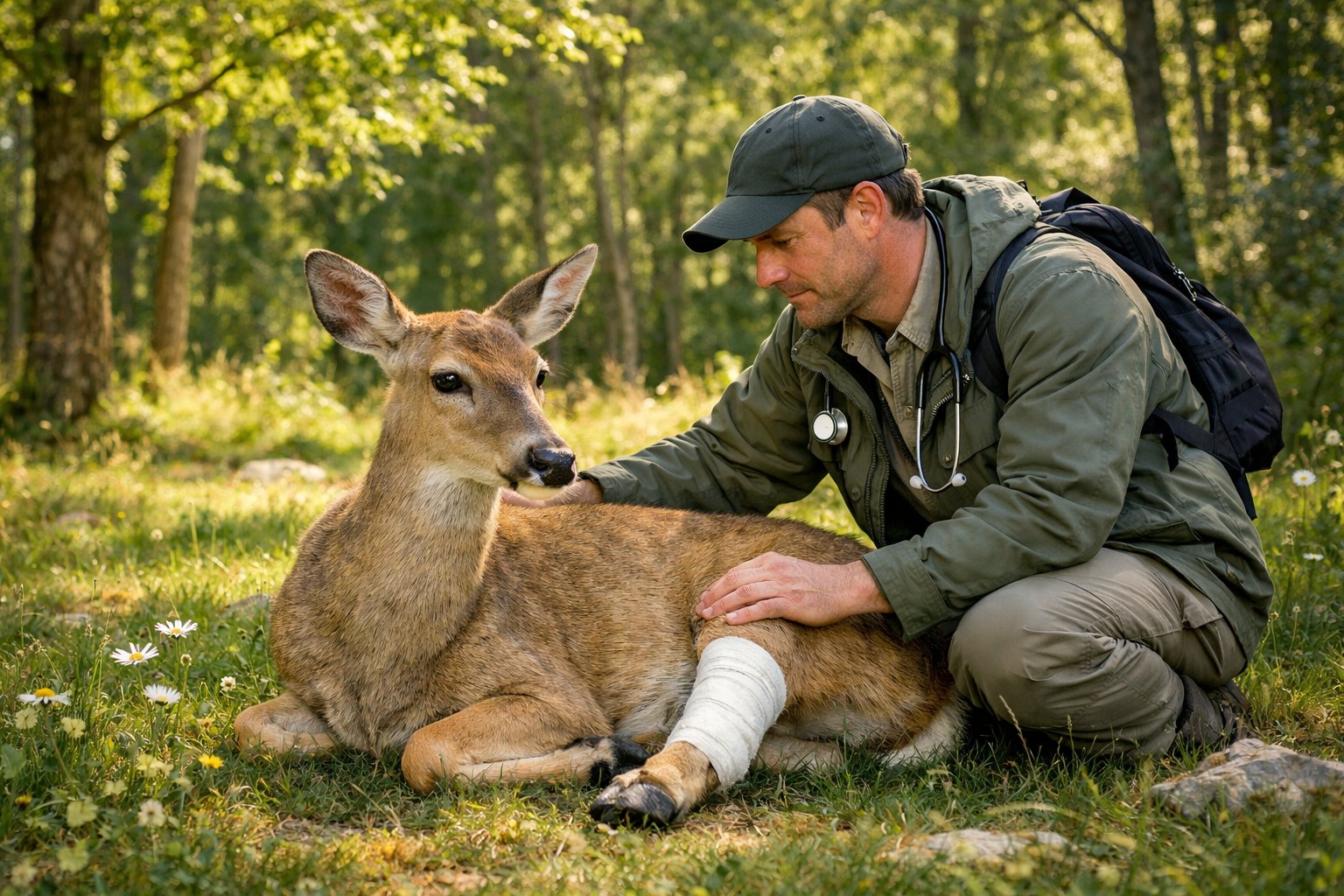
You’ll learn what these injuries look like, why some deer manage to recover on their own, and when humans or wildlife professionals step in to help.
This article also covers practical steps you can take safely if you come across an injured deer, plus the usual paths to recovery or humane intervention.
What Happens When a Deer Breaks Its Legs

A broken leg throws a deer’s daily life into chaos. It changes how the deer moves, hides, and searches for food.
The type and location of the break, along with the surrounding environment, make a huge difference in how tough things get.
Causes of Broken Legs in Deer
You’ll see most breaks after vehicle collisions, fence entanglements, or falls on rocky slopes. Cars hit deer and can shatter their lower leg bones.
Fences trap legs and twist them until they snap. Sometimes, predators or fights with other deer cause serious limb injuries.
Human-made hazards like barbed wire raise the risk, especially near roads and farm fields.
Young deer can get hurt from rough play or sprinting through cluttered areas. Winter ice and deep snow make falls much more likely.
If you spot a deer limping near a road, it could have a fracture—give it space and call your local wildlife officials.
Types of Leg Fractures
Fractures fall into a few clear categories. A simple fracture is a single clean break, with the skin still intact.
The deer might try to stand and shift weight to other limbs. A compound fracture is bad news—bone sticks out through the skin or there’s a big open wound, so the risk of bleeding and infection shoots up.
Breaks also differ by location. Lower-leg (metacarpal/metatarsal) breaks leave the limb dangling and usually make running impossible.
Upper-leg (femur or humerus) breaks hurt more and can stop the deer from bearing weight at all. Comminuted fractures crush the bone into pieces—these are nearly impossible to heal in the wild.
Impact on Survival and Mobility
A broken leg really changes a deer’s odds. With a simple hind-leg fracture, the deer might limp around, use its other legs, and still get by for a while.
But if the break is in a front leg or it’s a compound fracture, the deer often can’t move, run, or reach food.
Limited movement brings big risks: starvation if it can’t reach feeding areas, and predators because it just can’t get away. Infection from open wounds can spiral quickly.
In places with plenty of food and not many predators, some deer figure out how to live on three legs or with a stiff, healed limb.
If you come across an injured deer, don’t try to handle it yourself—call wildlife rehab or authorities.
For more on what causes these injuries and the chances of survival, check out Deer Hunting Life.
Responding to Injured Deer and Paths to Recovery

If you find a deer with broken legs, your main goal is safety—for you and the animal. Quick, calm choices matter most for the deer’s chance to recover.
How to Safely Help an Injured Deer
Keep at least 25–50 feet away. Injured deer can panic or lash out if you get too close.
Don’t try to capture, touch, or feed the deer. This just stresses it out, can make things worse, or even spread disease.
Watch from a safe spot. Note the location, any visible wounds, how the deer acts, and whether it can stand or move.
Take a few photos or a short video to show authorities. If the deer is in immediate danger—like on a road or in a yard with pets—block off the area from people and animals but still keep your distance.
Call your local wildlife agency or a licensed wildlife rehabilitator right away. If you don’t know who to contact, search “[state] wildlife rehabilitation” or ask local animal control for help.
Follow their instructions carefully. They might send trained staff or ask you to just keep an eye on the deer until help arrives.
Role of Wildlife Rehabilitation Centers
Wildlife rehabilitation centers check injuries and decide if treatment or humane euthanasia is the best option. Their staff has training, access to vets, and the permits needed to handle wild deer.
You can’t legally transport or treat most wild deer yourself.
At a center, veterinarians will take x-rays, clean wounds, give pain meds, and sometimes cast or splint fractures.
They also work to prevent infection and provide a safe place for rest and nutrition. Rehab might include protected enclosures to keep the deer from hurting itself again as it heals.
Not all centers accept adult deer with severe leg breaks. Many decide based on the deer’s odds and quality of life.
If release is possible, centers aim for full recovery and a return to good habitat.
When to Involve Wildlife Agencies or Experts
Call a wildlife agency if the deer is in a public area, got hit by a car, or shows signs of serious trauma—like not being able to stand, open fractures, or heavy bleeding.
Agencies handle legal issues, public safety, and work with rehab centers.
Contact a licensed wildlife rehabilitator if the injury seems less severe and you think quick transport to a center is possible.
Use agency hotlines outside regular hours. If a deer is on private property and isn’t in immediate danger, agencies might suggest you just watch for a bit to see if it improves.
If you’re not sure who to call, local animal control or your state fish and wildlife department can point you in the right direction.
Give them a clear location, a quick description, and photos to help them respond faster.
Natural Healing vs. Human Intervention
Deer sometimes manage to heal simple fractures on their own. With a bit of soft-tissue support, limited movement, and enough time, bones might knit—especially in fawns or when the break isn’t too bad.
But honestly, survival depends a lot on things like predator risk, food, and whether the deer can still move well enough to get away from danger. If a deer can’t reach food or escape threats, its odds drop fast.
People usually step in when fractures are open, badly displaced, or involve joints. If the animal can’t get to food or safety, that’s another time for intervention.
Rehabilitation teams can offer pain meds, surgery, splints, and a safe place to recover. Still, treating big wild animals like deer takes a ton of resources, and it’s just not always possible.
If experts think the deer won’t recover or would end up unable to survive in the wild, they might recommend humane euthanasia. Your best move is to report the case, follow expert advice, and let the pros handle things.
You’ll find more info and practical steps in regional guides, like the Flint Creek rehab pamphlet or other organizations that explain how to report injured deer.
(https://flintcreekwildlife.org/wp-content/uploads/2020/04/I_Found_an_Injured_Deer.pdf)


