
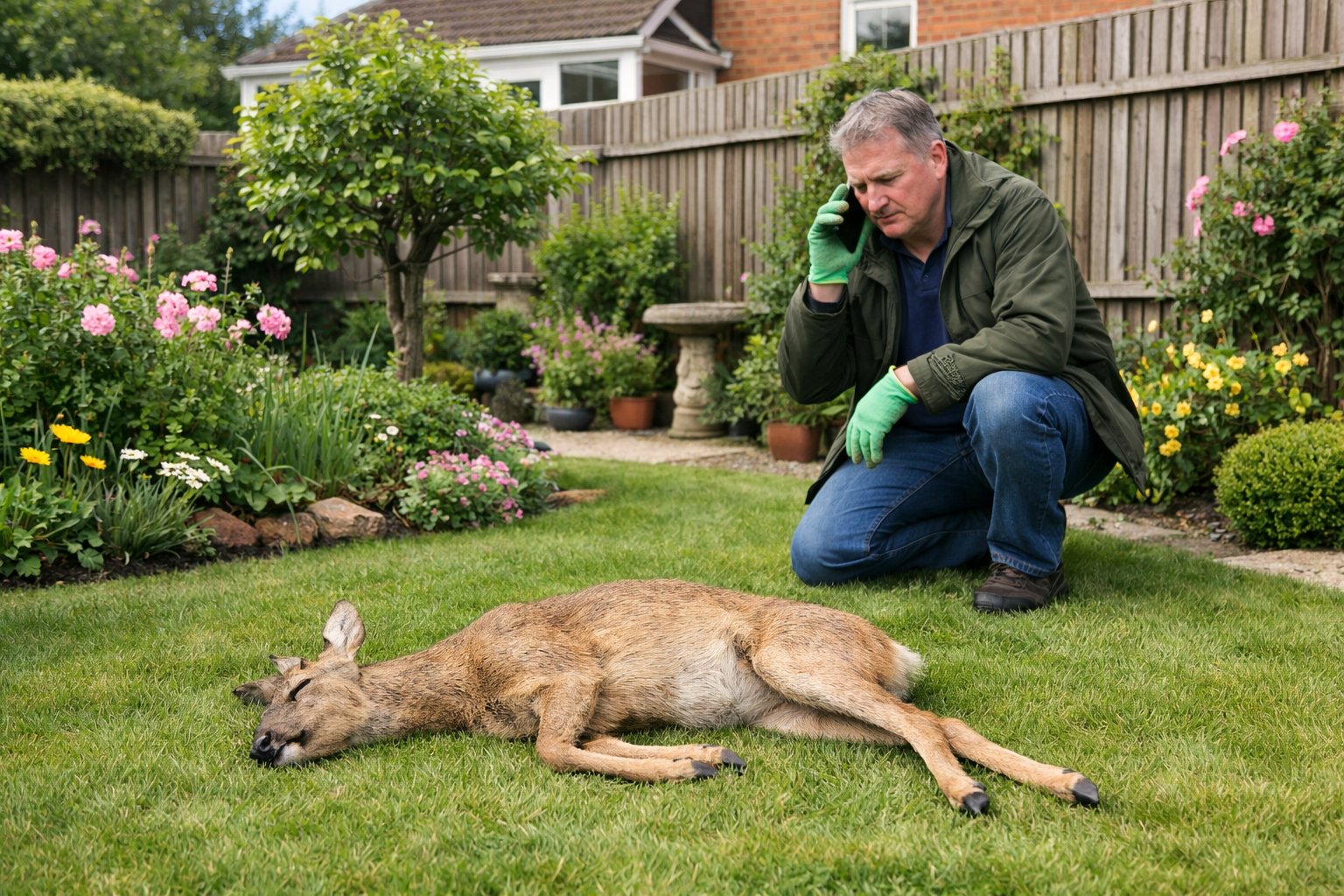
Finding a dead deer in your garden can feel shocking. Still, you can handle it calmly and keep things safe.
Don’t touch the carcass. Just take a look from a distance, keep your pets away, and call your local council or the Animal and Plant Health Agency if you think there’s a risk of disease or public danger. That way, you keep yourself and others safe while you figure out what to do next.
You’ll want to know which signs mean you should report the deer, who to ring for removal, and some simple safety steps for your family and pets. Let’s go through how to spot disease or anything suspicious, when to contact the right people, and what your options are for getting rid of the deer or filing a report.
Immediate Actions and Safety Measures
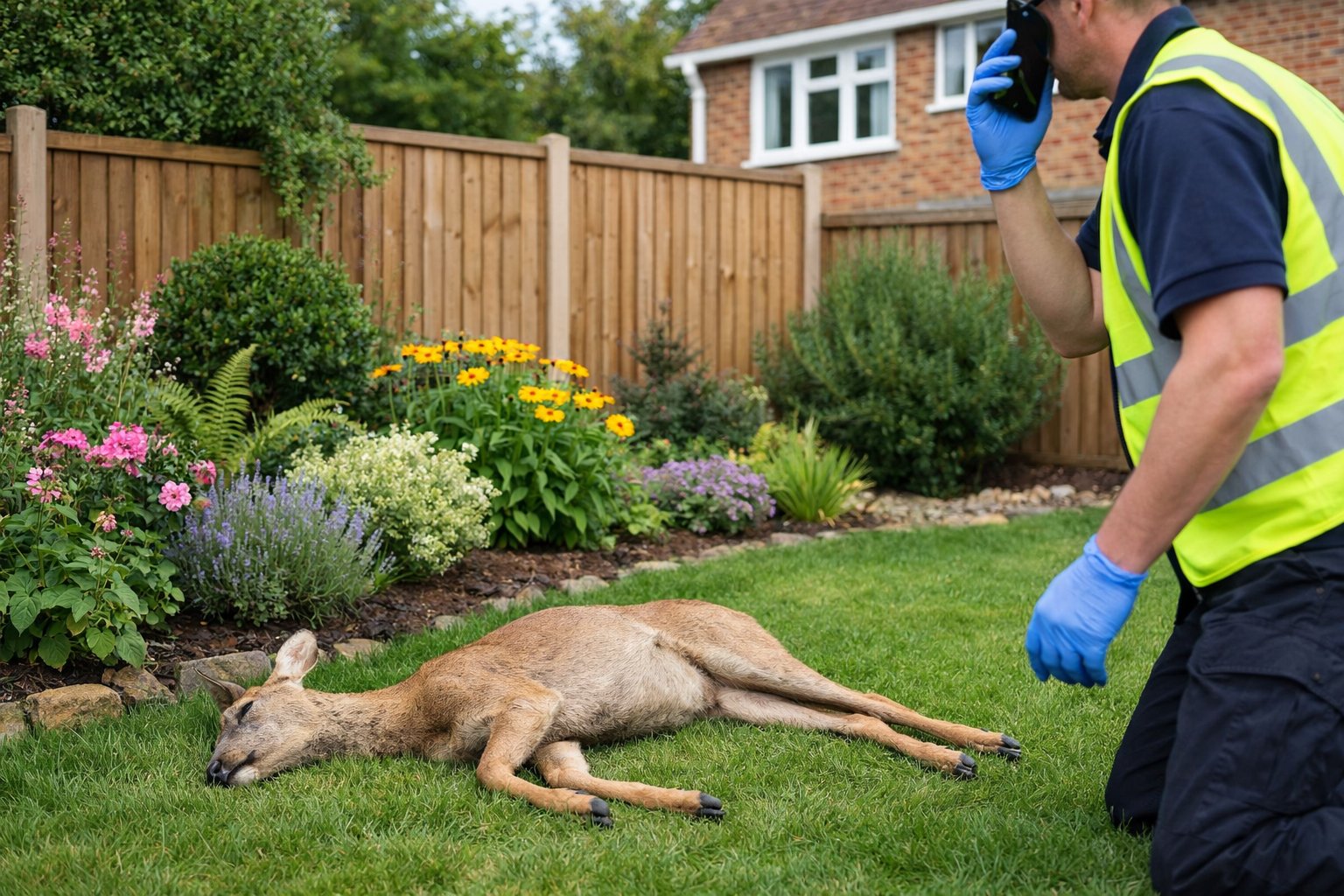
Keep everyone and pets away from the deer. Don’t touch it, and check if it’s blocking a road or causing any immediate danger.
Assess from a Distance and Do Not Touch
Stand back and see if there are any obvious injuries, blood, or signs it was hit by a car. Make a note of where the deer is—maybe it’s in the flower bed, on the driveway, or up against a fence.
Figure out if it’s on public land or your own garden.
If the animal twitches or you notice breathing, don’t go closer. It might still be alive or just hurt. In that case, call your local wildlife rescue or emergency services.
Check for signs of disease like sores, weird lumps, or if the deer looks very thin. If you think it might have something like chronic wasting disease, don’t move it. Report it to the Animal and Plant Health Agency or your local council.
Take a few photos from a safe distance. These can help when you report it and show where it is and what shape it’s in, without you getting too close.
Ensure Safety of Children and Pets
Keep kids inside and let them know not to go near the deer. If the deer’s somewhere easy to reach, set up a quick barrier with garden chairs, tape, or cones to keep curious children and neighbours away.
Keep dogs and cats on a lead or inside the house. Don’t let pets sniff, lick, or eat the deer. Eating or even sniffing a dead wild animal can make pets sick.
If your pet has touched the deer, jot down what happened and call your vet. The vet might suggest you keep an eye on your pet, clean them up, or get them checked for infections like Lyme disease if there were ticks on the deer.
Wearing Protective Gloves and Hygiene Advice
If you have to handle anything near the deer, put on disposable gloves and avoid touching it with bare skin. Use heavy-duty gloves for moving small stuff, and a tool with a long handle if you need to cover or shift something nearby.
Don’t cut into or try to butcher the deer.
After any contact, take your gloves off carefully and seal them in a bin bag. Wash your hands well with soap and hot water for at least 20 seconds. Disinfect any tools or boots you used with bleach or household cleaner.
Don’t try to eat the meat or feed it to pets. If you think the deer might be infected or you see ticks, talk to the authorities before you arrange removal. For more advice on reporting and disposal, check your local council’s website or the British Deer Society’s guidelines on dealing with dead deer in the UK (https://bds.org.uk/information-advice/issues-with-deer/dead-wild-deer/).
Reporting and Removal Procedures
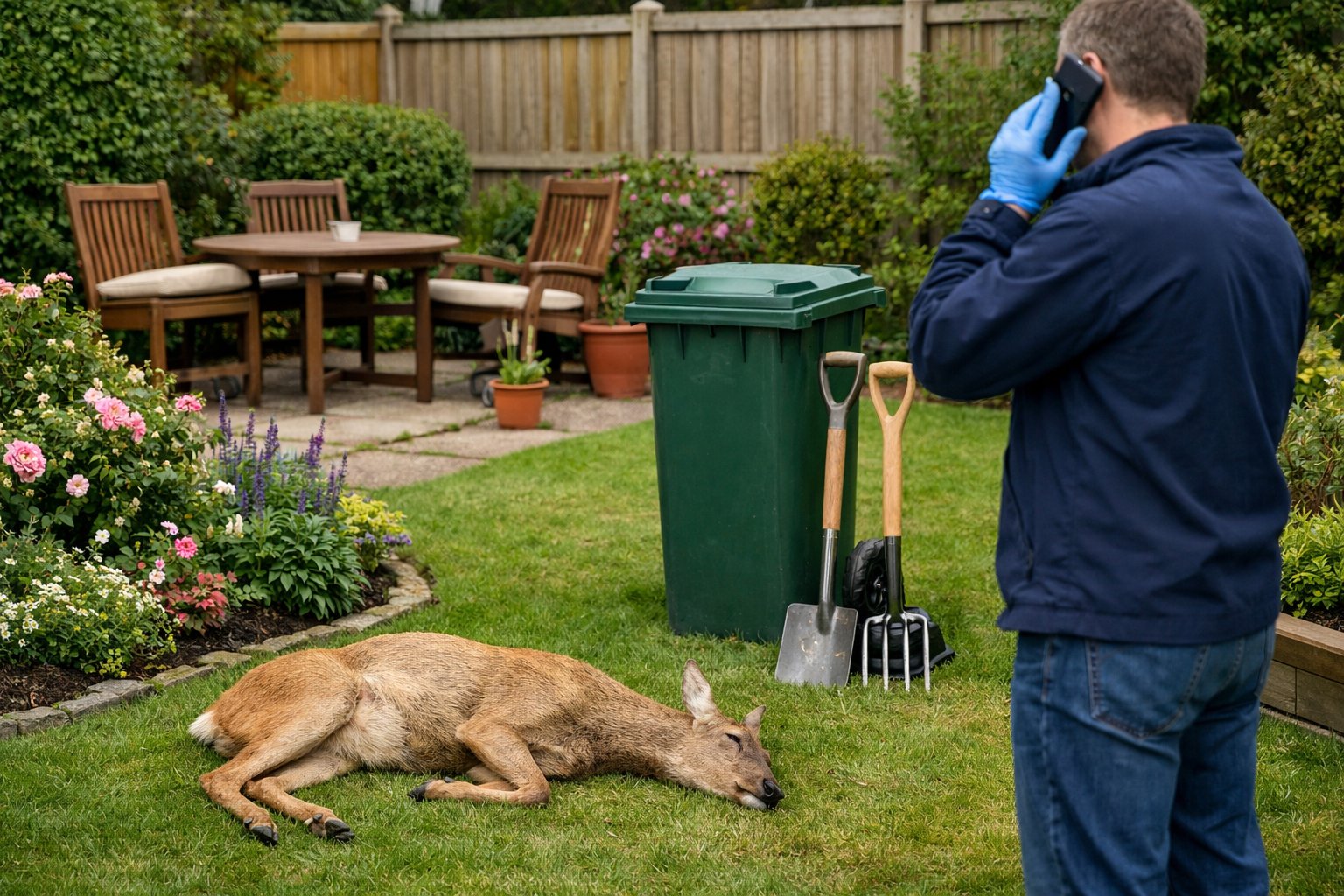
Act quickly but don’t rush. Check if the deer is a danger, avoid touching it, and decide whether to report it or arrange for removal.
If you have to move anything, use gloves. Keep kids and pets away, always.
Who to Contact About a Dead Deer
If the deer is on a public road or in a park, call your local council’s waste or highways team. They usually deal with roadkill and will arrange to pick it up.
Use 101 only if you think there’s been wildlife crime or if it’s something the police should know about.
If the deer is in your garden, you’re usually responsible. If you rent, let your landlord or property manager know. You can also call local animal control or a private removal company if the council won’t collect it from private property.
If you’re worried about health risks or need help identifying the deer, get in touch with Garden Wildlife Health or the British Deer Society. In Scotland, the SSPCA can help. In England and Wales, the RSPCA can give general advice.
Disposal Options for Deer Carcasses
Councils will collect deer from public land, but check their website or call to see what they do. If the deer is on your land, you can bury it (if allowed) or arrange for incineration. Make sure you follow local rules about how close you can bury it to water or buildings.
If you’d rather not deal with it, a pest removal company can collect and dispose of the deer for you.
Don’t eat the deer or let your pets near it. Always use gloves and wash your hands after any contact.
If you’re worried about foxes or other scavengers, cover the deer with netting or a sheet until someone comes to remove it. That helps stop the spread of disease and keeps things tidy.
What to Do if Disease or Wildlife Crime is Suspected
If you notice strange wounds, bleeding, sores, or an animal that’s extremely thin, don’t try to move it. Instead, you should contact the Animal and Plant Health Agency (APHA) right away—it’s actually a legal requirement.
APHA will let you know what to do next about testing and how to handle things safely. Honestly, it’s best to leave the animal where it is.
If you think someone’s been poaching, trapping, or harming wildlife—maybe you see gunshot wounds or other obvious injuries—call the police on 101. Ask for the wildlife crime officer.
It’s a good idea to take photos, but only from a safe distance. Jot down the time and exact spot where you found the animal.
Don’t touch anything or mess with the scene. Let the police or APHA investigators handle all the evidence.


