
Ever catch a glimpse of a deer darting away at the edge of the woods and wonder just how fast it really is? Most deer can sprint somewhere between 30 and 40 miles per hour for short distances, though some—like caribou or elk—can push even higher. That sudden burst of speed is their ticket out of trouble and over obstacles in a flash.
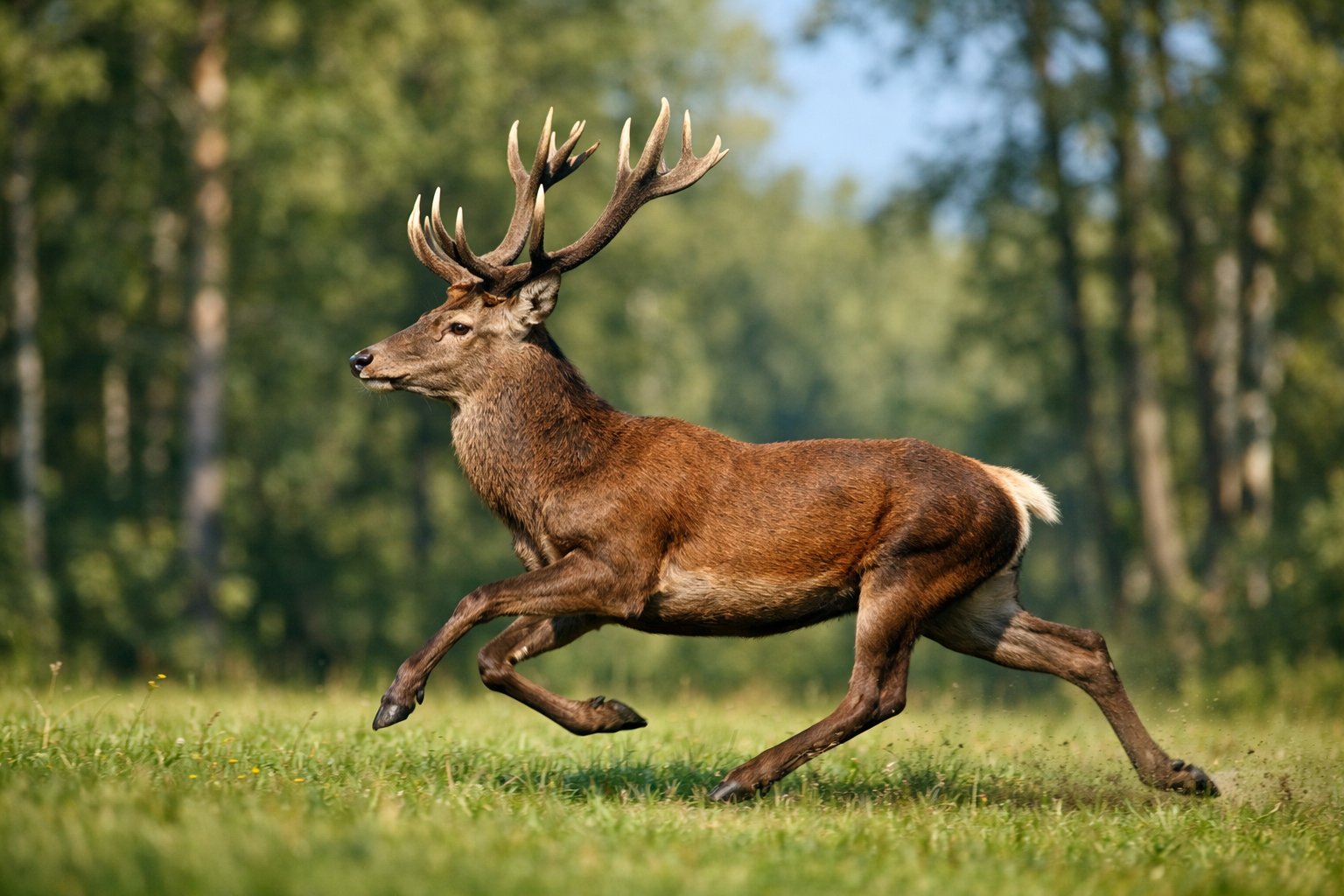
Let’s dig into how speed changes from one deer species to another, what really affects their running, and how their sprints stack up against other animals or threats. You’ll get some straightforward numbers and a few tips to help you make sense of wildlife encounters.
How Fast Can Deer Run?

Deer can really take off when they need to. They hit top speeds of about 30 to 50 mph—depends on the species, honestly—but you’ll usually see them moving slower in real life.
Typical Running Speed of Deer
Most of the time, when deer bolt across open ground, they’re moving at 20 to 30 mph. That’s enough to clear obstacles and leave you in the dust.
In the woods or on trails, they slow down a bit, trading raw speed for sharp turns and quick maneuvers. Agility comes in handy when trees get in the way.
White-tailed deer usually average 20 to 25 mph during a quick escape, especially if the terrain’s a mix of open and covered. Mule deer aren’t too different, though they sometimes use long, bounding leaps on slopes.
If you’re watching a young or injured deer, you’ll notice they can’t run nearly as fast.
Maximum Sprint Speeds
Some deer species can really crank it up for a few seconds. White-tailed and mule deer often top out around 40 to 45 mph, while caribou and elk can sometimes get close to 50 mph.
But those numbers? They only last for a few heartbeats. Deer can’t keep that pace up for long.
Ground surface, slope, and the deer’s health make a big difference. On flat, hard ground, a healthy adult stands the best shot at hitting top speed.
Sustained vs. Burst Speed
Deer act more like sprinters than marathon runners. They explode into a run, then slow down pretty quickly.
When predators chase them, deer mix short sprints with slower movement and clever zig-zags. They’ll use cover and quick turns to shake off danger.
If they have to run for a bit, they usually settle into a pace around 15 to 25 mph for a few minutes—terrain and stress level matter here.
How Fast Can a Normal Deer Run
A healthy adult deer you spot will probably manage a panic sprint at 25 to 35 mph. In a crowded suburban yard, they’ll run slower because of all the obstacles.
On a wide-open field, though, you might see them hit the high end of that range.
If you want precise numbers, check out the details for specific species like white-tailed or mule deer. “Normal” speed really depends on age, species, and where the deer lives.
For more on species differences, there’s a good guide here: how fast a deer can run.
Deer Species Speed Comparison

Speed isn’t the same for every deer. It changes with species, size, and where they live.
Some deer go all out for short dashes, while others keep a steady pace over rougher ground.
North American Deer Species Top Speeds
Most North American deer can hit 30 to 45 mph in a sprint. White-tailed deer usually reach 30 to 35 mph when they’re scared and running.
Mule deer can go a bit faster in open spaces, often getting up to 35 to 45 mph. Elk, with their big muscles, can hit about 45 mph for a short burst.
Moose look slow, but they can surprise you by running up to 35 mph. Caribou (or reindeer, if you’re in Eurasia) have both endurance and bursts, sometimes reaching 50 mph, which is wild for their size.
Terrain and age play a big part. Young, fit adults move faster than older or injured deer. Rocky woods slow them down compared to flat, open plains.
Fastest Deer in the World
If you’re looking for the world’s fastest deer, check out medium-sized, long-legged species. Caribou and some elk groups have the highest top speeds—caribou sometimes hit 50 mph.
Red deer and certain open-country deer can sprint at 40 to 45 mph. Most deer worldwide fall somewhere between 30 and 50 mph, depending on their build and the predators they face.
Smaller deer like roe deer are quick and agile, dodging danger with sharp turns and leaps instead of just running flat-out.
Globally, leg length and muscle mass really matter. If a deer lives in open country and has long legs, it’s probably a fast runner.
White-Tailed Deer vs. Mule Deer
White-tailed deer have the edge in thick cover. They’re nimble, zigzagging through forests and brush at 30 to 35 mph.
Mule deer do better in open, rugged ground. They’re bigger, with longer legs, and can reach 35 to 45 mph in a straight sprint.
If you watch closely, you’ll notice differences in how they move. Whitetails use quick footwork and sudden turns, while mule deer stretch out into longer strides and keep up higher speeds on open ground.
Pay attention to the habitat and how the deer moves—you’ll usually figure out which species just ran past.
Speed of Moose, Elk, Reindeer, Red Deer and Roe Deer
Moose weigh much more than other deer, but they can still run about 30–35 mph. They’ll surprise you with a quick burst of speed, though they tire out fast if the chase drags on.
Elk use their size and muscle to hit around 45 mph. You’ll see them sprinting powerfully across open plains.
Reindeer—well, wild caribou—often clock in near 50 mph for short sprints. They can also keep a steady pace for those long migrations, which is pretty impressive, honestly.
Red deer usually top out at about 40 mph. Their speed varies a bit, depending on the subspecies and where they live.
Roe deer are smaller, but don’t let that fool you. They’re super quick over short distances, darting away from predators with speed and agility instead of relying on long sprints.
Honestly, it’s kind of fascinating to see how each species uses speed differently. Heavy-bodied moose rely on power, elk need that extra burst on open ground, and reindeer have to balance speed with the endurance for long journeys.


