
You can find deer beds scattered across moorlands, along wood edges, and in quiet parklands—if you know what to look for. In the UK, deer usually pick sheltered spots like dense scrub, evergreen thickets, grassy clumps, or tucked-away slopes. They want cover, warmth, and a fast escape.
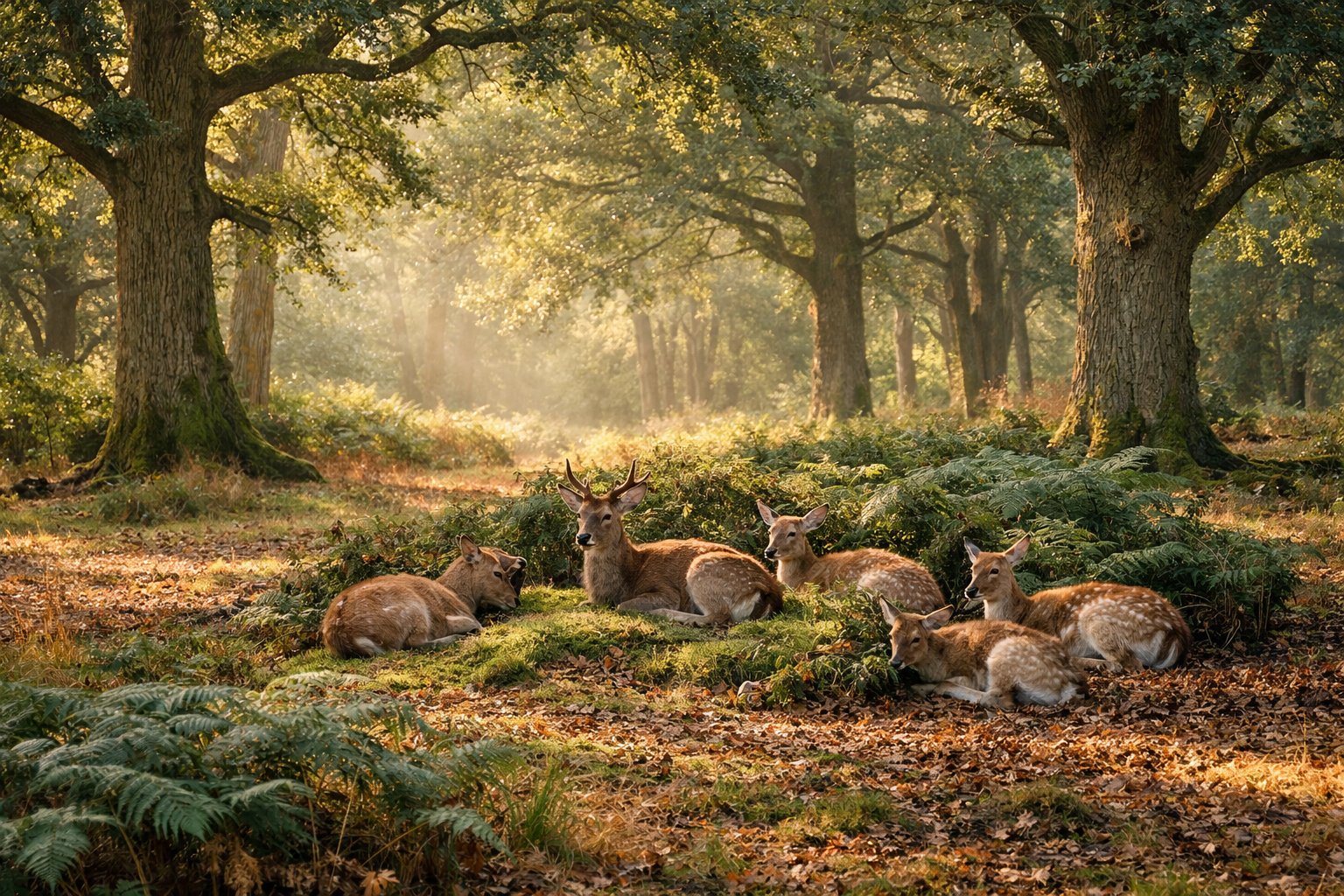
If you walk quietly at sunrise or dusk, you might spot flattened grass, oval-shaped depressions, or even a cluster of droppings—signs that deer have been bedding there. This article will help you spot those clues, figure out when deer nap or go into deeper sleep, and notice the differences between stags, hinds, and fawns so you’ll know where to look next.
Where Do Deer Sleep in the UK?

Deer choose spots with good cover, a quick escape route, and food nearby. You’ll usually find them in thick vegetation, on sheltered slopes, or near field edges where they can watch their surroundings and bolt if needed.
Typical Bedding Locations
Deer like dense cover that hides both their bodies and their scent. You might find flattened, oval beds in tall grass, bramble patches, or under thick hawthorn and willow.
Bucks often use bigger beds on ridge points where they can look out across fields but still have cover close by. Does and fawns stick to thicker shelter like scrub or evergreen thickets—places that hide fawns and block the wind.
Inside woodlands, deer bed down under fallen logs, behind root wads, or in the understory where bracken and saplings make good hiding spots. If you check field margins and hedgerows, you’ll sometimes find beds close to feeding areas.
Look for fresh hoof prints, droppings, or bent-but-not-broken plants. Beds stand out more after rain or during a frost, when those depressions become easier to spot.
South-Facing Slopes and Seasonal Choices
When winter hits, deer move to warmer spots. South-facing slopes get more sun and usually have less snow or frost, so deer use them for warmth and easier walking. You’ll see deer bedding in conifer shelterbelts on these slopes during cold snaps since evergreens block wind and hold in heat.
As the seasons shift, so do bedding choices. In spring and summer, tall grass, reedbeds, and crop edges make cool, hidden beds for fawns and does. During the rut or when things get busy, deer might pick steeper, harder-to-reach slopes or change beds more often to keep from being found.
Urban and Suburban Sleeping Spots
In towns and villages, deer get creative. They use overgrown gardens, allotments, and railway embankments to bed down. You’ll sometimes spot them hiding in thick shrubs, laurel beds, or behind sheds where it’s quiet at night.
Small woods and park edges also work as safe bedding near food like ornamental shrubs. Roe and fallow deer seem to handle these areas pretty well. If you look along hedgerows, green corridors, or under evergreen hedges, you might see flattened patches where they’ve rested.
Deer in towns put up with a bit more noise, but they still pick spots with a fast escape to green space.
How and When Do Deer Sleep?

Deer rest in short bursts, always keeping alert, and pick beds that offer cover and a quick exit. Let’s look at when they nap, how groups behave differently from loners, if they ever sleep standing, and how much rest they really get.
Daily Sleep Patterns
Deer are crepuscular, so you’ll spot them most often at dawn and dusk. During the day, they take short naps in dense cover like hawthorn, bramble, or conifer thickets.
These micro-naps last just a few minutes and help deer save energy while staying on guard. At night, if they feel safe, they might rest longer.
On bright, moonlit nights, deer pick heavier cover to avoid being silhouetted. When people are around or predators are close, deer change their timing—they’ll rest more during the day and move about at night.
Group and Solitary Sleeping Habits
Does and fawns tend to bed in small groups. You’ll sometimes see several does lying within sight of each other so they can watch for danger and look after their young.
Fawns stay hidden in tall grass while their mothers graze nearby and return to feed them. Bucks usually sleep alone.
A male deer picks a tucked-away spot, maybe on a ridge or under thick cover, to avoid fights and stay hidden. During the rut or if there’s hunting pressure, both sexes might switch beds more often so no one can predict where they’ll be.
Do Deer Sleep Standing Up?
Deer don’t sleep standing up like horses do. Most of the time, you’ll find them lying down, making shallow oval depressions in grass or leaves.
Sometimes, while feeding or staying alert, they’ll stand and seem to doze—but that’s just light rest, not real sleep. Standing lets them react fast, but they only get proper deep sleep when lying down in a safe spot.
If you come across flattened plants without broken stems, odds are you’ve found a place where a deer bedded down, not just stood for a while.
How Long Do Deer Sleep?
Deer rack up about 8 to 12 hours of rest in a 24-hour stretch. Only a couple hours—maybe 2 or 3—count as deep, uninterrupted sleep.
They spend the rest of their downtime taking lots of short naps, sometimes just a few minutes at a time.
Seasons and risk really change how much sleep they get. In the winter, deer often rest longer in cozy, south-facing spots or under thick evergreens to hang onto warmth.
If they sense a lot of danger, they break up their sleep even more, grabbing quick rests and moving around to stay safe.


