
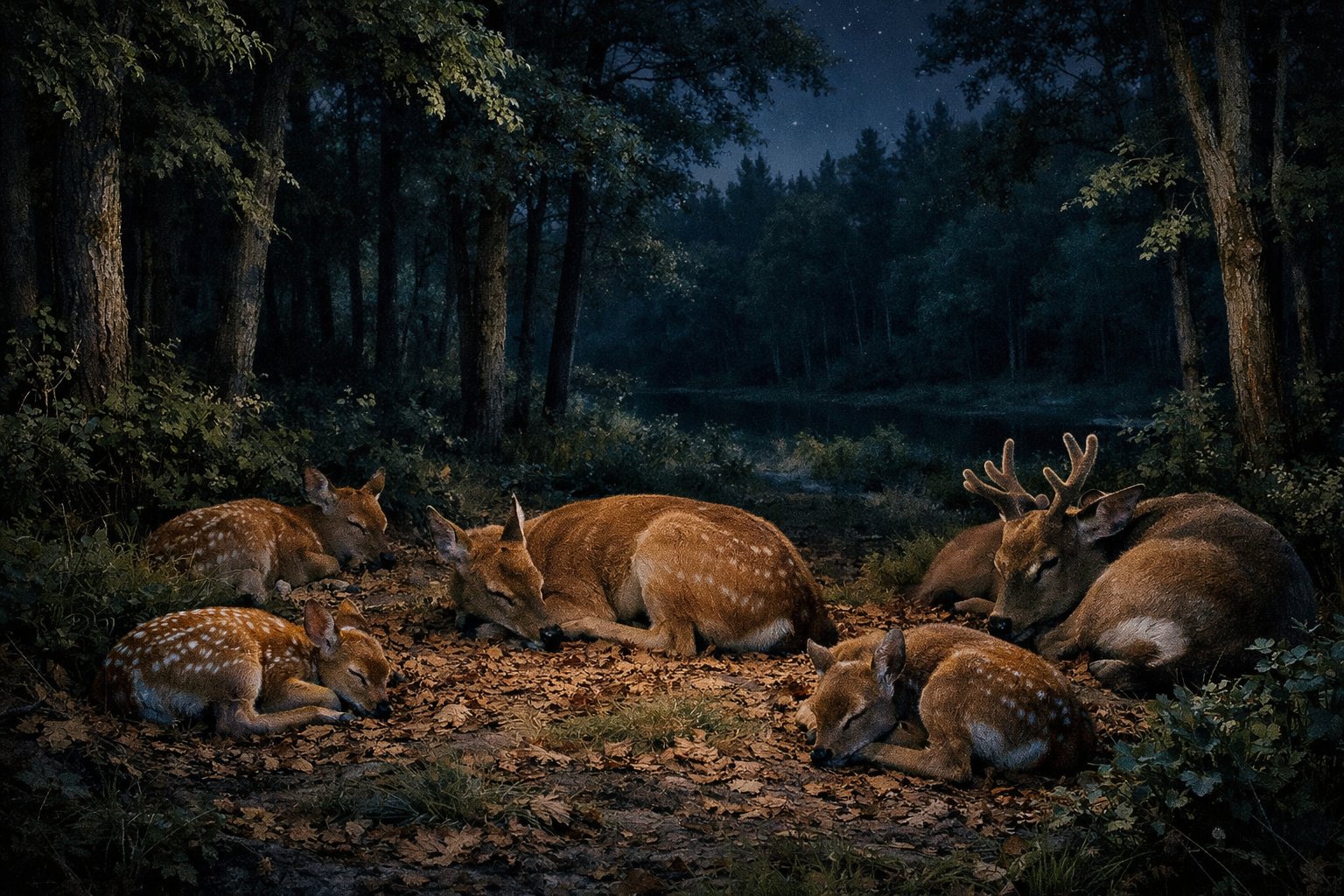
Ever spot a deer at dusk and wonder where it disappears once the sun goes down? Usually, deer bed down in sheltered places—thick brush, the edge of a forest, or on raised ground with a good escape route. They want to sleep but stay ready to bolt at the first sign of trouble.
This mix of safety, warmth, and food access really matters to them.
If you keep reading, you’ll get a better idea of how deer pick their sleeping spots, when they sneak in quick naps, and how things like season, wind, or people nearby change their habits. Honestly, once you get a feel for these patterns, spotting bedding areas gets a lot easier.
Where Do Deer Sleep at Night?

Deer actually pick spots with good cover, a clear view, and a quick escape route. They look for a place that keeps them safe and close to food or shelter.
Typical Nighttime Bedding Spots
You’ll often find deer bedding on forest edges, ridge tops, or along brushy field margins. These places let them keep an eye on things while staying hidden. If you’re looking for whitetails, check near oak trees or fruit trees—they love to feed there at night.
Mule deer go for rocky benches or sagebrush edges out in the open. They like a spot that fits their style.
In winter, evergreen thickets, pine stands, and rows of cedar become popular because they block wind and trap a little heat. Wetlands? Deer sometimes use tiny islands or thick cattail patches to avoid predators. Out in farm country, you’ll see them bedding near corn or soybean fields, or even along old fencerows.
You can spot beds by looking for oval dents in the grass, flattened spots, hoof prints, droppings, or plants that got bent but didn’t break.
Factors Influencing Nighttime Bedding Sites
Wind direction really matters. Deer usually face into the breeze so they can sniff out danger. When you’re scouting, pay attention to which way the wind blows.
Deer also bed close to food when they feel safe—sometimes just a few hundred yards away. If people or predators are around, they’ll move deeper into thick cover or away from trails.
Cold or deep snow pushes deer to lower slopes or south-facing hillsides where it’s warmer. They want water, easy escape routes, and a good terrain break. If you plant evergreen shelterbelts or leave wild field edges, you might notice deer changing their bedding spots on your property.
Seasonal Changes in Nighttime Bedding
Summer pushes deer into shaded, cool places—tall grass, brush piles, or upland woods. Fawns hide in thick stuff while their mothers feed at night and come back to nurse. Beds often show up close to water when it’s hot.
In fall, things change. Bucks move around more for the rut and often pick out-of-the-way beds with a good view. When crops get harvested, deer shift to field edges or hedgerows.
Winter is all about staying warm. Deer look for south-facing slopes, thick stands of conifers, or hollows out of the wind. Heavy snow drives them to lower ground and spots with food close by.
Nighttime Group and Solitary Sleep Patterns
Does usually bed in groups, especially when they have fawns. Group sleeping means more eyes and ears to watch for danger. You’ll find these beds in thick understory near food and safe spots for fawns.
Bucks mostly bed alone, picking hidden spots or ridge tops with fast escape routes. During the rut, they don’t sleep as much and might use more than one small bed. Mule deer and whitetail bucks act pretty similar, though they pick spots that fit their landscape.
Fawns stick close to thick cover near their mother’s bed until they’re old enough to follow. If you’re managing land or hunting, it’s smart to leave group bedding areas alone at night.
How and When Do Deer Sleep?

Deer don’t just crash out for hours. They rest in short bursts and stay partly awake, always ready to bolt if something spooks them.
Deer Sleep Patterns and Duration
Deer are crepuscular, meaning they’re busiest at dawn and dusk. You’ll probably catch them feeding then.
During the day, they take lots of little naps—anywhere from 3 to 10 minutes at a time. All those naps add up to about 8–12 hours of rest in a day.
Deer rarely get deep, uninterrupted sleep. They might manage 2–3 hours of deep sleep total, split up into short bits. Usually, they tuck their legs under to stay warm and so they can jump up fast if needed.
Season and pressure change their habits. In hunted areas, deer bed in thicker cover and shift more activity to nighttime.
Group vs. Solitary Sleeping Behaviors
Does usually bed down together, especially with fawns around. Extra eyes and ears let them nap a little longer. Moms leave fawns hidden in tall grass or brush while they feed nearby.
You might notice several flattened circles close together where does have slept. Bucks, on the other hand, tend to bed solo outside the rut. They pick hidden spots with good views and quick exits.
Sleeping alone helps bucks avoid rivals and stay unnoticed. When hunting pressure or predators ramp up, both bucks and does change things—does might spread out, and bucks push deeper into cover.
Adaptations for Safety While Sleeping
Deer usually pick beds that offer some cover, decent visibility, and a quick way out. They’ll often face into the wind, hoping to catch any warning scents, and they seem to lean toward spots near trails or edges so they can bolt if needed.
Want to spot a bedding area? Look for those oval-shaped depressions, grass that’s bent (but not totally flattened), and maybe a few tracks nearby.
While resting, deer keep their ears twitching and heads up during lighter sleep. If they feel really safe, they’ll tuck their heads down for a deeper nap, but honestly, they still wake up in a flash.
Weather definitely plays a role. In winter, deer seek out south-facing slopes or tuck under evergreens to stay warm. On especially bright nights, they move into thicker cover—probably to avoid standing out like a spotlight.


