
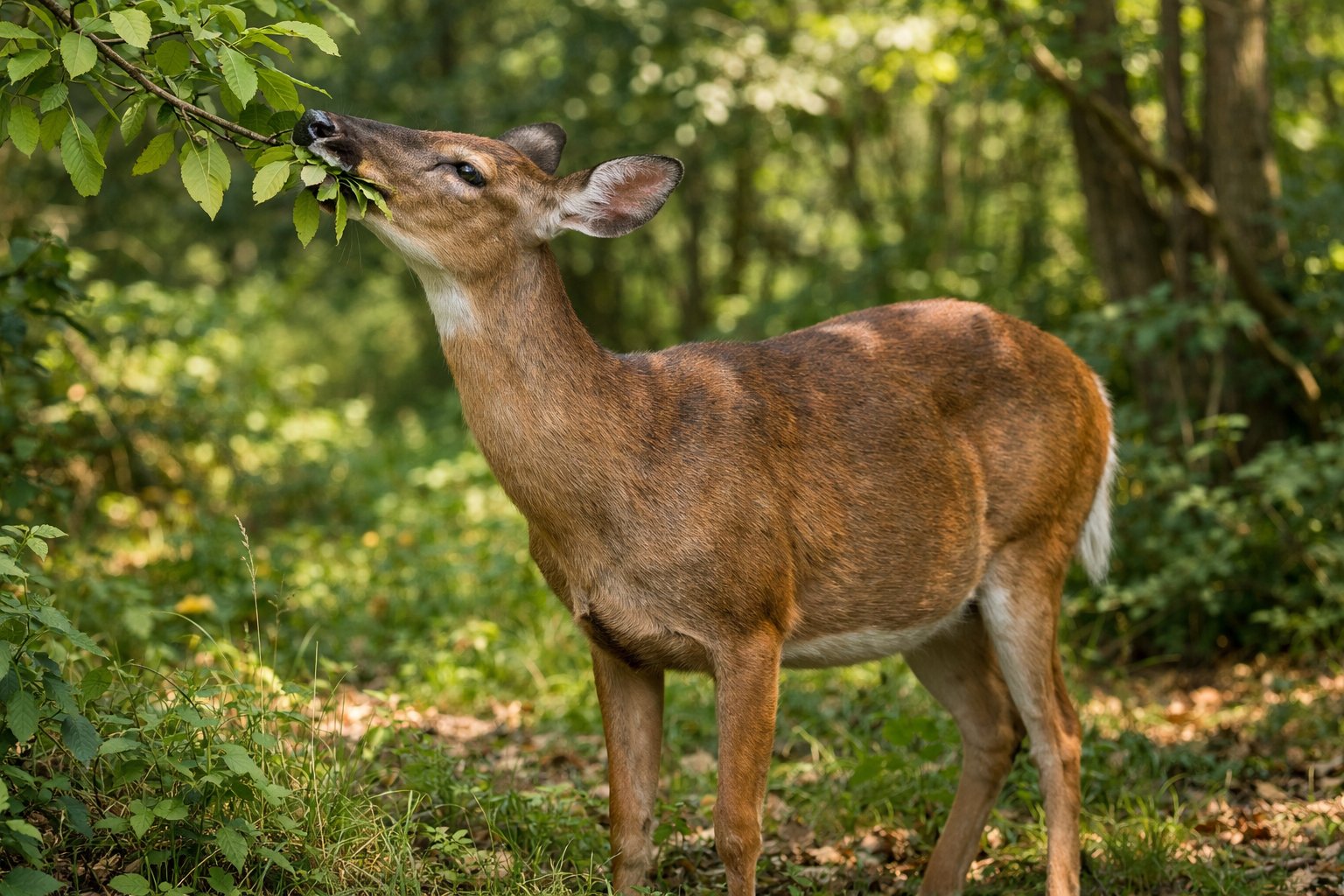
You’ll see deer nibbling on leaves, fruits, and grasses just about anywhere—woods, fields, even right at the edge of your yard.
Deer eat all sorts of plants: tender shoots, leaves, nuts like acorns, fruits like apples, and, if they get the chance, some crops too. This article takes a closer look at what they eat, how their diet shifts with the seasons, and which foods they seem to like best.
If you want to attract deer, protect your plants, or just figure out why they keep showing up in your yard, you’ll get a sense of which foods matter most and how deer pick them.
You’ll see clear examples of their main foods and a simple breakdown of favorites in each category—so next time you spot a deer, maybe you’ll guess what’s on the menu.
Core Foods in the Deer Diet
Deer rely on a mix of woody and herbaceous plants, and that mix really changes as the seasons move along.
They usually go for the most nutritious parts: tender leaves, buds, fruits, and young shoots. These help with growth, lactation, and antler development.
Browse: Leaves, Twigs, and Shoots
Browse means the leafy and woody bits of trees and shrubs you’ll often see in the forest understory.
Deer munch on willow, aspen, maple saplings, dogwood, and shrubs like bitterbrush and sagebrush. They target tender leaves, buds, and young shoots since those parts have more protein and digest easier than old, tough wood.
In winter, browse becomes even more important.
When snow buries the low plants, deer strip twigs and bark from white cedar, arborvitae, and young hardwoods. If you’re managing habitat, try to keep a mix of native shrubs and young trees around so deer have options all year.
What might you see where you live? Browse use depends on what’s available and the deer species in your area.
Oaks and other trees drop nuts in autumn, but browse sticks around as a steady food source through the tougher months.
Forbs and Herbaceous Plants
Forbs are broad-leaf, non-woody plants—think goldenrod, ragweed, asters, pokeweed, and sunflower seedlings.
Deer eat these especially in spring and summer when they need extra protein and new growth is everywhere. Forbs digest easily and help fuel fawn growth and antler building.
You’ll notice deer going for new leaves, flowering tops, and seedheads. In fields or along woods edges, forbs can make up a big chunk of their diet during the warmer months.
If you want to help out deer, leave some native forbs and don’t mow everything down. A good mix of these plants gives deer the nutrients they need as the season rolls on.
Grasses and Grass-Based Foods
Grasses and sedges aren’t the main part of a deer’s diet, but they still matter, especially in open areas and early spring.
You might catch deer grazing on young, green grass shoots when other foods are running low or when they just need a quick energy boost. Grasses have less protein than browse and forbs, and deer usually eat them less than 10% of the time in a year.
Still, grassy field edges, clover patches, and crop cover—like soybeans or grains—can offer good forage in farm country or suburbs.
If you’re managing land, mix some grasses in with forbs and browse. That way, deer get energy from grasses and better nutrition from forbs and woody plants.
Favorite Deer Foods by Category

Deer go for high-energy foods in fall, protein-rich plants in spring and summer, and woody browse in winter.
If you want to know what attracts or repels them, pay attention to acorns and nuts, soft fruits, legumes and crops, and some common garden plants.
Nuts and Hard Mast
Acorns top the list in fall, especially from white oak and other oaks.
White oak acorns tend to be sweeter, and deer seem to eat them up fast. Hard mast also means hickory nuts, chestnuts, pecans, and beechnuts—these all give deer fat and calories heading into winter.
If you have mast-producing trees nearby, a good oak crop can feed a lot of deer. Deer often pick through leaf litter for fallen nuts and might travel quite a distance for a good mast stand.
If you’re managing land, keep a mix of oaks and let some mast stay on the ground so deer can fatten up before the cold sets in.
Fruits and Soft Mast
Soft mast gives deer sugar and vitamins.
They’ll eat apples, pears, persimmons, and wild berries like raspberries, blackberries, and elderberry. Deer usually grab fallen fruit first, then go for what’s left on the tree if they can reach it.
Berries and soft fruits matter most in late summer and fall, when deer need quick energy. If you plant fruit trees, expect deer to browse low limbs and young trunks.
Leaving fruit on the ground under trees will bring in deer, but it could also mean more animals and a higher risk of disease.
Legumes and Agricultural Crops
Deer eat a lot of farm crops.
Corn and cereal grains—like wheat, oats, and rye—give them calories. Soybeans, peas, and alfalfa provide protein. Clover and white clover are pretty common choices for food plots in spring and summer.
You’ll see deer feeding in soy and corn fields after harvest, and on green soybean leaves in summer. Food plots with legumes like alfalfa or clover attract does and bucks that are still growing.
Be careful, though—big, reliable feeding spots can change how deer move and might bump up disease risk.
Garden and Landscape Plants
Deer munch on all kinds of garden plants. They’ll go for veggies like tomatoes, beets, sweet potatoes, pumpkins, and turnips.
Ornamentals don’t stand much of a chance either. Hostas and daylilies are favorites, and honestly, roses and tulips seem to vanish overnight.
Some landscape plants just don’t appeal to deer at all. Yew, azalea, rhododendron, holly, and English ivy usually get left alone.
If you’re hoping for a deer-resistant yard, give those species a try. Maybe skip planting tender-leaved or low-growing fruiting plants near the edges—deer seem to love those easy snacks.


