
You’ll find deer all over Germany—from the quiet edges of small towns to the depths of sprawling national parks. Several species stick around year-round. Roe deer, red deer, and fallow deer are pretty common, and sometimes moose even wander into the eastern parts.
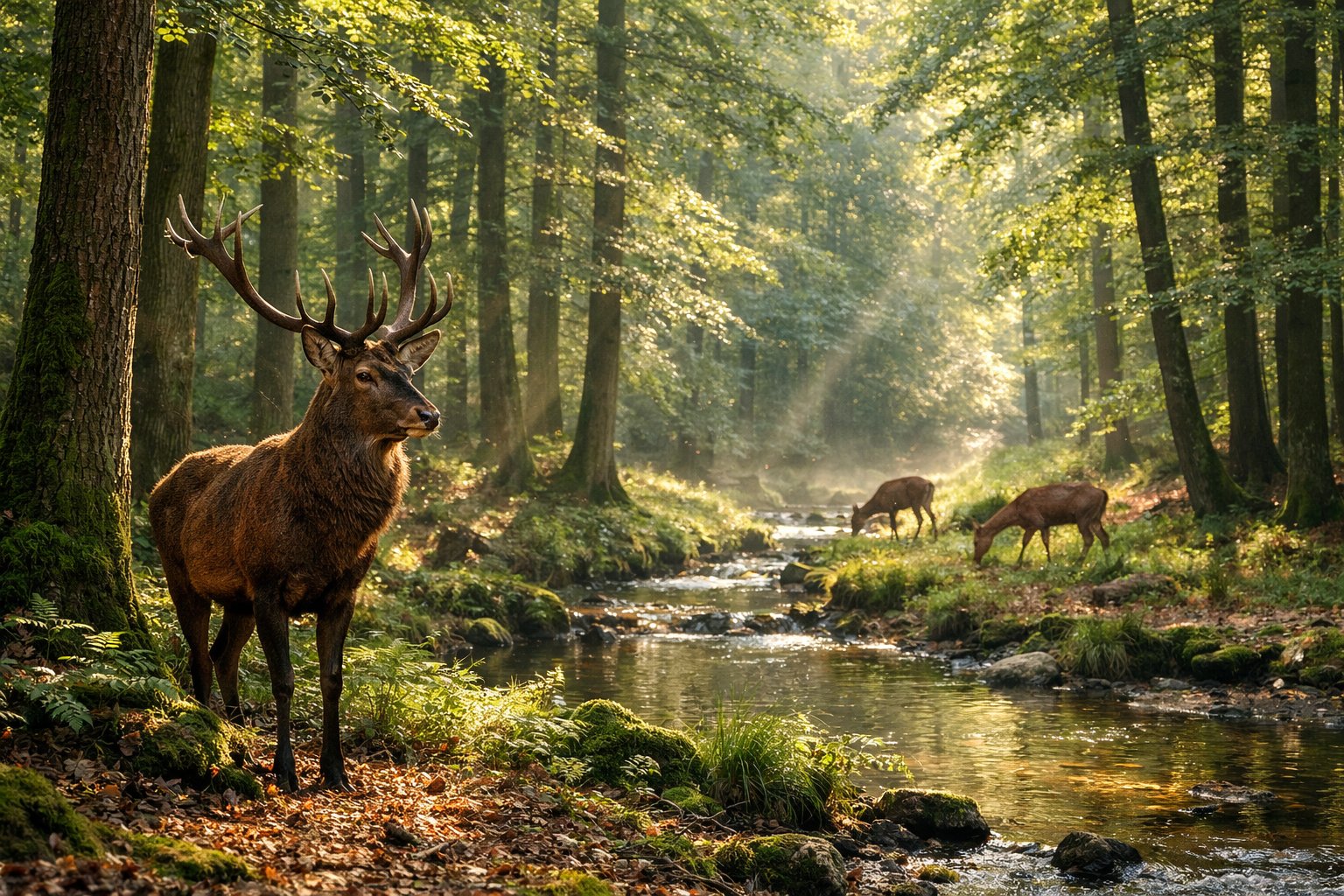
At dawn or dusk, you might spot them in forests, fields, or even some city parks. It’s interesting to see how hunting and conservation efforts shape their numbers, too.
Curious which species you might bump into? Or where to look? Let’s dive in and see how people and wildlife end up sharing the same landscape.
Deer Species Found in Germany

Germany’s deer include big forest dwellers, nimble roe deer, and fallow deer brought in long ago. You’ll run into them in national parks, woods, or even on managed estates. Their numbers and habits change depending on where you are.
Red Deer: The Majestic Forest Giant
Red deer (Cervus elaphus) are the largest native deer you’ll see in Germany. Males grow big antlers every year and stick to forested regions like the Harz, the Bavarian Alps, and parts of the Black Forest.
You’ll most often catch groups of them in quieter, continuous woods or up in the higher hills. They munch on grasses, shrubs, and young tree shoots.
Forest management and hunting seasons help keep their numbers in check, so they don’t overeat the woods. If you’re hoping to see them, try early morning or late evening in national parks or big state forests.
Roe Deer: Germany’s Most Abundant Species
Roe deer (Capreolus capreolus) are the smallest and, honestly, the most common deer in Germany. You’ll spot them near field edges, hedgerows, or even in suburban parks—sometimes easier than in deep woods.
They’re quick, super shy, and really like twilight hours. Roe bucks have short, upright antlers with just a few points.
Their population spreads across all kinds of fragmented landscapes. But road crossings and shrinking habitats still cause problems for some local groups. If you want to learn more, there are plenty of practical guides on hunting and wildlife management in Germany.
Fallow Deer: Historical Residents and Their Range
Fallow deer (Dama dama) have lived in parts of Europe for ages and now roam across Germany’s parklands, mixed forests, and some old hunting estates. Their spotted summer coats and the males’ broad, palm-shaped antlers make them easy to recognize.
They often gather in bigger herds, especially in managed areas. Some estates released them centuries ago, so you’ll find semi-wild groups here and there.
Sometimes, fallow deer mingle with sika deer or other escaped species in certain spots, so local populations can look a bit different. Game parks and historic forests are great places to see them up close.
Deer Habitats, Wildlife Coexistence & Conservation

Deer in Germany choose mixed forests, open meadows, and the edges of farmland as their homes. They move between hiding spots and feeding areas, and various management efforts change where you’ll actually see them.
Common Habitats: Forests, Meadows, and Farmlands
Most of the time, you’ll find deer along forest edges where trees meet open fields. German forests like the Schwarzwald (Black Forest) and protected spots such as Bavarian Forest National Park give them plenty of cover and food.
Young shoots, grasses, and crops at the edges pull roe deer and red deer out into meadows and farmland. On farms, deer use hedgerows and field margins to hide.
In places like Brandenburg, with its patchwork of woods and fields, deer are everywhere. They feed in open areas at dawn and dusk, then slip back into the woods during the day.
Forest edges and clearings offer salt and mineral-rich plants that deer need.
Wildlife Interactions: Foxes, Wild Boar, and Other Mammals
Deer share their world with a bunch of other mammals. Foxes and hares use the same field edges and hedges.
Foxes mostly hunt small mammals and sometimes fawns, while hares munch on grasses and crops near the same spots as deer.
Wild boar dig up meadows and young woods, changing the ground cover and making wallows that deer might use. You’ll also come across badger setts, lynx in some national parks, and even introduced mouflon on certain hills.
All these interactions tweak food availability and predator pressure, which shifts where deer decide to feed and rest.
Nature Conservation and Sustainable Hunting
In Germany, you’ll find conservation efforts that try to balance deer numbers with the health of the habitat. National parks like the Bavarian Forest actually protect core forest areas, letting deer act more naturally since there’s less human interference.
In managed forests, foresters and hunters team up to stop deer from overbrowsing and harming young trees. They keep an eye on populations, remove sick animals, and focus on species like wild boars that mess with crops.
You might spot fencing, wildlife corridors, or browse-tolerant trees planted to help seedlings survive, while still giving deer space to roam. Local plans often look at ways to reduce car collisions, keep seedlings safe, and make sure forests stay connected.


