
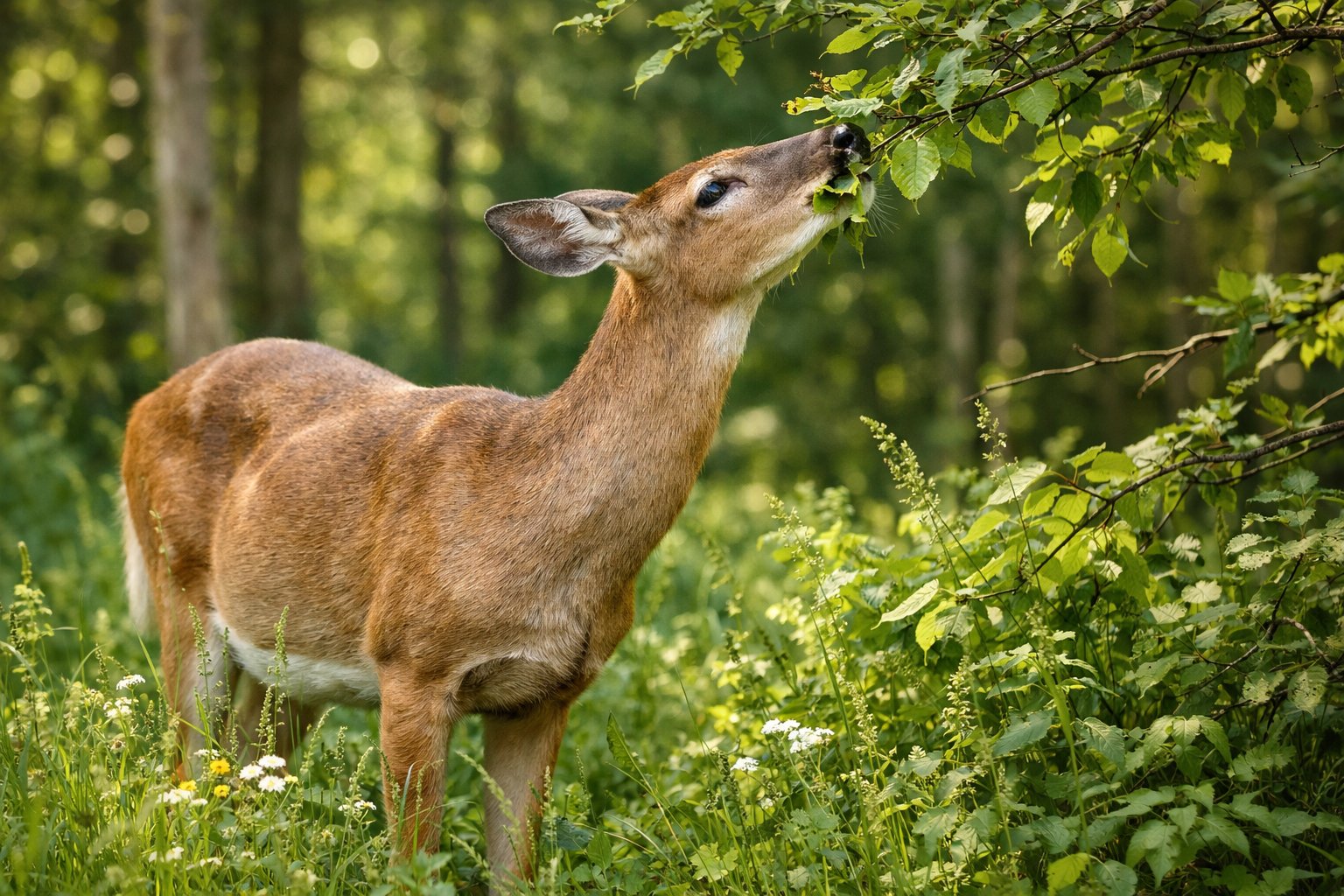
Ever watched a deer munching away and wondered how they manage to get by all year? Deer mostly eat plants—leaves, twigs, fruits, nuts, and grasses. They switch up their menu depending on the season and what’s around.
They survive by browsing a wide mix of vegetation and shifting their menu with the seasons.
If you’re trying to protect your garden or just curious about how deer find food, you’re in the right place. I’ll break down what deer really like to eat, what they avoid, and some easy ways you can manage deer near your home.
Core Components of a Deer Diet
Deer eat all sorts of leafy greens, woody plant parts, grasses, forbs, fruits, and nuts. Their diet changes with the seasons—think high-protein greens in spring, energy-packed nuts and fruits in fall, and woody browse when winter hits.
Tender Leaves and Shoots
Deer really go for young, tender leaves and new shoots. These are loaded with protein and much easier to digest.
You’ll spot them nibbling fresh growth from maple, willow, and ash in the spring and early summer. These plants help does bounce back from winter and support fawn growth or antler development in bucks.
Young shoots from vines and shrubs—raspberry and honeysuckle come to mind—offer a soft texture and plenty of nutrients. Deer often nip the tips of stems and buds instead of gnawing on tough, mature leaves.
If you see a patch of bright green regrowth, chances are deer have been using it as a buffet.
Browse: Woody Plants and Shrubs
Browse covers twigs, buds, and leaves of woody plants. In fall and winter, when grasses and forbs get hard to find, browse becomes a staple.
You’ll spot deer chewing oak leaves and twigs, dogwood stems, and maple buds. They sometimes strip tender bark and chomp on small branches to reach the good stuff inside.
Shrubs like elderberry and greenbrier pull double duty, offering both food and cover. When pickings get slim, deer won’t turn down less tasty plants like sumac.
Grasses and Forbs
Grasses and forbs make up a lot of the deer diet in spring and summer. You might see deer grazing on bluegrass or ryegrass when they can get it.
Forbs—those broad-leaf, non-woody plants like clover, dandelion, and goldenrod—are favorites. They’re packed with more protein and minerals than older, tougher grasses.
Deer flock to crops like alfalfa and soybeans in farm country. They usually pick the young, soft growth and skip the tough, fibrous blades.
Forb patches near the woods? Those are prime feeding spots, since they offer both food and a quick escape if needed.
Fruits and Nuts
Fruits and nuts give deer the sugars, fats, and carbs they need for energy and building up fat. In summer and fall, they’ll happily gobble up blackberries, raspberries, elderberries, and apples.
These soft fruits deliver quick energy and vitamins. When autumn rolls in, hard mast—acorns, beechnuts, chestnuts, hickory nuts, and pecans—becomes crucial.
White oak and red oak acorns taste different because of tannins, which affects which ones deer like best. You’ll often see deer gathering under oaks in fall, fattening up for winter.
How Deer Choose and Digest Their Food

Deer look for plants that offer the most nutrition with the least effort. Their bodies and stomachs let them eat all sorts of roughage—twigs, leaves, fruits, and grasses—and still get energy from tough plant fibers.
Feeding Anatomy and Adaptations
You can spot how deer pick food just by watching them. Their eyes sit back from their nose, so they can check out leaves and buds as they eat.
Their narrow, nimble lips help them pluck small stems and young leaves, so they don’t waste effort on the tough stuff. Deer have strong, flat molars for grinding up fibrous plants.
They don’t have upper front teeth, so they press plant parts against a hard dental pad to tear them off. Their long necks and strong shoulders let them reach low shrubs or stretch up for higher branches.
They often test new plants by taking small bites at first. That way, they can avoid anything toxic and pick the best parts.
This picky eating shapes which plants grow back in a field or forest.
Four-Chambered Stomach and Digestion
You depend on digestion to turn food into energy, and deer do too—but with a twist. Their four-chambered stomach makes it possible.
The rumen, the first chamber, acts like a fermentation tank. Microbes in there break down tough cellulose, turning it into calories from fibrous browse that most animals can’t touch.
Next, food moves to the reticulum, where dense particles get trapped and form cud. Deer bring up that cud and chew it again, breaking it down even more for the microbes.
The omasum handles water, minerals, and some fatty acids, shrinking the volume before the rest of the gut deals with it.
Finally, the abomasum releases acids and enzymes to digest proteins and those helpful microbes from the rumen. This step-by-step process keeps deer going, no matter if it’s summer or the dead of winter.
Concentrate Selectors: Selective Feeding Habits
Deer belong to the “concentrate selectors” group, which actually matters quite a bit when you’re deciding what to plant or protect. Unlike bulk grazers, they go for the most digestible, high-nutrient bits—think new shoots, buds, fruits, and forbs.
They pick those parts because their rumen microbes handle easy-to-digest stuff much better. That’s probably why you’ll see deer chasing after forbs and young browse in spring, then switching to mast like acorns in the fall.
When high-quality forage runs low, they still munch on woody browse. But honestly, their intake drops, and they have to depend more on fermentation to get by.
If you’re managing land or a garden, you can bet deer will hit tender growth and fruiting plants first. Knowing how picky they are can help you plan what to plant and figure out how to shield your trees from heavy browsing.


