
Ever spot a deer in the woods and wonder what to call the female? Here’s the quick answer: most people call a female deer a doe, but in some species, she’s a hind or a cow. It’s a little quirky how the name changes depending on species and size, isn’t it?
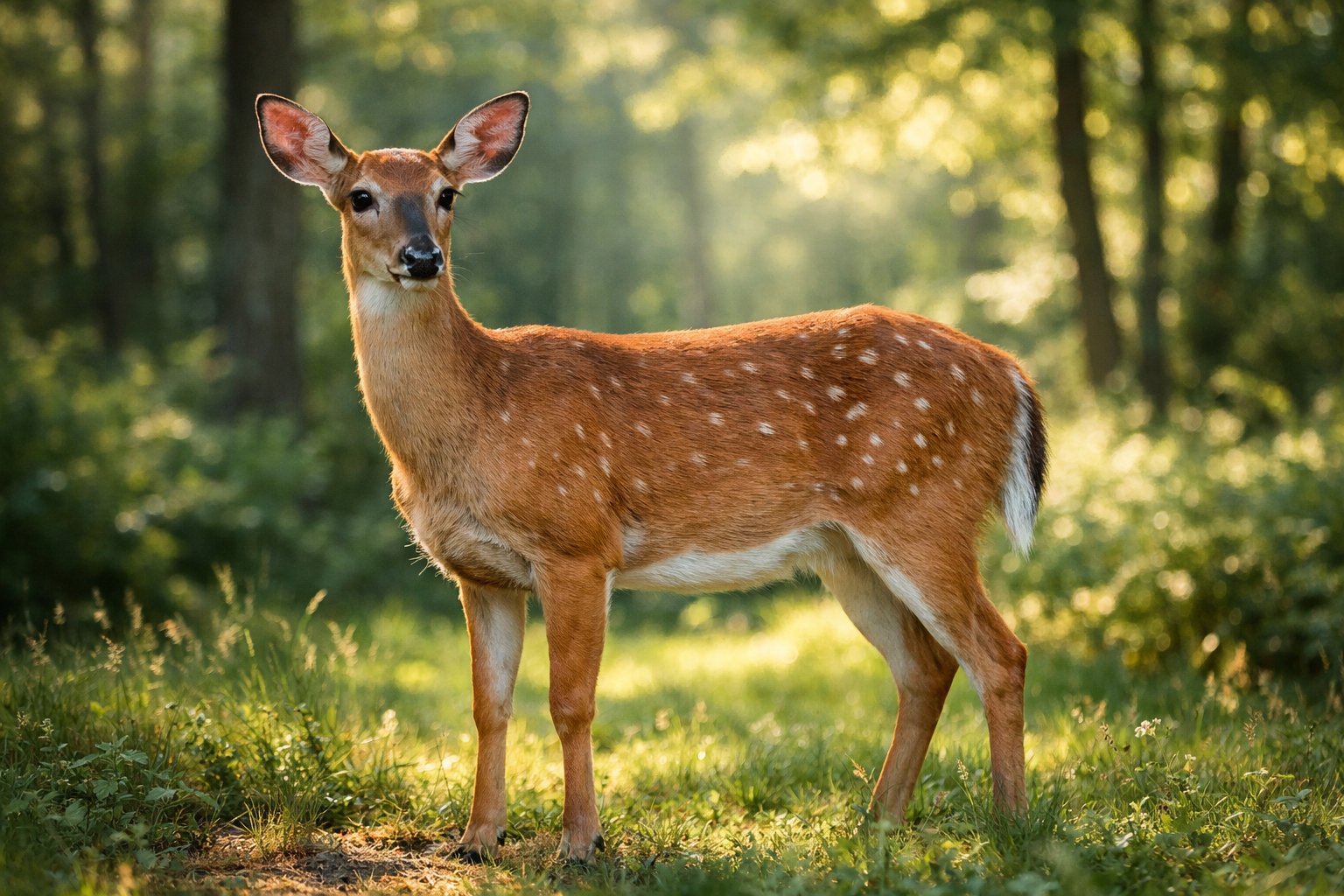
Let’s get into when to use doe, hind, or cow, and what those words actually tell you about the animal’s size, habits, and family life.
You’ll see clear examples from deer you probably recognize, so next time you’re out or watching a nature show, you’ll know the right name.
Names for a Female Deer: Doe, Hind, and Cow

People use three main names for female deer, and these change with species, size, and even where you live.
Each name matches up with specific deer types and the male names you might hear in the same species.
When to Use Doe, Hind, or Cow
Most of the time, for small and medium deer like white-tailed deer, mule deer, roe deer, fallow deer, or muntjac, “doe” is the right word.
If you see a female deer in a park or a patch of woods in North America or Europe, calling her a doe almost always works.
Use “hind” for bigger Old World deer like red deer and sika deer, especially when they’re adults over two years old.
“Hind” goes with “stag” for the male and comes from an old European tradition.
“Cow” is for the real giants: moose, elk (wapiti), caribou (reindeer), and sometimes the big North American elk.
You’ll also hear “cow” when someone talks about a pregnant female, across several species.
Female Deer Names by Species
White-tailed and mule deer females? They’re does, and their male partners are bucks.
Roe deer females are also does, with bucks for males.
Fallow deer and muntjac stick with the same pattern—does for females.
Red deer and sika deer use “hind” for females and “stag” for males.
Elk (wapiti) and moose females are cows, and their males are bulls.
Caribou and reindeer are a bit odd: females are cows, and both sexes can grow antlers, which isn’t typical for deer.
Chinese water deer and some Asian species don’t have antlers on either sex, but folks still call adult females does.
If you’re in a specific region, it’s worth checking the local species—black-tailed and spotted deer usually follow these same naming rules.
Comparison to Male Deer Names
Match up female and male names to avoid confusion.
Does go with bucks in most familiar species, like white-tailed, mule, and roe deer.
Hinds pair with stags for red and sika deer, a nod to British-style naming.
Cows go with bulls in the biggest species: cow elk, cow moose, and cow caribou.
Some males have unique names: buck for the smaller and medium deer, stag for the bigger Old World types, and bull for the largest.
Knowing which species you’re looking at really helps you pick the right male name, especially if you’re describing antlers or size.
Physical and Behavioral Traits of Female Deer

Female deer tend to be smaller than males and don’t usually have antlers.
They lead small groups, raise fawns every spring, and play a massive role in growing the population through their care and breeding.
Differences Between Male and Female Deer
You can usually tell the difference by looking at size and shape.
Adult females—whether you call them does, hinds, or cows—are lighter and have slimmer necks and narrower heads than their male counterparts.
Bucks get thicker necks and bulk up, especially as fall approaches.
Social lives vary, too.
Females stick together in little family groups with yearlings and fawns.
Males either wander alone or hang out in bachelor groups until it’s breeding season.
You’ll notice these patterns if you watch deer in fields, woods, or even suburbs.
Antlers and Other Features
Antlers make the difference obvious.
Males grow and shed antlers every year, while females almost never have them.
If you spot a mature deer without antlers—especially in white-tailed deer—it’s probably a female.
Look for other clues: females usually have smoother faces and less pronounced necks.
Fawns or calves of both sexes might have spots when they’re born.
Coat color and size can change with species and season, so it’s smart to use antlers and body shape together when you want to be sure.
Female Deer Behavior and Maternity
You’ll notice does acting pretty protective around their fawns. After about 200 to 210 days of pregnancy, a female deer gives birth in the spring, right when food starts showing up again.
She hides her fawns in thick cover and comes back several times a day to nurse them. By doing this, she keeps her scent to a minimum, which helps lower the risk from predators.
When breeding season rolls around, bucks go looking for does. Still, the females call the shots when it comes to timing conception.
A doe usually feels receptive for just about 24 hours. If she doesn’t get bred, she can cycle again.
Honestly, the size of your local deer population depends quite a bit on how many does manage to reproduce and make it through each year.
For more on female deer names and roles, check out this article on female deer at A-Z Animals. (https://a-z-animals.com/blog/female-deer-name-and-behavior-explained/)


