
You’ll spot six wild deer species across the UK—red, roe, fallow, sika, muntjac, and Chinese water deer. Each has its own quirks when it comes to size, shape, and habits.
If you just want the answer: those six are the ones to know. Only red and roe are truly native.
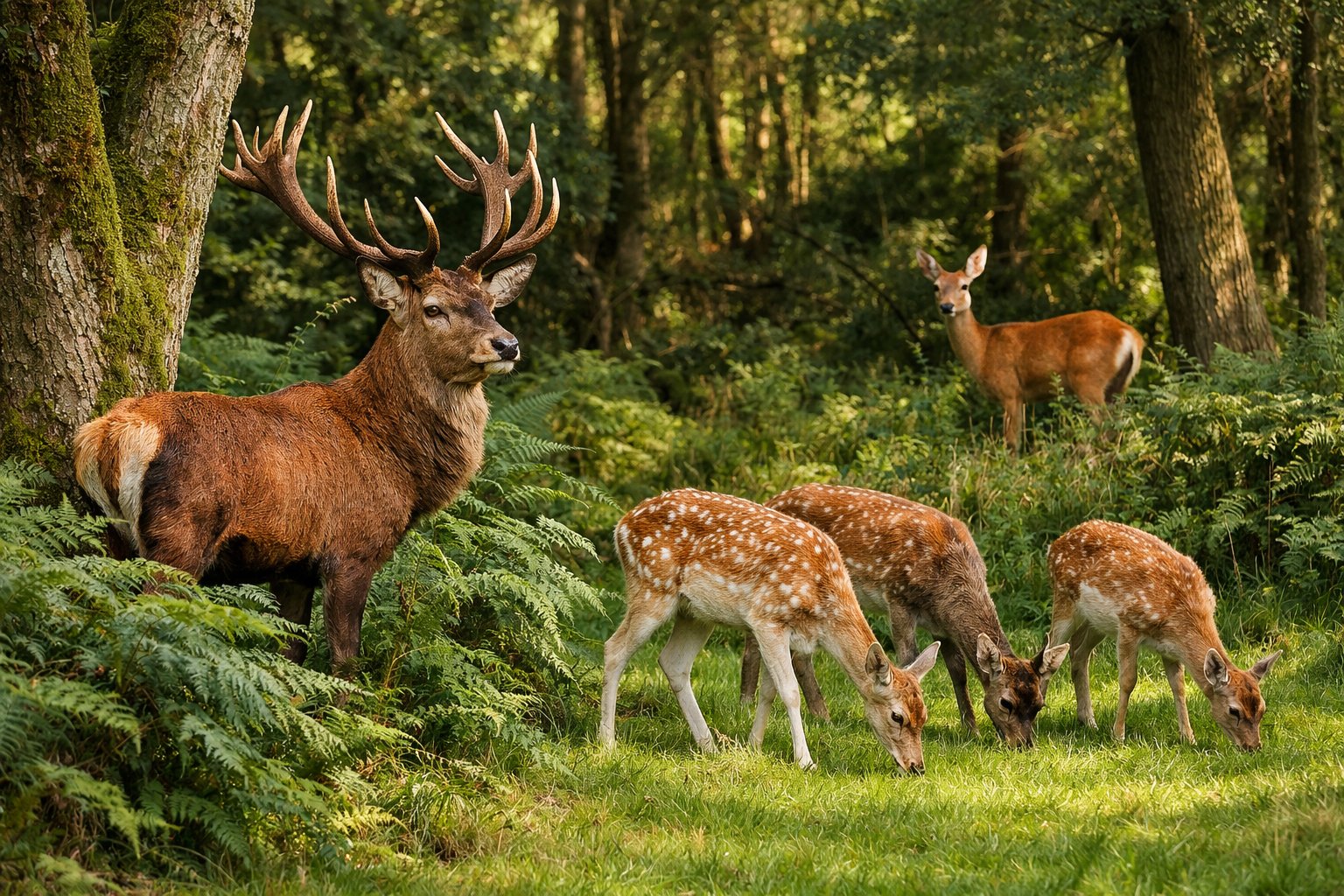
As you read on, you’ll find out where each species lives, how to tell them apart, and why some seem to be popping up everywhere while others remain rare.
You’ll get ID tips, habitat notes, and a bit about what conservationists watch for to keep these animals healthy in Britain.
The Six Main Types of Deer in the UK

Six deer species now live wild in Britain. Each one stands out with its own size, shape, antlers, and favourite hangouts.
Red Deer
Red deer (Cervus elaphus) are the largest wild deer in the UK. Adult stags can weigh over 200 kg and carry big, branching antlers for those autumn rut battles.
Hinds are smaller and don’t have antlers. You’ll mostly see red deer on moors, upland forests, and big estates in Scotland, but they also live in parts of England and Wales.
They form loose herds outside the rut. When feeding, they move to higher ground or woodland edges.
Their coats look deep reddish-brown in summer and turn greyer in winter. Red deer can change how young forests grow and sometimes damage them.
Land managers keep an eye on their numbers and use culling or fencing if needed. If you want more, check the British Deer Society’s info: https://bds.org.uk/information-advice/about-deer/deer-species/
Roe Deer
Roe deer (Capreolus capreolus) are small and graceful, weighing 15–35 kg. Bucks have short, upright antlers with three points, while does don’t have antlers at all.
You’ll find roe deer along woodland edges, hedgerows, and farmland in much of Britain. They move quietly and often freeze if you spot them.
In winter, they strip bark from young trees, which can hurt small plantations and orchards. Their coats are red in summer, grey in winter.
Roe deer have a breeding trick called delayed implantation, so fawns arrive in late spring when food’s more plentiful. Here’s a basic guide to British deer: https://en.wikipedia.org/wiki/Deer_of_Great_Britain
Fallow Deer
Fallow deer (Dama dama) come in a range of sizes and colours—chestnut with white spots, black, pale, you name it. Bucks grow broad, flat antlers called palms, totally different from red or roe antlers.
Hinds are smaller and don’t grow antlers. You’ll usually see fallow deer in mature broadleaf woods, parkland, and open fields in England and Wales.
The Normans likely brought them here, and now they’re settled in local populations. Their grazing changes ground plants and young trees.
Fallow deer are social, sticking to separate male and female groups outside the rut. In autumn, you’ll hear their loud groans and see males showing off.
A walk in parkland or woodland often gives you a good chance to spot them. Local conservation groups have more details: https://bds.org.uk/information-advice/about-deer/deer-species/
Sika Deer
Sika deer (Cervus nippon) originally came from East Asia and now live in parts of Scotland, England, and Northern Ireland. Their coats range from dark brown to nearly black, sometimes with white spots.
Males grow antlers shaped like red deer’s, but usually smaller. You’ll mostly see sika on acidic soils, in conifer woods, and near moorland edges.
Their numbers have grown, especially in Scotland, and they’re spreading. Sika sometimes hybridise with red deer, which worries people trying to protect native genes.
Sika tend to be more nervous and solitary than fallow or red deer. They make high-pitched whistles and sharp alarm calls.
For more on where they live and how they’re managed, check here: https://bds.org.uk/information-advice/about-deer/deer-species/
Reeves’ Muntjac
Reeves’ muntjac (Muntiacus reevesi) are tiny, about as big as a large dog—10–18 kg. Males have short, backward-pointing tusks and small antlers.
Their bodies are compact and they move with a hunched posture. You’ll find muntjac mostly in south and central England, spreading through woods, hedgerows, and even gardens.
They hide in thick undergrowth and eat young shoots, which can mess with tree regeneration in woods and parks. Muntjac breed all year and can have more than one calf a year if it’s mild.
Their spread comes from past releases and escapes. For a quick ID and distribution, here’s a guide: https://bna-naturalists.org/id-guide-british-deer/
Chinese Water Deer
Chinese water deer (Hydropotes inermis) are a bit odd—no antlers, but the males have long canine tusks that look like fangs. They’re small and slim, weighing 10–15 kg, with a buff-brown coat.
You’ll mostly find Chinese water deer in the Midlands and East Anglia, hanging around reed beds, rivers, wet meadows, and fenland. They like tall, wet vegetation for cover and will swim if startled.
Their presence is patchy and less common than other deer. They breed quickly and can change wetland plant communities.
Managers watch their numbers to protect sensitive habitats and young trees. For maps and posters, check out the British Deer Society: https://bds.org.uk/information-advice/about-deer/deer-species/
Habitats, Behavior, and Conservation of UK Deer

Deer in the UK use all sorts of places—woodlands, farm edges, reedbeds, heath. Each species has its own favourite spots.
Their behavior changes with the seasons and how close people are.
Natural Habitats and Distribution
Roe deer stick to woodland edges, hedgerows, and little copses across Britain. You’ll spot them where scrub meets fields, since they browse low plants and need cover nearby.
Red deer prefer big forests and open moorland. You’ll see them on Scottish hills and in large English woods.
Fallow deer like mature broadleaf woods and parkland. Muntjac and Chinese water deer stick to lowland woods, reedbeds, and wet fenlands in places like Cambridgeshire and Norfolk.
Sika deer favour acidic soils, conifer woods, and heath. The British Deer Society’s maps show where to look and help you track local sightings.
Role in Woodland Ecosystems
Deer shape young trees and understory plants by browsing. When there aren’t too many, seedlings and shrubs grow well.
If deer numbers get high, they can stop young trees from growing, change what plants are around, and reduce habitat for birds and insects. Herds make trails and little clearings, sometimes helping wildflowers spread.
Conservation managers use fencing, culls, and monitoring to balance deer and woodland health. Local groups like the British Deer Society share info on what’s happening and how you can help protect both trees and deer.
Identifying UK Deer: Tracks and Antlers
If you spot deer tracks, you’ll notice two teardrop-shaped halves. The front of the hoof always points forward.
You can guess the deer’s size from the track. Muntjac prints are tiny—just about 3 cm.
Roe and fallow deer leave medium-sized tracks. Red deer, though, can make prints over 10 cm across.
Antlers help with identification, too. Bucks and stags grow and shed their antlers every year, especially around the rut.
In autumn, males use antlers for fighting. Roe deer have short, upright antlers, usually with three points.
Fallow bucks show off broad, palmate antlers once they mature. Red deer stags? They’ve got those big, branching crowns.
Try comparing tracks and antler shapes when you’re out recording local deer sightings. Or just check a wildlife ID guide if you’re not sure.


