
Deer mostly act out of hunger, self-preservation, and the urge to reproduce. They use scent, body language, and soft calls to let others know where they are, if there’s danger, or if a mate is around.
If you know these basic drives, you can start to guess where a deer might go, how it’ll react, or when it could wander near your yard.
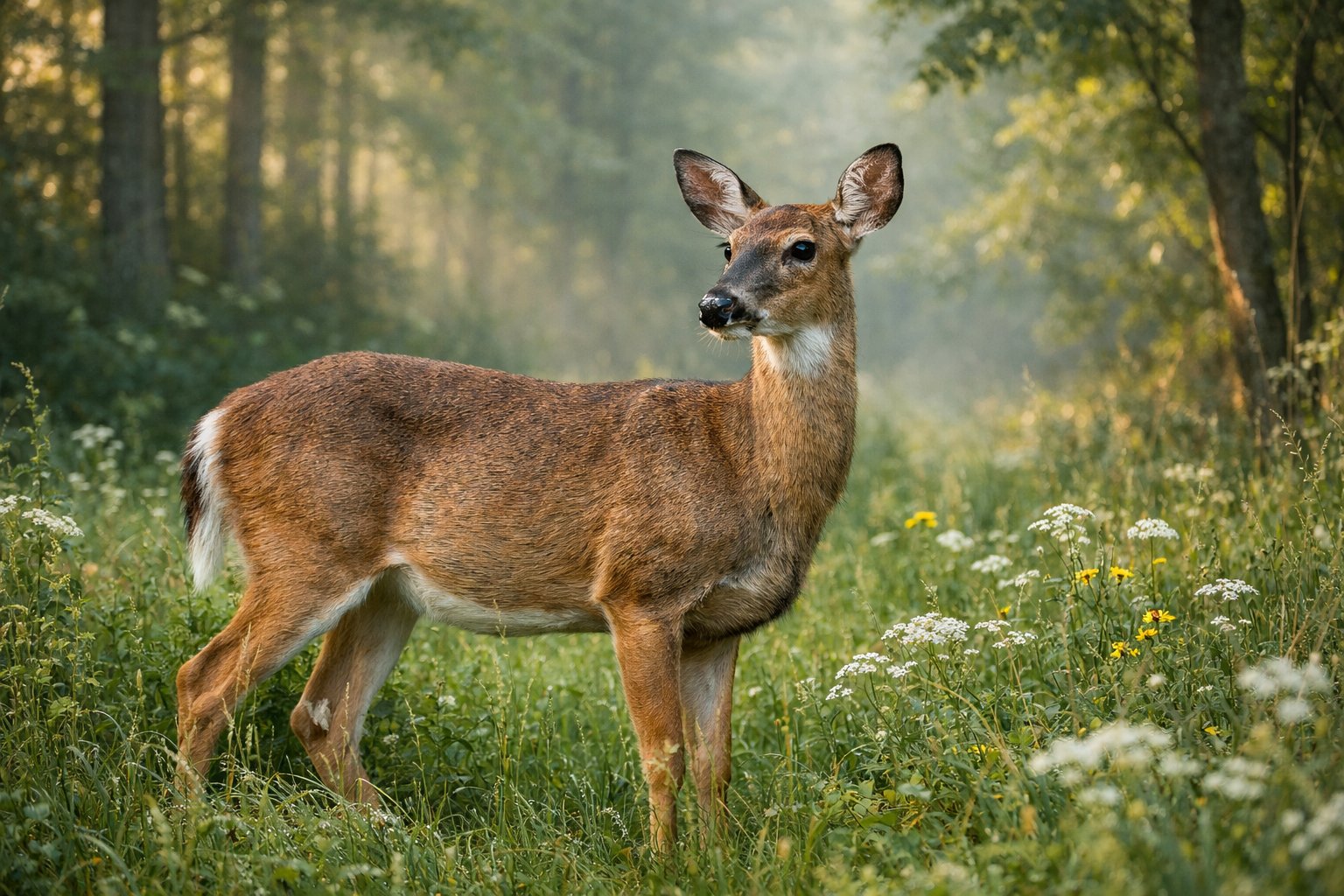
You’ll notice their habits change with the seasons—feeding times, mating, and group sizes all shift. This article digs into how deer “talk,” how their behavior changes from spring to winter, and a few simple things you can watch for to understand them better.
Core Deer Behaviours and Communication

Deer juggle group living, feeding, and warning signals to get by. You’ll see patterns in the way they hang out, send signals, pick food, and mark spots with scent.
Social Structure and Herd Dynamics
Older females usually lead loose herds. Does and their young stick together through spring and summer.
Bucks join or leave groups depending on the season or if it’s mating time. Group size really depends on habitat and risk. You’ll spot bigger herds in open fields, but in thick woods, smaller family groups are the norm.
Daughters often stay close to their mother’s home turf, shaping the local herd over the years. During the rut, bucks shift gears—they compete for does and sometimes patrol overlapping ranges.
Things like human activity, predators, and food supply mess with how tightly herds group up or move around.
Vocalizations and Non-Verbal Communication
Deer don’t use loud calls much; they stick to grunts, bleats, and snorts. A sharp snort usually means trouble’s close. Fawns bleat in a high pitch to call their moms.
Body language says a lot. Tail position, ear angles, and head posture show if a deer feels chill or on edge. If you see a raised white tail, that’s a warning signal for others to bolt.
Bucks flex their antlers and rub trees to show off without fighting. Scent matters too. Deer sniff scrapes and rubs—they’re picking up info on identity, sex, and whether someone’s ready to mate.
Feeding Habits and Diet
Deer mostly browse, munching on leaves, twigs, and buds more than grass. In spring and summer, they go for fresh shoots and herbs. Come fall, they snack on acorns, nuts, and fruit.
Winter forces them to eat woody stuff like small branches and buds. You can often track deer by looking for trails between where they feed and where they bed down.
They feed most at dawn and dusk, but if people are around a lot, they’ll shift those times. Gardeners should plant stuff deer don’t like or put up barriers for favorite plants—deer love a lot of common ornamentals.
Diet changes by species and habitat. Whitetails eat more mixed-edge plants, while red deer in some places stick to woodland browse.
Territoriality and Scent Marking
Deer don’t defend big territories like wolves, but bucks mark key spots. They make scrapes and rub trees, leaving scent from special glands.
You’ll see scraped ground near trails and bark rubbed a few feet up. These marks show dominance, reproductive state, and who’s who.
Does check scrapes to find ready bucks. Other bucks size up rivals from the same marks. Scent marking helps you figure out where deer gather, since repeated marks trace travel routes and rutting activity.
Fencing and repellents can help in small spaces, but deer rely on scent networks to move through bigger habitats.
Seasonal Changes and Survival Strategies

Deer switch up their diet, movement, and habits as the year rolls along. You’ll notice when bucks get more active, how deer hide from predators, why some travel far, and how people affect their survival.
Rutting Season and Mating Behaviour
The rut, usually in autumn, drives bucks to stop eating as much and chase does. You’ll spot antler rubs on trees and scrapes on the ground—these mark territory and spread scent.
Bucks grunt and stomp to challenge each other, and sometimes they clash antlers to win mates. Does come into estrus for just a short stretch, so timing is everything.
Mating peaks in November for lots of North American deer. Fawns are conceived in fall and born in late spring when food’s plentiful. Hunters often see deer moving around more during the rut.
Predator Avoidance and Defense Mechanisms
Deer rely on their sharp senses—smell, hearing, and wide vision—to spot threats fast. If a deer senses danger, it’ll flag its tail to warn others and either freeze or bolt in a zigzag to escape predators like wolves, coyotes, or mountain lions.
Fawns mostly stay still and use camouflage, while mothers hide them in thick cover for the first weeks. Group vigilance helps; more eyes and ears mean a better chance to spot trouble.
In areas with lots of hunting, deer change up their routines, moving at dawn, dusk, or even at night to stay safe.
Deer Movement, Migration, and Habitat Use
Some deer migrate between summer and winter ranges to find food and avoid deep snow. Others stick to local areas year-round, following familiar trails to feeding spots.
You can spot these tracks near fields, forest edges, and known paths. Wildlife corridors and connected habitats let deer move safely and keep their populations healthy.
Habitat management—like keeping cover and food sources—helps deer thrive. Landowners use food plots, timber cuts, and fenced refuges to guide where deer feed and bed down.
Human-Deer Interactions and Conservation
People change how deer behave, often without realizing it. When we build new neighborhoods or roads, we break up their habitat. That pushes deer into smaller areas and, honestly, it leads to more car accidents.
Hunting also shapes what deer do and when they move around. In places where hunters follow regulations, deer populations usually stay healthier and don’t overgraze the land.
Conservationists take action in a few key ways. They set up regulated hunting seasons, build wildlife corridors, and manage forests so deer have enough food and places to hide.
You can help reduce conflicts too. Try putting up fences, plant things deer don’t like to eat, or just slow down when you drive through areas where deer tend to cross.
Getting involved with your local deer management plan might seem small, but it really does help people and deer live together a little more smoothly.


