
You might think lions always outrun deer, but honestly, it’s more complicated than that. A lion hits higher top speeds in quick sprints, but plenty of deer species can match or even beat a lion when it comes to staying fast and nimble, depending on the landscape. That really matters if you picture an actual chase instead of just comparing numbers.
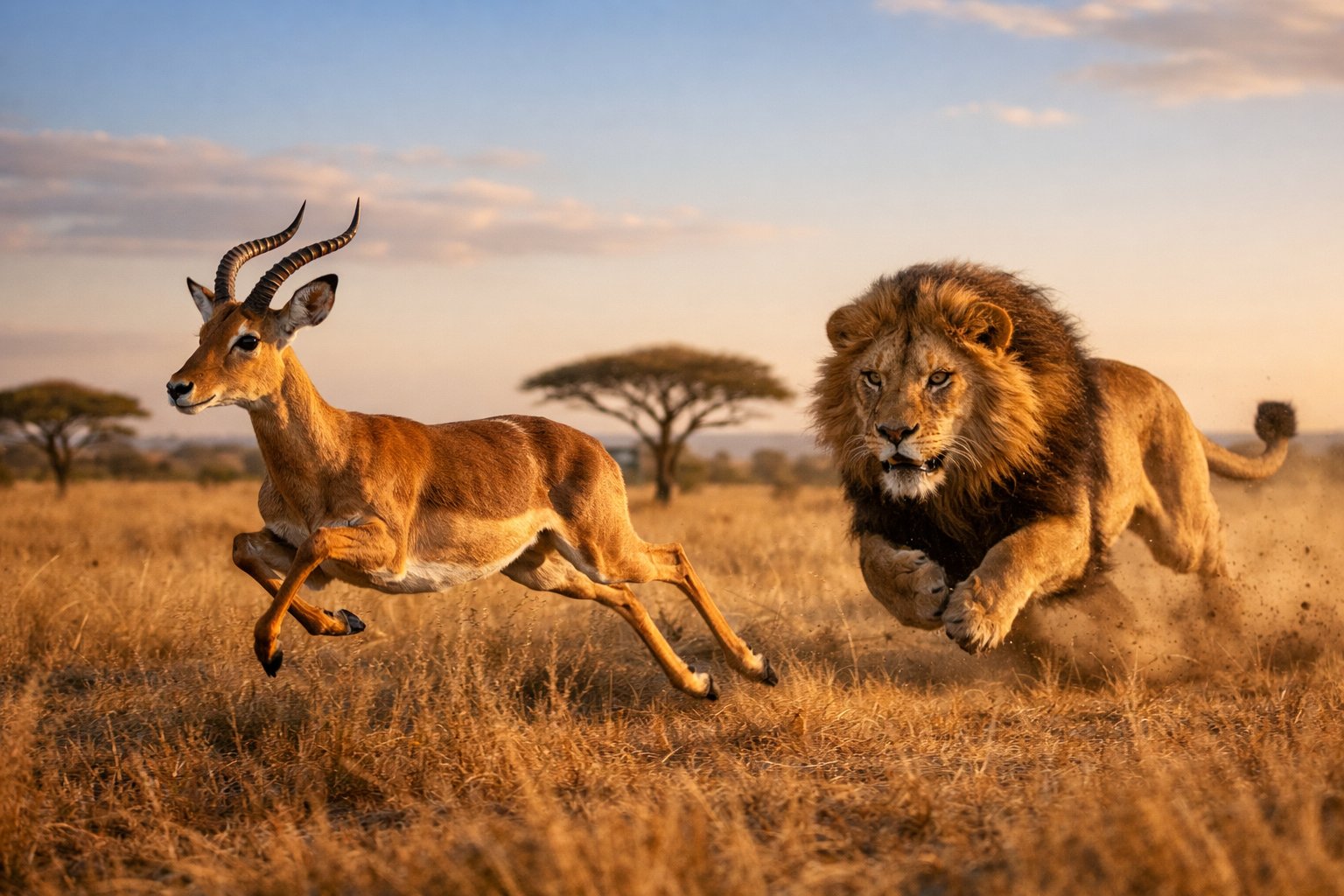
Let’s get into how things like sprint speed, acceleration, and turning shape the outcome. Habitat, stamina, and whether the animal’s hunting or escaping all play a role too.
Speed Comparison: Deer vs. Lion

Lions reach higher top speeds in short bursts and get off the mark fast. Deer, on the other hand, run hard to escape, but their speed, agility, and stamina really depend on the species.
Top Speed of a Lion
A healthy adult lion sprints up to about 50 mph (80 kph), but only for a few seconds. That kind of speed is all about power, not distance—usually less than 100 meters.
You’ll spot lions using this burst when they ambush prey. They depend on a quick, explosive charge to close the gap.
If you’re curious about lion speed and how they hunt, check out more details here.
Top Speed of Common Deer Species
Deer species vary a lot. White-tailed deer usually run near 30 mph (48 kph). Mule deer and moose get up to about 35 mph (56 kph).
Elk often hit around 45 mph (72 kph). Some sources say reindeer (caribou) can reach about 50 mph (80 kph), but only for a moment.
Deer speed depends on age, terrain, and how scared they are. These are max burst speeds—deer don’t keep that up for long.
Want more on deer speed and how different species stack up? There’s a good breakdown here.
Acceleration and Agility Differences
Lions explode from low cover, using their powerful legs to get up to speed fast. That’s a big advantage in a short chase.
Deer accelerate quickly too, but in a springy, unpredictable way. They zigzag and leap, dodging predators with sharp turns and sudden jumps.
You’ll notice deer really shine on rough ground and in thick brush, where agility matters more than just speed.
On open plains, lions usually win the straight-line sprint. In the woods, deer often have the upper hand with their quick turns.
Endurance and Stamina in Chases
Lions can’t run for long. They overheat and get tired after a quick sprint.
If a lion doesn’t catch its prey fast, it usually gives up. Their whole hunting style depends on surprise and a short, intense effort.
Deer handle longer runs better. They mix fast dashes with steady running to keep distance from danger.
You’ll see deer use bursts and then settle into a steady pace, especially when they’re trying to outlast a predator or reach cover.
How long a deer can keep going depends on the terrain and the species.
Survival Factors in Predator-Prey Chases

Speed isn’t everything. The ground, how each animal hunts or escapes, and split-second choices shape every chase.
Influence of Terrain and Environment
The chase location changes the game. On the African savanna or open grasslands, short, flat runs favor animals that can sprint fast in a straight line.
Lions use these open spots to launch their surprise attacks. In woods or rocky places, though, agility counts for more.
Deer twist and turn, slipping between trees or using gullies and shrubs to break line of sight. That makes long, straight sprints tough for lions.
Soft ground or mud slows down heavy predators more than lighter prey. Hills and cliffs sometimes give deer an escape you wouldn’t expect.
Even wind and tall grass can shift the odds by messing with scent or sight.
Hunting Strategies of Lions
Lions go for stealth, teamwork, and raw power. You’ll see them crouch in tall grass, sneaking close before exploding into a sprint—sometimes up to 50 mph, but only for a few heartbeats.
That burst only works if the prey is really close, like within 20–30 meters.
When lions hunt in groups, they coordinate. Some chase, others wait in ambush.
Lionesses often take on different roles—one stalks, another flanks, and someone else tries to cut off the escape.
Lions use their camouflage and those big claws for grip when they pounce. They avoid long chases because it just drains their energy.
Instead, they count on timing, cover, and hitting the weak spot fast.
Evasion Tactics of Deer
Deer rely on agility, quick bursts of speed, and unpredictable moves to stay alive. If you’re a deer, you might zigzag or make sharp turns—heavy predators just can’t keep up with that.
That nimbleness comes in handy in forests, rocky slopes, or tall grass. You can slip through dense cover or just vanish behind a tree when you need to.
Instead of running flat out for miles, deer break up their escape into short, intense sprints. They’ll do it again and again, hoping the predator gives up or runs out of steam.
Deer often flag their tails or let out an alarm call. That alerts other deer and, sometimes, it startles the predator just enough to give you a head start.
Knowing your home turf really gives you an edge. Deer remember where fences, streams, or thick brush offer a quick getaway. Picking the right path at the right second often matters more than pure speed.


