
You’ll run into six wild British deer: red, roe, fallow, sika, muntjac, and Chinese water deer.
These names pretty much cover the deer you’ll spot across woodlands, fields, and wetlands in Britain.
As you read on, you’ll find out which species are native, which ones people brought in, and how to tell them apart by size, coat, antlers, or habitat.
You’ll get some quick ID tips and simple notes about where each deer hangs out, so you can recognise them on a walk or figure out what you’re looking at in photos.
What Are British Deer Called?

You’ll find six main wild deer species in Britain. Two are native, and people introduced the others over the last 1,000 or so years.
Each species has its own names for males, females, and young.
The Six Main Species of British Deer
The six wild species you’ll see are: red deer (Cervus elaphus), roe deer (Capreolus capreolus), fallow deer (Dama dama), sika deer (Cervus nippon), Reeves’ muntjac (Muntiacus reevesi), and Chinese water deer (Hydropotes inermis).
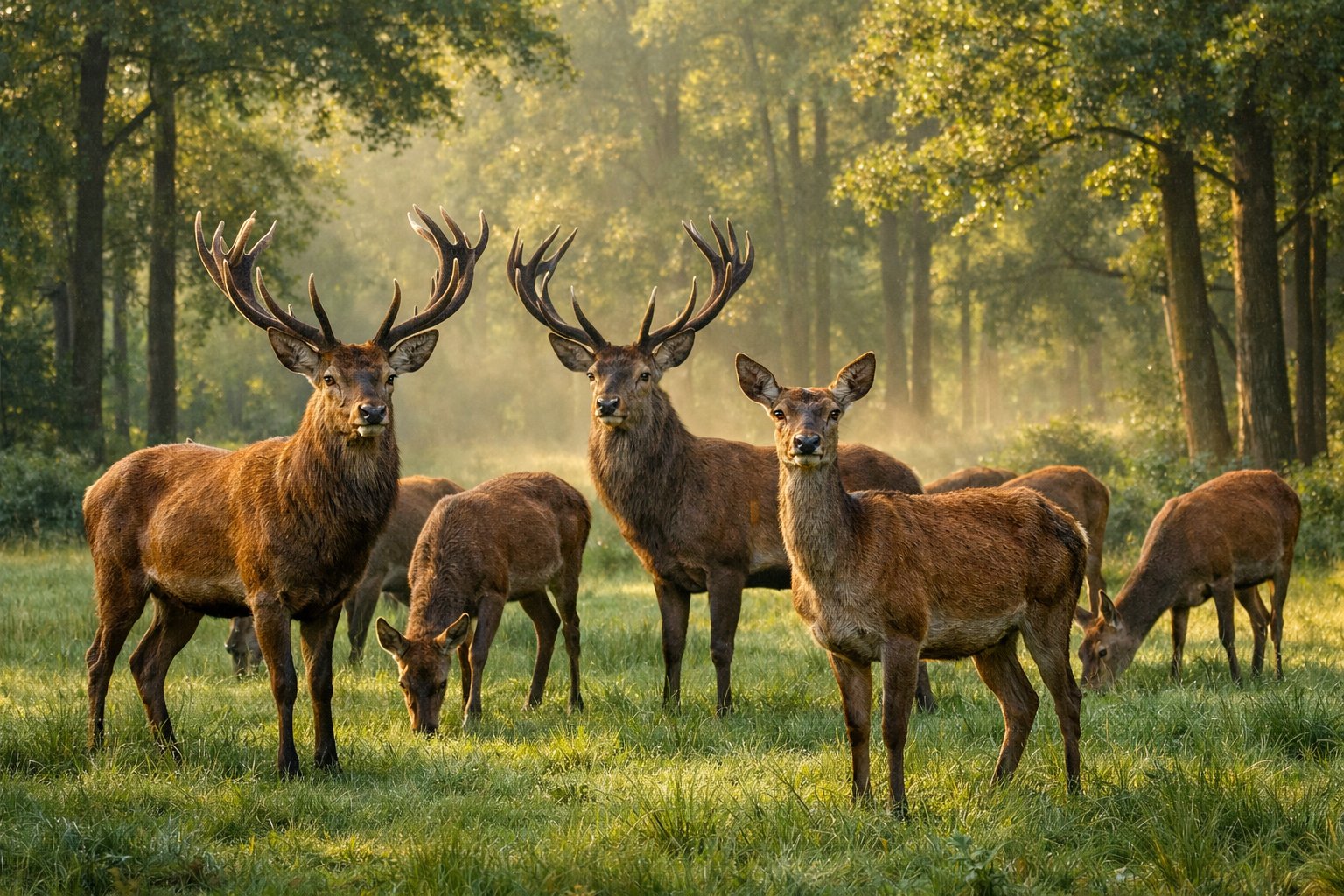
Red deer are the biggest and live in woodlands and on moorland.
Roe deer stay small, often show up at woodland edges, and pop up just about everywhere.
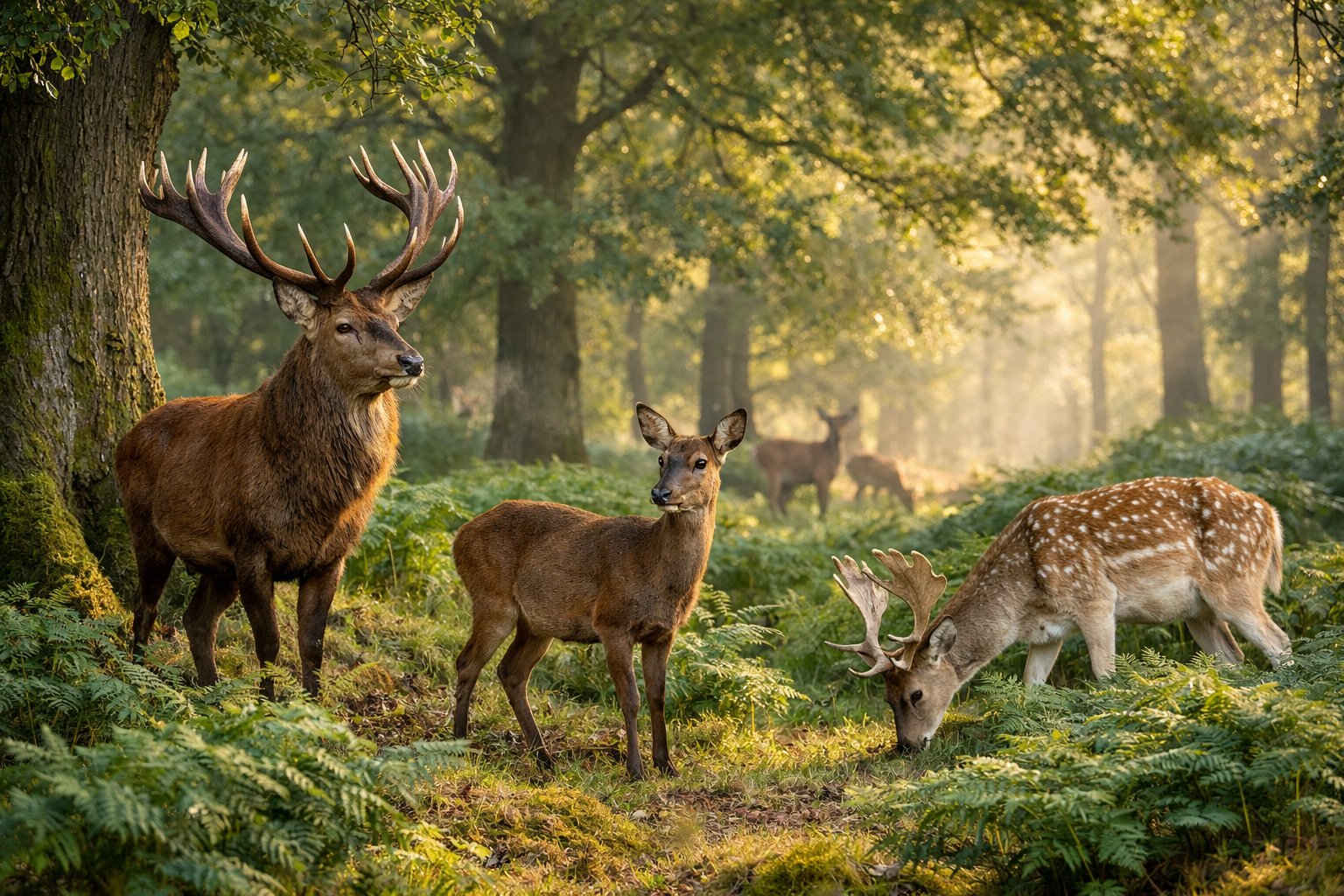
Fallow deer show off all sorts of coat patterns and have those wide, palmate antlers.
Sika look a bit like fallow in size but stick to acidic soils and conifer woods.
Muntjac are tiny, barking deer that have spread all over southern England.
Chinese water deer don’t have antlers and instead sport long, tusk-like canine teeth; they really like reedbeds and riversides.
- Red deer — cervus elaphus (largest)
- Roe deer — capreolus capreolus (small, common)
- Fallow deer — dama dama (spotted, palmate antlers)
- Sika deer — cervus nippon (acidic soils, expanding ranges)
- Reeves’ muntjac — muntiacus reevesi (small, barking)
- Chinese water deer — hydropotes inermis (no antlers, tusks)
Native Versus Introduced Deer in the UK
Only red deer and roe deer count as truly native to Britain; they’ve lived here since the post-Ice Age.
The Normans brought in fallow deer centuries ago, mostly for parks and hunting.
Sika came over from East Asia in the late 1800s and early 1900s, and now you’ll find them breeding all over, especially in Scotland.
Reeves’ muntjac and Chinese water deer arrived from Asia around the same time; muntjac have spread fast after escapes and releases.
Human choices and deliberate releases shaped where these deer live now—you can check out maps from the British Deer Society to see their ranges.
If you spot long-established herds in old woodlands, they’re probably native or older introductions, while muntjac or sika often turn up in new pockets around southeast England.
Common Names for Male, Female, and Young Deer
Names change a bit by species, but a lot of terms repeat.
Here’s a quick guide for when you spot deer:
- Red deer: male = stag, female = hind, young = calf.
- Roe deer: male = buck or roebuck, female = doe or hind, young = kid or fawn.
- Fallow deer: male = buck, female = doe, young = fawn.
- Sika deer: male = stag, female = hind, young = fawn.
- Muntjac (Reeves’): male = buck, female = doe, young = fawn.
- Chinese water deer: males don’t have antlers, but you still call them buck; females = doe; young = fawn.
You’ll notice “stag” or “buck” for males depending on the species and tradition, especially with antlered deer.
Young ones are usually “fawn” or “calf,” though roe sometimes get called “kid.”
If you want to be clear, use the species name plus the term—like “fallow buck” or “roe hind.”
Unique Traits and Habitats of British Deer
Let’s get into how British deer look different, where they live, and how they shape the woods and fields around them.
I’ll cover unique antlers and markings, where each species lives and breeds, and a bit about how they affect woodland ecosystems.
Distinctive Features and Antlers
British deer go from the tiny muntjac to the big Scottish red deer.
You can spot roe deer by their short, reddish coats and the small, upright antlers on the males.
Red stags grow large, branching antlers that can have loads of tines during the rut.
Fallow bucks get those flat, hand-shaped antlers called palmate antlers.
Muntjac stay tiny, with short antlers and those obvious upper canine teeth.
Chinese water deer don’t have antlers at all; the males use their tusk-like canines instead.
Antlers start growing each spring and drop off after the autumn rut.
If you walk through the woods, you might find shed antlers on the forest floor—they can tell you a lot about age and health.
The British Deer Society tracks antler shapes and keeps records to help monitor species and their condition across the UK.
Distribution and Populations Across the UK
Six deer species now live wild in Britain: Scottish red, roe, fallow, sika, Reeves’s muntjac, and Chinese water deer.
Red deer hold strong in the Highlands and some lowland woods.
Roe deer are all over England and Wales, but they’re rare in Northern Ireland.
Fallow deer show up a lot in England and Wales and less so in Scotland.
Muntjac and Chinese water deer mainly spread through southern and eastern England.
Sika populations stick to parts of Scotland and Northern Ireland.
Population sizes shift with habitat, hunting, and releases.
You can check regional maps and surveys for current hotspots and ranges.
Local numbers rise near woodlands, hedgerows, and farmland edges where food and cover are close by.
Deer and Woodland Ecosystems
Deer really shape woodland structure by browsing. When deer graze a lot, you’ll notice fewer new trees popping up—saplings and understorey plants just don’t stand much of a chance.
Roe and muntjac go after shrubs and young shoots. Red deer, on the other hand, strip bark and munch on taller plants, which slowly changes what grows in the forest.
Deer spread seeds around too, and sometimes they create open patches that help certain wildflowers and birds. Still, when there are too many deer, ground plants suffer, and insects or small mammals lose out on habitat.
Land managers keep an eye on deer numbers. They use monitoring, habitat fencing, and targeted control to protect sensitive woodlands and keep ecosystems diverse.
If you’re curious about mapping and management, check out the British Deer Society (https://bds.org.uk/information-advice/about-deer/deer-species/).


