
You’ll usually spot deer bedded down where they can blend in, see what’s coming, and bolt if they need to. At night, deer pick sheltered spots—think forest edges, thick brush, or raised ground—so they stay hidden but can still watch for trouble.
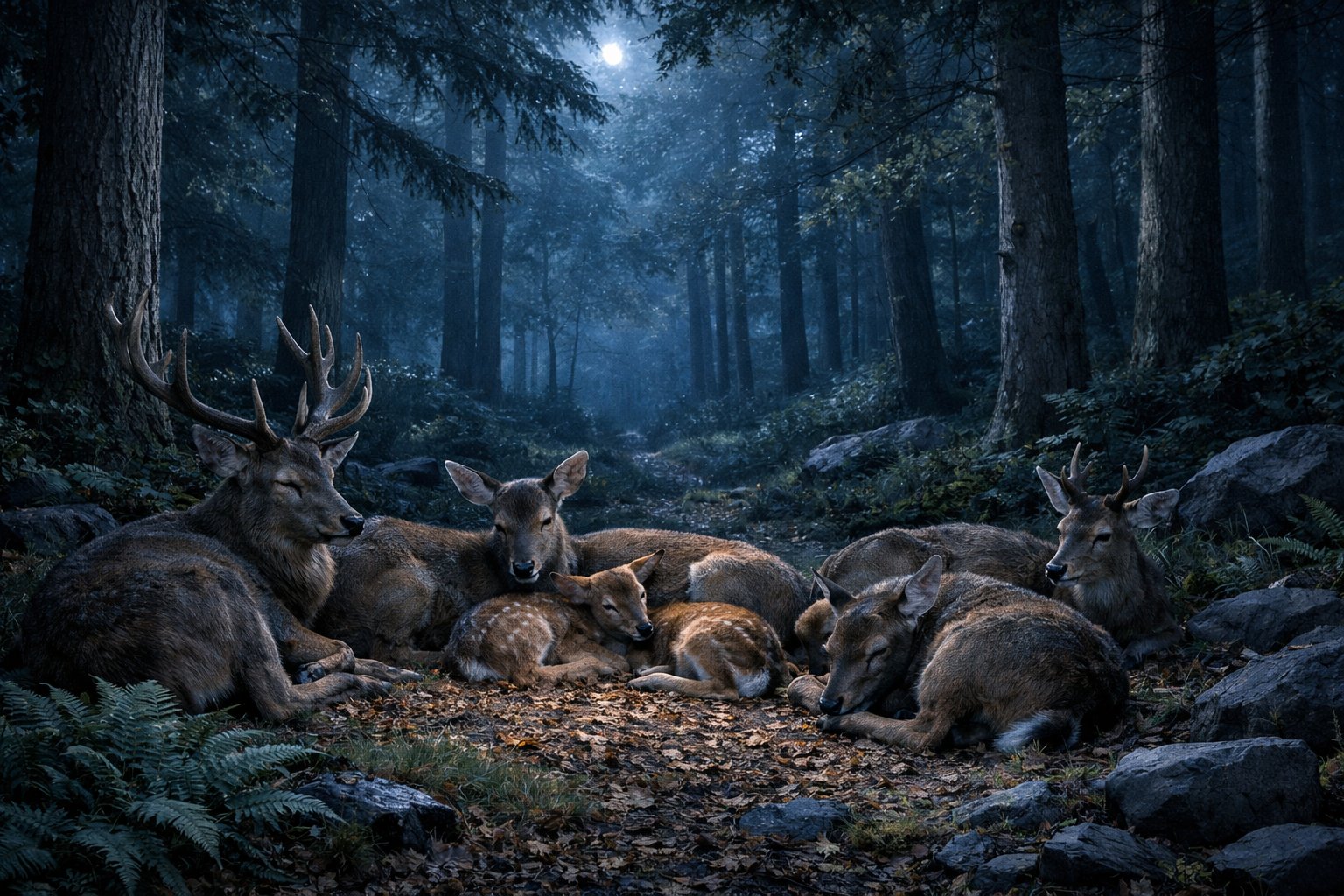
If you walk into the woods at dusk, notice how the landscape shapes their choices. In winter, they’ll tuck into evergreens for shelter from the wind. In summer, tall grass and brush give them cover.
When they need a quick escape, they’ll bed along ridgelines or at the edge of a field. It’s kind of fascinating how these spots keep them safe at night.
Where Do Deer Sleep at Night?
Deer choose places that let them hide, see what’s around, and escape fast if they need to. They stick close to food, usually just a short walk from their favorite feeding spots.
Typical Nighttime Bedding Areas
You’ll often find deer bedding along forest edges—right where the woods meet open fields. These spots give them the best of both worlds: cover from the trees and a clear view across the field.
Look for shallow spots under hardwoods or conifers near those field edges. In winter, evergreen thickets like cedar or pine become popular. They block wind and keep snow from piling up on the deer.
You might also spot beds on ridges or hilltops. From there, deer can watch for predators and use the slope to escape quickly.
In swampy areas, deer head for marsh islands or cattail patches. Predators have a tough time reaching them there. If you’re near farmland, check the edges of corn or soybean fields—those spots let deer eat and bed down without wandering far.
Night vs. Daytime Bedding Differences
At night, deer seem to pick beds with better visibility than during the day. They often choose more open spots next to cover, so they can watch for danger and still stay hidden.
During the day, deer bed deeper in thick cover. They take short naps and keep fawns hidden in those dense spots.
Bucks like to switch up their bedding locations between day and night. They’re trying to avoid being predictable. Does and fawns might rotate through several beds nearby to stay safe from predators.
At night, you’ll notice deer using elevated ground or edges more often. When the sun’s up, they sink into brush or tall grass.
Factors Influencing Nighttime Bedding Choices
Wind direction really matters. Deer usually face into the wind, so they can smell anything coming their way. When you’re scouting, pay attention to which way the wind blows and how the beds line up.
If there’s a lot of hunting or human activity, deer push deeper into thick cover or move farther from trails. In quiet spots, you’ll find them bedding closer to food sources.
Snow and cold send deer toward south-facing slopes or evergreens for warmth. The presence of predators and the type of habitat also play a role.
In open country, deer use tall grass clumps. In the woods, they prefer underbrush or benches on ridges. If you watch closely, you’ll start to see how bedding areas connect to where deer feed.
How and Why Deer Choose Their Sleeping Spots

Deer pick beds that hide them, let them sense danger, and offer a quick way out. Their choices shift with cover, group size, and the season.
Preferred Cover and Safety
Deer really like dense cover—think cedar or pine thickets, tall grass, or brush piles. These spots block wind and keep them out of sight.
Whitetails often bed under evergreens in winter to stay warm. Mule deer go for steep draws or rocky benches. They can see across the valley from there but still stay partly hidden.
Wind direction? That’s huge. Deer usually face into the wind to catch human or predator scent early. They also pick beds near escape routes—maybe a trail or a gap in the brush—so they can bolt if spooked.
Wildlife managers watch these habits to protect bedding areas and manage habitat. If you’re out looking, check for oval depressions, flattened grass, or tracks. Those clues tell you if deer use the spot regularly.
Group vs. Solitary Sleep
Does usually bed in groups, especially when fawns are around. You’ll see several does spaced out in a patch of cover so they can all keep watch.
Group bedding lowers the risk for each deer and helps protect hidden fawns. Hunters try not to disturb these nursery areas.
Bucks mostly bed alone, away from the does. They pick spots with better views or steeper escape routes. During the rut, big bucks might still keep to themselves to avoid fights.
If you’re tracking deer, notice solitary beds—they’re often bigger and more oval, with fewer droppings nearby.
Fawns bed differently. They hide in super dense grass or brush and barely move, while the doe feeds close by. This keeps them safer, but if you walk through, you might spot them before you see the adults.
Seasonal Changes in Bedding Habits
Bedding habits shift with the seasons. Food, temperature, and hunting pressure all play a part.
In winter, deer head for south-facing slopes and tuck into evergreen cover. They want to save energy and dodge deep snow. You’ll spot more deer hanging out in cedar cuts or tucked in conifer draws, where they get a break from the wind and can browse nearby.
Spring and summer show up, and suddenly the grass grows taller and the understory gets thick. Does and fawns start using those dense fields and edges along creeks for better cover.
When fall rolls around and hunting season starts, deer move to thicker, harder-to-reach bedding spots. Sometimes they just shift the times they use those beds—smart move, honestly.
Human activity changes everything. In places with heavy hunting or lots of development, deer feed farther from their beds. They pick out denser or more remote bedding spots to stay safer.


