
Would you believe that deer sometimes eat snakes? It doesn’t happen often, but deer will go for snakes or other animal matter when they need extra minerals or protein.
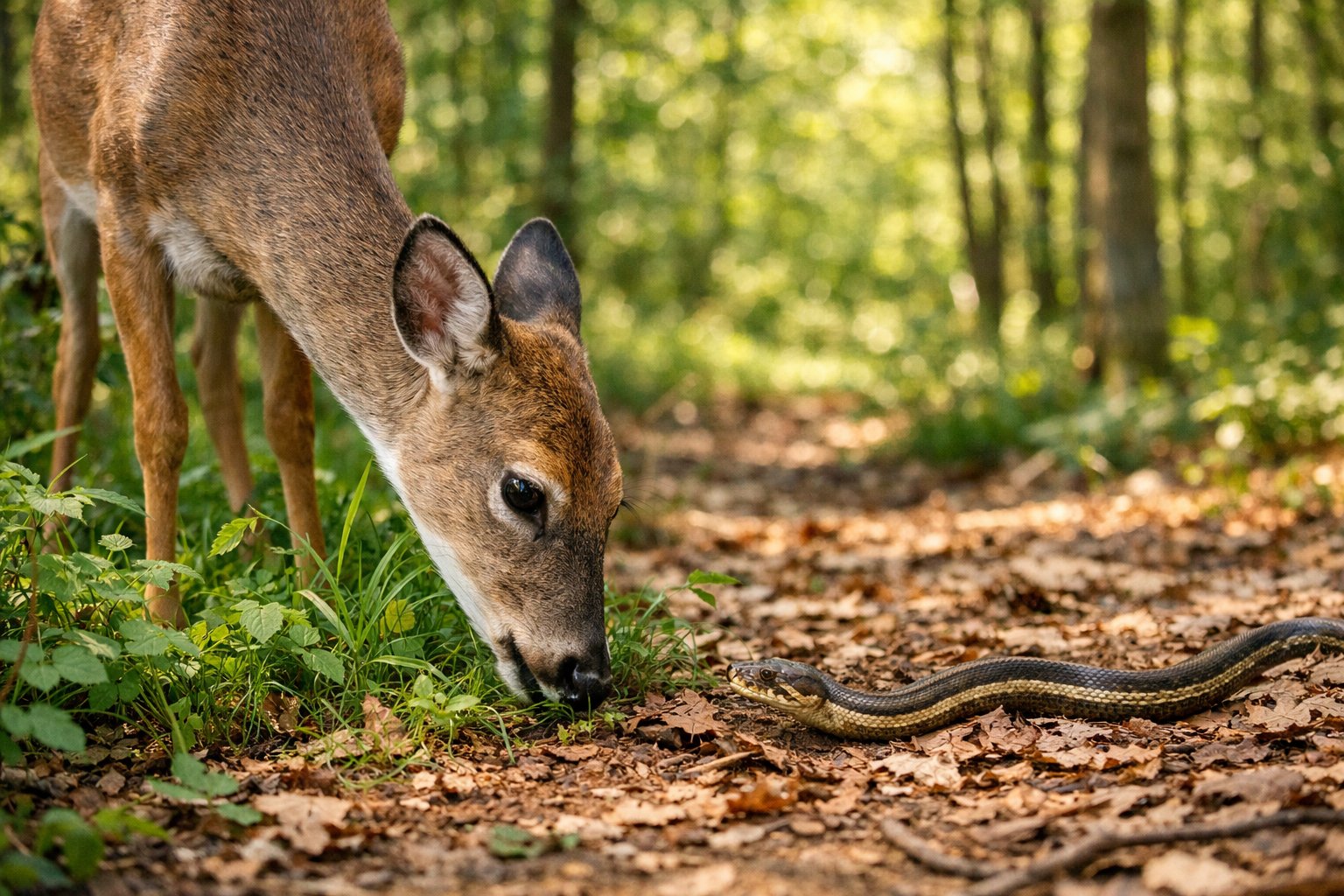
Maybe you’ve caught a trail-cam video or seen a weird photo of a deer gnawing on a snake. You’re not imagining things.
Let’s take a look at when and why deer sometimes turn away from their usual greens and try animal food instead. You’ll get a sense of what this means for wildlife you might spot near roads, trails, or fields.
Do Deer Really Eat Snakes?

Deer do eat snakes now and then, but it’s rare and usually comes down to specific needs or just plain luck.
You’ll hear about actual sightings, how unusual this really is, and a viral clip that had people talking.
Documented Cases of Deer Eating Snakes
Researchers and wildlife watchers have spotted a handful of confirmed cases where deer munched on snakes. Most of these involve white-tailed deer in North America.
Camera traps, roadside sightings, and quick phone videos usually catch these moments.
Some cases show deer chewing on small, non-venomous snakes that were already dead or dying. Sometimes, deer scavenge snake carcasses to get protein, calcium, or minerals—especially during antler growth, pregnancy, or when they’re nursing fawns.
But don’t get the wrong idea—deer aren’t out hunting live snakes as a rule.
Wildlife groups treat these events as oddities. Experts keep warning us not to assume deer regularly eat snakes just because a few examples exist.
If you spot a deer eating a snake, it’s probably a one-off, maybe a quick fix for a mineral craving or just a lucky find.
How Common Is Snake Consumption in Deer?
Honestly, deer eating snakes is super uncommon. Most research on deer diets shows they stick with plants—things like browse, acorns, fruit, and fungi.
Animal matter barely shows up in the data.
When deer do eat animal tissue, they usually scavenge instead of hunting. These are isolated reports, not a trend.
So, if you’re out in the woods or even in suburbia, you’ll almost always see deer eating plants. The odds of catching a deer eating a snake are pretty slim.
Certain things can make rare meat-eating more likely, like local mineral shortages, high nutritional needs, or stumbling across a dead animal. Still, it’s not something you’ll see often.
Viral Video and Social Media Attention
A viral video made the rounds showing a whitetail deer eating a snake on a Texas roadside. Trey Reinhart posted that clip, and suddenly everyone had an opinion.
Social media and pages like Nature Is Metal helped spread the footage. People tagged in experts and groups like the National Deer Association for answers.
Media outlets love the shock factor, but they rarely mention how rare this actually is.
Next time you see a wild animal video go viral, remember: just because it’s online everywhere doesn’t mean it’s common. These clips capture weird moments, not everyday habits, and they can totally mess with your sense of what deer really eat.
Why and How Deer Might Eat Snakes

Deer usually stick to plants, but every so often, they’ll eat animals. Why does that happen?
Let’s look at the reasons for this, which snakes show up in reports, how these encounters happen, and what goes down if venomous snakes get involved.
Nutritional Reasons and Food Scarcity
If plants don’t have enough minerals, deer look elsewhere. You might spot a deer chewing on bones, eggs, or even small animals to get calcium, phosphorus, or protein that’s missing from fresh grass or during a tough winter.
Young deer and nursing does need extra minerals, so they’ll sometimes try weird foods.
After deep snow, drought, or over-browsing, food gets scarce. Deer might check out carcasses or snake remains by roadsides, since the smell of protein and bone can trigger their curiosity.
But again, this is rare and usually just a temporary thing—not a sign that deer are turning into carnivores.
Snake Species Consumed by Deer
Most reports and videos show deer eating small, nonvenomous snakes like garter snakes, rat snakes, or young colubrids. These snakes are easy for deer to catch and don’t pose much risk.
Deer sometimes chew them right down to the bone, getting minerals from the crushed bones.
Now and then, there’s a story about a deer eating a bigger snake, but that’s much less common. Online, you’ll hear all sorts of wild claims, but stick with the documented sightings and clear footage.
Deer usually avoid adult rattlesnakes and other big, defensive snakes—unless they’re already dead.
Interaction Between Deer and Snakes
Deer often spot snakes by sight or smell while grazing or walking near trails and roads. Sometimes, a deer will sniff, paw at, or mouth a snake out of curiosity.
If the snake is small or already hurt, the deer might chew it up and swallow it.
Those strong molars help deer crush food, including small snake bones, so they can get to the marrow and minerals inside.
These run-ins mostly happen where deer, nests, and snakes cross paths—like field edges, forest borders, or rocky spots where garter snakes and rat snakes hang out near bird nests and rabbit dens.
Risks of Eating Venomous Snakes
Deer sometimes eat venomous snakes, and honestly, it’s risky—though not always fatal. If a deer manages to bite down and crush the snake’s head fast, there’s a good chance the venom won’t get injected.
But if the snake strikes back and bites the deer’s mouth or face, venom can enter the tissue. That usually leads to swelling, pain, or even infection.
Copperheads, timber rattlesnakes, and bigger rattlers carry a lot of venom. Smaller deer, like fawns, face way more danger compared to big adults.
If a deer scavenges a dead venomous snake, the risk drops quite a bit. Still, messing with a live venomous snake? That’s a bad idea and can definitely end in serious injury—or worse.


