
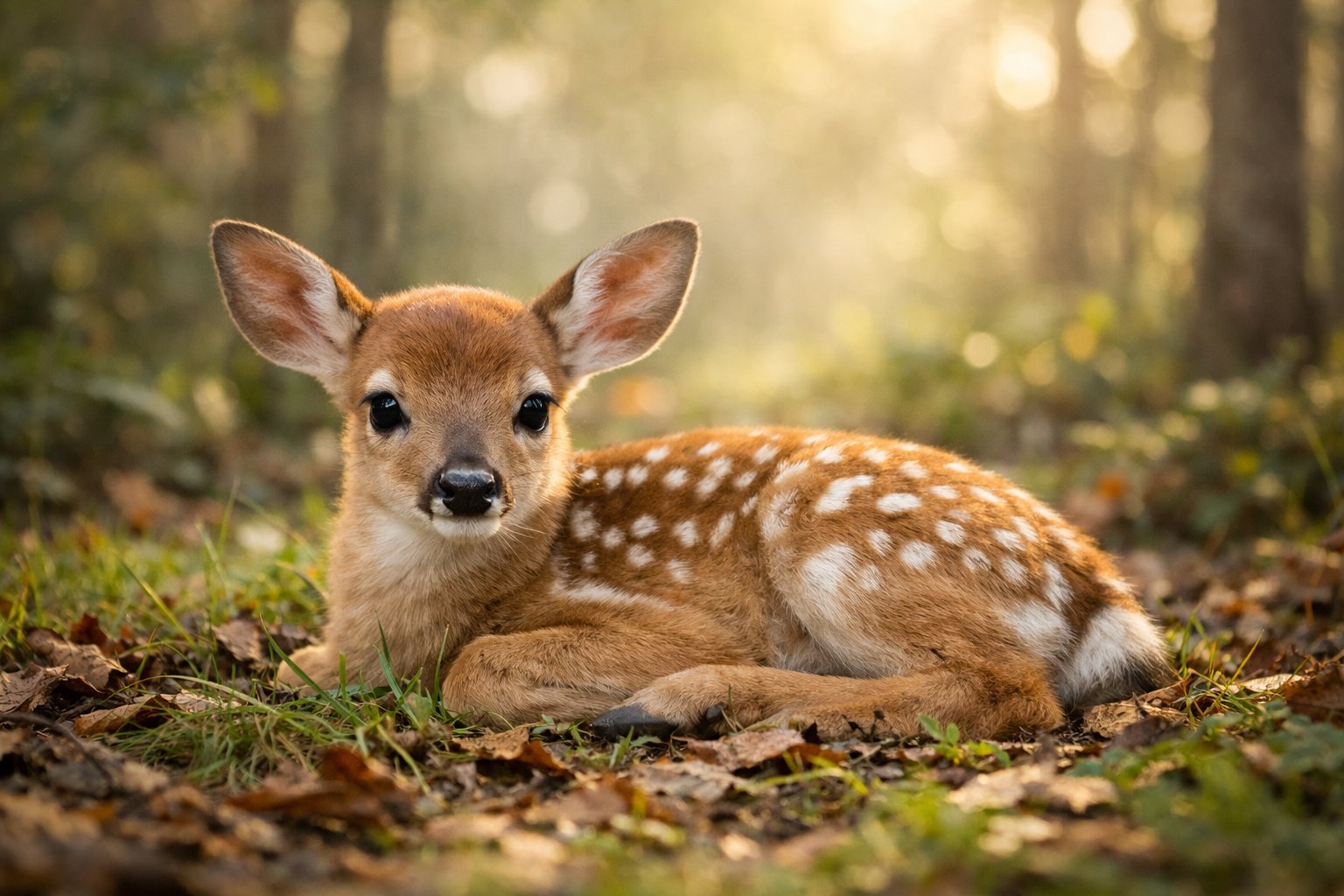
Have you ever spotted a tiny fawn curled up in the grass and wondered why it just stays there, motionless? Baby deer lie down and keep incredibly still because hiding is their best shot at staying safe while their mothers feed and keep watch from a distance. This quiet little trick relies on camouflage and almost no scent, making it tough for predators to find them until they’re strong enough to tag along with mom.
If you’re curious, stick around to see how this hiding strategy actually works. I’ll share when a fawn really needs help, plus how deer sleep in yards versus out in the wild.
You’ll also get some simple tips for spotting normal fawn behavior and what you should do if a fawn seems like it’s in trouble.
Why Do Baby Deer Lay Down?

Fawns usually lie very still and hide while their mothers go off to feed. This keeps them safe, using both camouflage and a nearly invisible scent, and it really depends on the mother’s careful behavior.
The Survival Strategy of Stillness
When a newborn fawn hides, it goes silent and barely moves. That’s its best defense against predators like coyotes, bobcats, or foxes.
You’ll notice fawns tuck their legs under and press themselves low to the ground. In tall grass or brush, they’re almost impossible to spot.
Newborns can slow their breathing and freeze if they sense danger. They spend much of their first week just bedded down, not following their mothers yet.
This gives them time to get stronger before they need to run. Not every animal does this—some species have babies that follow mom right away.
White-tailed deer and mule deer, though, use this “hider” strategy early on, especially where small predators are everywhere.
Camouflage and Scent Adaptations
Fawns come with those adorable spotted coats for a reason. The white spots break up their shape in the dappled light, so they blend right in with grass and leaves.
That’s why you rarely spot a fawn unless you’re really looking. This camouflage is their best friend.
Mothers lick their fawns clean after birth and sometimes even eat the afterbirth. That cuts down on any strong smells that could give the baby away.
A fawn’s body barely gives off any scent for the first few weeks. Predators have a much harder time finding them by smell.
Both the color and the scent help, but the fawn still needs to stay very still in its hiding spot—usually tall grass, brush, or piles of leaves.
If you ever see a fawn, just watch from a distance. Don’t touch it, or you’ll leave your scent behind.
Role of the Mother Deer
Mother deer actually leave their fawns hidden while they head out to forage. They come back to nurse a few times each day, but you’ll almost never see a mother right next to her fawn while she’s feeding.
Staying away lowers the odds that a predator will notice the bedding spot. She’ll move the fawn to a new hiding place now and then, just to be safe.
Nursing visits are quick, but they happen regularly. The mother keeps a close eye on things from a distance.
If you stumble on a fawn alone, just leave it be and keep pets and kids away. Only step in if the fawn looks hurt, cries nonstop, or you know for sure the mother isn’t coming back—then call a wildlife rehabilitator.
Risks and Benefits for Fawns
Lying still keeps fawns safe from lots of predators, but it’s not a perfect plan. If a predator happens to search the exact spot, or if nasty weather rolls in, the fawn could be in trouble.
Heavy rain and cold can be rough on very young fawns. But honestly, hiding gives them a much better shot at making it, since they can’t outrun anything yet.
By two or three weeks old, fawns start moving around and following mom. At six to eight weeks, they get way more active and rely less on hiding.
If you want to help, just give fawns space. Only call local wildlife experts if you see a fawn that’s clearly hurt, in distress, or stuck somewhere dangerous like a busy road.
Deer Sleeping Habits in Nature and Backyards

Deer look for hidden, safe spots to rest. They adjust their sleep to match dawn and dusk, and sometimes they even pick backyards if there’s food, cover, or it’s just quiet enough.
Ever wonder where they bed down, how alert their sleep really is, or why your yard suddenly has a visitor? Let’s get into it.
Where Do Deer Sleep and Bed Down?
Deer pick spots with good cover and a quick escape route. Think thick brush, tall grass, cedar groves, or the edge of a woodlot.
Fawns usually hide in tall plants near where they were born. Bucks, on the other hand, like denser, quieter places during the day—especially late summer and fall when they’re rutting.
You might spot bedding sites by flattened grass, droppings, or little trails leading to feeding spots. In wetlands or snow, look for compacted beds in sheltered hollows.
Other species, like moose, use similar spots but sometimes bed down in open marshes or willow patches.
Sleep Cycles and Alertness
Deer are most active at dawn and dusk. You’ll catch them feeding then, and resting during midday or at night.
They sleep in short bursts, adding up to about four or five hours a day, but only a bit of that is deep sleep. That way, they stay ready for danger.
When they’re bedded down, deer alternate between light rest and quick, deep naps. Their ears and nose stay on alert—they often lift their heads to check around.
Fawns nap more and stay extra still while their mothers are off foraging. If you walk by or make noise, they’ll wake up fast.
Do Deer Sleep Standing Up?
Deer can rest while standing, but they usually lie down for deeper sleep. Standing lets them bolt if anything spooks them.
They lock their leg joints so they don’t have to use much energy, but their muscles stay ready to run.
Deep sleep almost always happens when they’re lying down. Fawns and does will lie down to nurse and take longer naps.
Big deer like moose lie down for deep rest too, but sometimes stand more if it’s wet or there are lots of predators around.
Why Do Deer Sleep in Yards?
Deer show up in yards because they find food, cover, and fewer predators near homes. If you plant shrubs, fruit trees, or keep ornamental grasses, you’re basically inviting them to feed and bed down close by.
Quiet neighborhoods with little human activity give deer a safe-feeling spot to rest during the day. Sometimes, it almost feels like they know exactly which yards to pick.
You’ll notice deer bedding in yards that sit next to woods or open fields. They like yard edges for quick meals and a fast escape into cover if they sense danger.
If you’d rather not have deer hanging around, try removing easy food sources. Closing off sheltering shrubs and letting pets roam the yard can make it a lot less appealing.
Curious for more details? Check out why deer might choose your yard for rest. (https://thebackyardmaster.com/why-do-deer-sleep-in-my-yard/)


