
Looking for a quick answer? Most adult female deer usually give birth to one or two fawns at a time. Healthy, mature does often have twins. Triplets and even bigger litters do happen, but honestly, that’s pretty rare. Their odds go up when food and habitat are really top-notch.
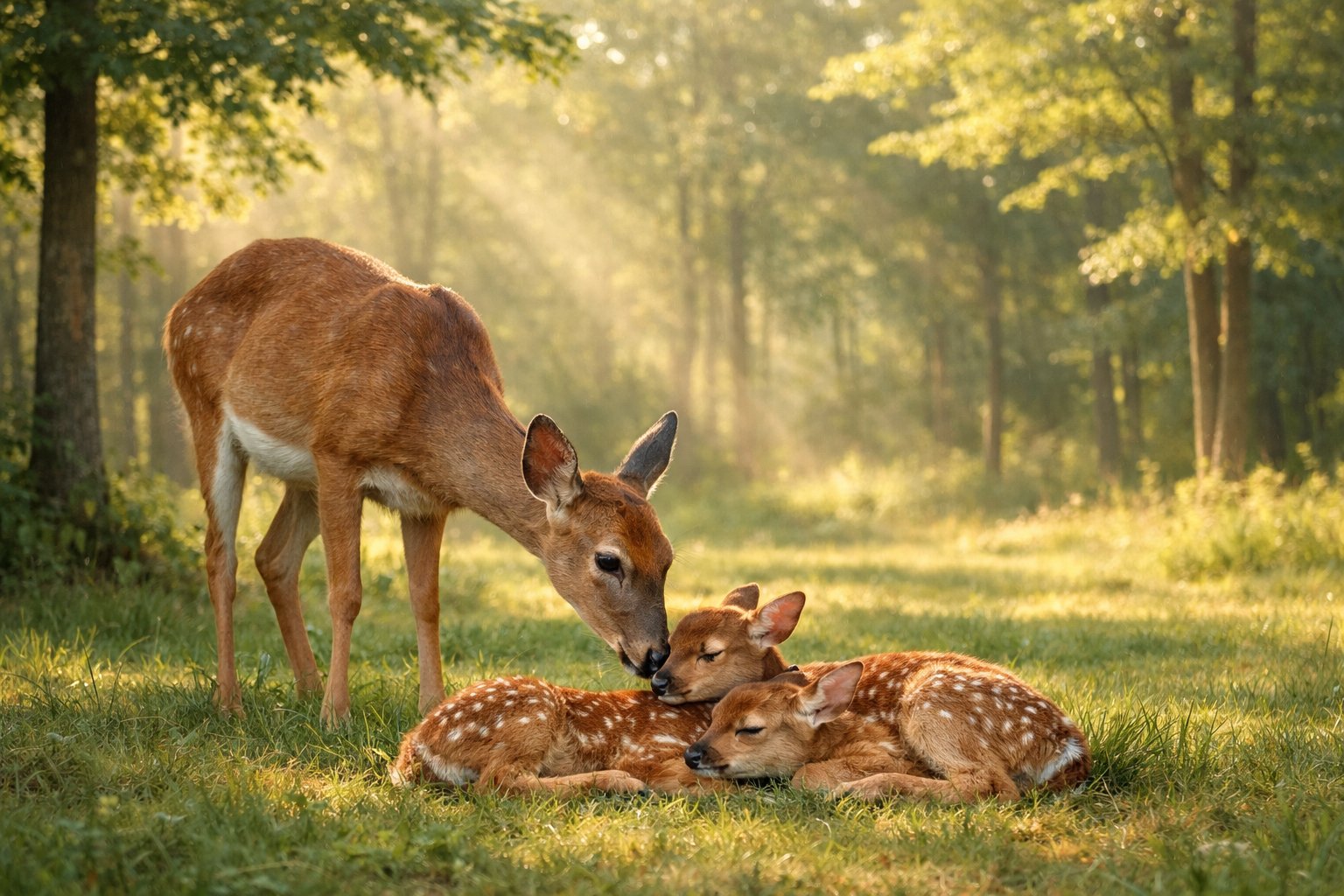
Litter size, the mother’s age, and habitat all shape how many fawns you’ll see. Many tiny fawns just don’t make it through their first weeks.
Curious about when deer give birth, what helps fawns survive, or what those numbers mean for the wildlife in your backyard? Let’s dig in.
How Many Babies Do Deer Have at Once?
Most female deer have one to three fawns at a time. Twins pop up a lot in healthy herds.
The actual number depends on the species, how old the mother is, and what she ate while pregnant.
Normal Litter Sizes by Species
White-tailed deer usually have one or two fawns. In places with good habitat, twins are pretty standard.
Single births show up more in yearlings or does that aren’t in great shape. White-tailed fawns weigh in at about 4–8 pounds when they’re born.
Mule deer often have just one fawn, but they’ll have twins if the range is really high quality. Other deer species vary—smaller ones usually stick to single fawns, and some tropical species do their own thing.
If food and cover are everywhere, you’ll see bigger average litter sizes.
Twins, Triplets, Quadruplets, and Quintuplets
Twins are the most common multiple-birth for North American deer like white-tailed and mule deer. Triplets happen sometimes, but you’ll only see them when nutrition and genetics are both really strong.
Quadruplets and quintuplets? Those are almost unheard of, and only show up in special spots or certain herds.
When a doe has more than one fawn, she’s got her work cut out for her. She needs to hide and nurse each one, and their survival depends on food, predators, and how healthy she is.
If you ever spot a doe with a big group of fawns, it usually means the local resources are excellent or she’s just unusually fertile.
Litter Size Variation by Doe Age and Health
Yearling does usually have just one fawn. Their bodies are still growing, so they need most of their energy for themselves.
Mature does—especially those between two and seven years old—more often have twins. Older does can still have twins, but if their health drops, their fertility might too.
Nutrition makes a huge difference. Pregnant does with lots of good food or less competition usually have more fawns.
Disease, parasites, and heavy predator pressure can cut down both litter size and survival. If you’re watching a local herd, check out their body condition in spring to guess how many fawns you’ll see that year.
Factors Impacting Fawn Numbers and Survival
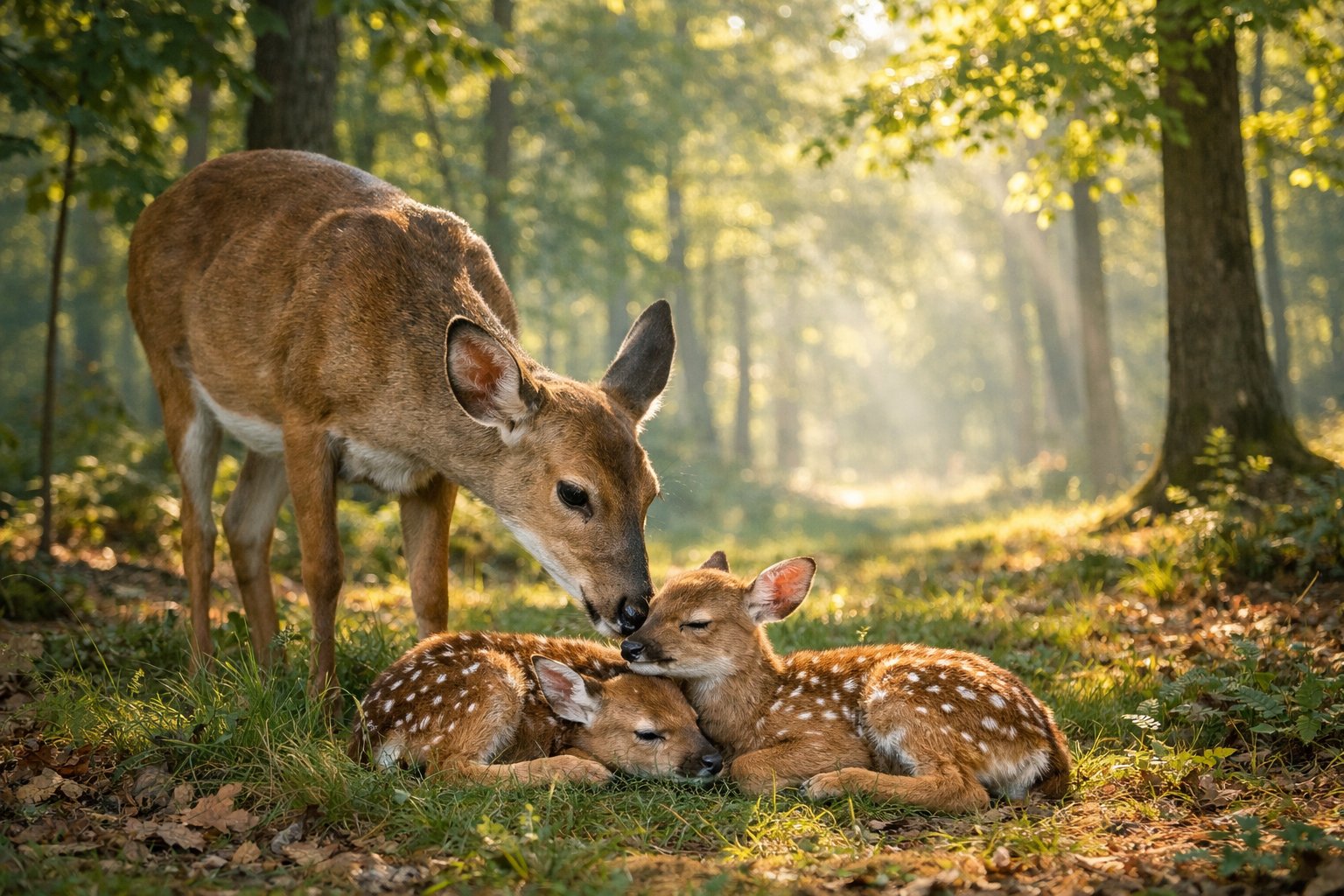
Food, predators, breeding season, and the deer species in your area all shape how many fawns are born—and how many make it.
Habitat quality, disease, hunting, and even the weather play big roles too.
Species Differences and Regional Trends
Different deer species have their own fawn patterns. In North America, white-tailed does can have one to three fawns, but twins are common if food is everywhere.
Mule deer stick to singles more often, especially out west where it’s drier. The age of your local herd matters too—young does usually start with just one fawn until they’re fully grown.
Where forests are rich and spring growth is strong, does put on weight and are more likely to have twins. In broken-up or poor habitat, fawn numbers drop and the herd gets older.
Bucks can stress out does during the rut, and sometimes that means fewer fawns the next year.
Nutritional Status and Habitat Quality
Nutrition really drives how many fawns a doe can carry and raise. If your local woods or fields have plenty of fresh greens, herbs, or even farm crops in spring and summer, does gain fat and usually have more twins.
When habitat shrinks or gets chopped up, food and safe hiding spots for fawns disappear. That means fewer fawns survive.
Spring and summer food matter most, since fawns are developing and does need to make milk. Disease and parasites—often linked to poor nutrition—can knock survival rates down even further.
Look for thick underbrush, native grasses, and water nearby if you want clues about high-quality deer habitat.
Predators and Fawn Survival Rates
Predators take a lot of newborn fawns. In some areas, coyotes are the main reason fawns don’t make it, especially where woods are broken up.
Bobcats, black bears, wolves, and sometimes even bears go after fawns too. How much cover there is makes a huge difference—thick brush gives fawns a chance to hide, but open farmland leaves them exposed.
Timing really matters. Newborn fawns are in the most danger during their first few weeks, when they mostly rely on camouflage and staying still.
Good hunting and population management can help keep things balanced. Disease and poor nutrition just make fawns even more likely to end up as predator food.
Role of Breeding Season and Environmental Timing
The rut really sets the calendar for deer. Bucks start breeding in autumn, which means fawns show up in spring or early summer—right when plants are growing fast and there’s plenty of milk and cover around.
But when winter drags on or spring comes late, fawn survival takes a hit. Mothers struggle to find enough food when it matters most, and you can probably guess how tough that gets for the little ones.
Climate shifts throw another wrench in the works. Early or late springs can mess with the timing of the fawning season. If spring green-up happens too early, fawns born on the usual schedule might miss the best forage.
You might want to keep an eye on your local rut timing and plant growth. That way, you can spot trends in fawn production. If you manage land, protecting spring cover and forage really helps line up fawning with peak food availability.


