
You might spot deer near your chicken coop now and then, but honestly, they almost never go after chickens. Deer stick to plants—they’re herbivores through and through. Most of the time, deer just ignore chickens, though weird situations can always pop up.
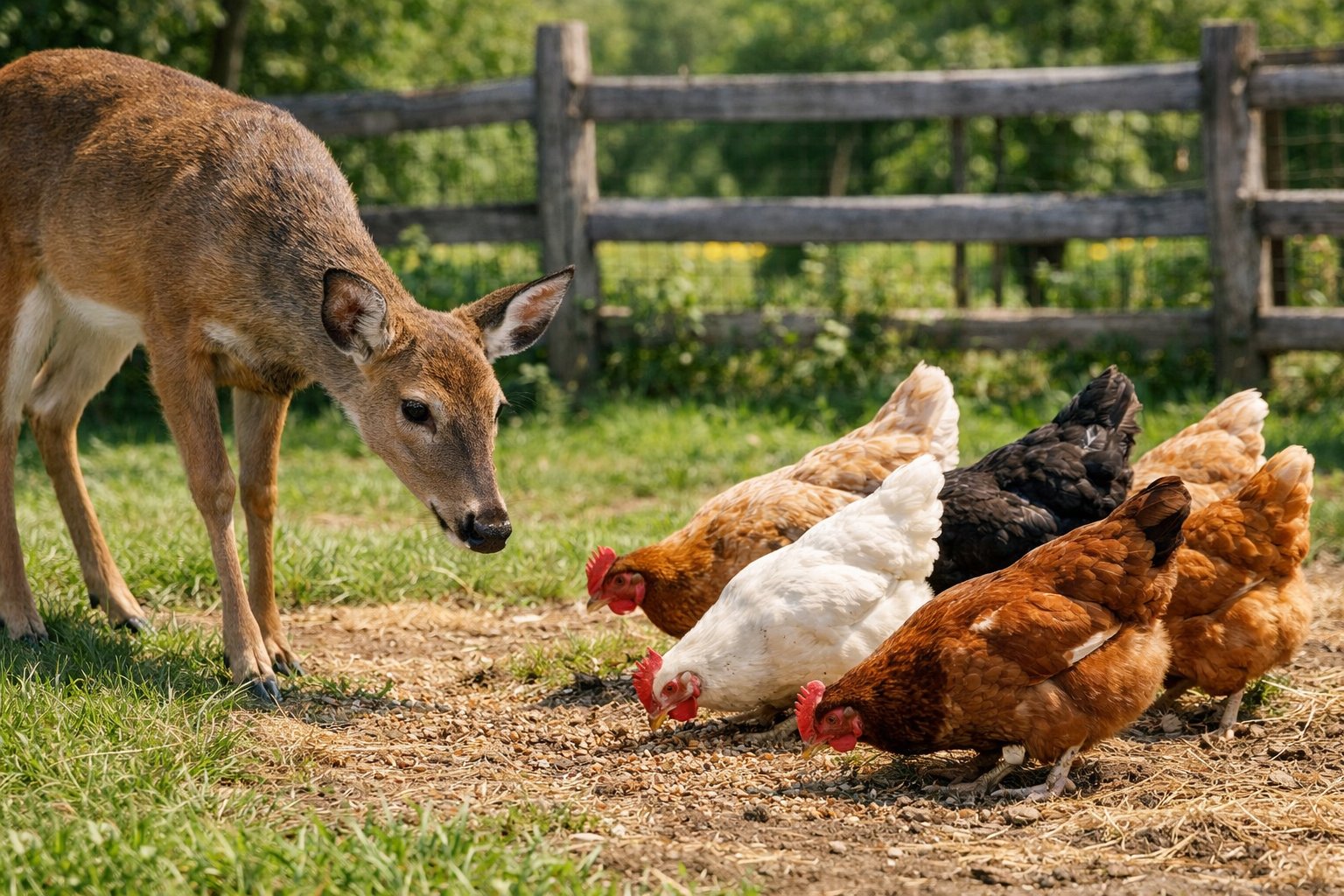
Still, it’s smart to pay attention if deer start hanging around your yard. Let’s dig into how likely deer are to bother chickens, what kind of trouble they might cause, and some ways you can keep your flock safer.
Are Deer Likely to Eat Chickens?

Deer munch on plants and almost always ignore live chickens. Sometimes they’ll show up for spilled feed or to nibble on soft plants, but hunting adult chickens? That’s super rare.
Deer Dietary Habits and Natural Preferences
Deer have a ruminant digestive system built for leaves, shoots, fruits, and nuts. Their four-chambered stomach breaks down plant fibers, so they want tender browse and nutrient-rich plants, not meat.
You’ll probably notice deer checking out high-calcium or salty things when they’re growing antlers or nursing fawns. That curiosity sometimes brings them close to your coop, but they just aren’t equipped to kill or eat poultry. If a deer wanders near your chickens, it’s almost always after spilled feed or low shrubs, not the birds.
Rare Instances of Deer Consuming Meat
Deer mostly eat plants, but sometimes they nibble on animal stuff. There are stories of deer eating eggs, scavenging dead animals, or even poking at nestlings if they’re desperate for minerals.
If a deer eats any chicken meat, it’s usually from a bird that’s already dead or injured. You can look for clues like disturbed feed, deer droppings, and hoof prints to tell if deer have been around. Unlike foxes or raccoons, deer won’t leave drag marks or those classic bite wounds.
Wild Deer Versus Domesticated Chickens
Wild deer and chickens don’t really compete. Chickens are noisy, active, and can flutter away if they need to. Maybe a fawn or a hurt chicken could be at risk if it can’t move, but healthy adult chickens have little to worry about from deer.
What you might notice more is deer eating chicken feed or messing up your shelter plants. To protect your flock, secure the feed, put up sturdy fencing, and clear out anything that might attract deer like fallen fruit.
Potential Risks of Deer Around Chickens
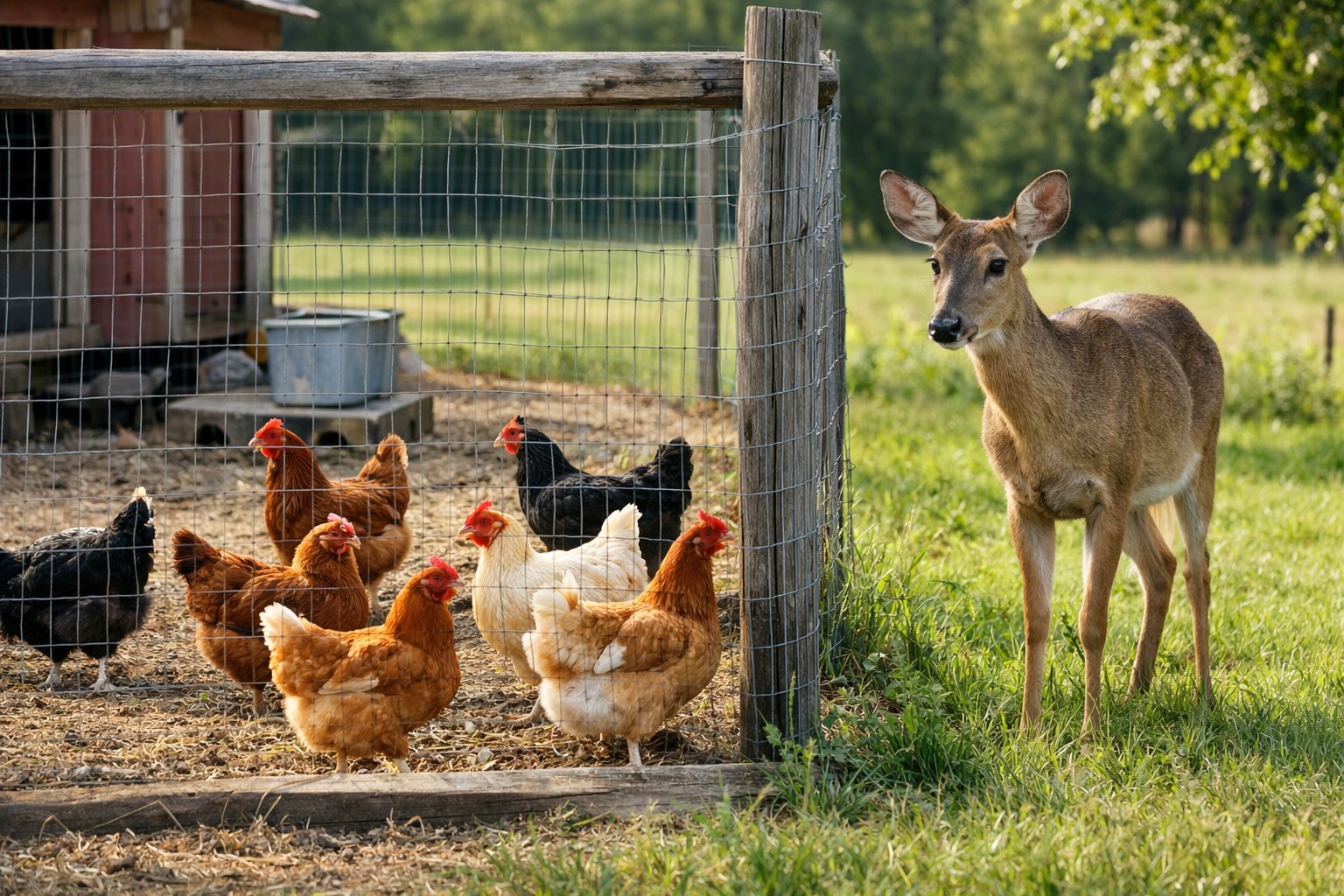
Deer near your chickens can bring in disease, eat or ruin feed, and damage the coop area. It’s a good idea to check your feed storage, watch your birds’ behavior, and keep fences in good shape to cut down on these issues.
Disease Transmission Between Deer and Chickens
Deer sometimes carry germs that can make chickens sick. They might shed bacteria like Salmonella or E. coli in their droppings, which can end up in your chickens’ food or water.
Chronic wasting disease (CWD) hits deer, but so far, there’s no proof it harms chickens. Still, other bugs and parasites from deer can stress your flock or mess with their immune systems. Don’t let deer get to your feed or waterers if you can help it.
Try to keep feed in closed containers, clean up spilled grain, and get rid of deer droppings quickly. If you notice your chickens acting off—like diarrhea or looking tired—keep an eye out. Limit how much wild animals and your chickens cross paths, especially around runs and trails.
Competition for Chicken Feed and Resources
Deer will gladly eat grain and chicken feed, especially corn and wheat, if they find it. That can drain your feed supplies fast and drive up your costs. They’ll also trample the area around feeders, leaving a muddy mess that chickens have to deal with.
If deer get into the feeders, your chickens might not get enough food or could miss out on the right nutrients. Chicken feed is made for chickens, and if they start eating what’s left after deer have been at it—or wild plants instead—they might end up with upset stomachs or health issues.
Use deer-proof feeders, raise them off the ground, and stash bulk feed in locked bins that keep out both rodents and deer. Fencing and motion-activated deterrents can help protect your feed and coop area too.
Safety of Chicken Coops and Poultry Feed
Deer love to nose around chicken coops. They can knock down fencing, shove at gates, or even trample low shelters when they’re searching for food. When deer break fencing, they don’t just let themselves in—now foxes, raccoons, and other sneaky predators can stroll right through those openings.
After deer wander through, check posts, gate latches, and mesh for any signs of wear or damage. It’s amazing how quickly things can go from secure to risky.
When deer snack on spilled poultry feed, they bring contamination risks with them. Their droppings can end up on feed or too close to waterers, which means bacteria and parasites might sneak in. If you notice deer showing up in your yard, get ready for more cleanup and plan to swap out feed more often.
To keep your coop safe, put up taller perimeter fencing—8 feet or more if that’s allowed where you live. Reinforce any weak spots and only use covered feeders inside the run. Store your feed in sealed plastic or metal containers. Sweep up spilled grain every day so you don’t end up hosting a party for deer and rodents in your chickens’ space.


