
Ever caught a deer eyeing your picnic or sniffing a hot dog left on the grill? Surprisingly, deer will eat hot dogs if they get the chance, but those snacks really aren’t good for them.
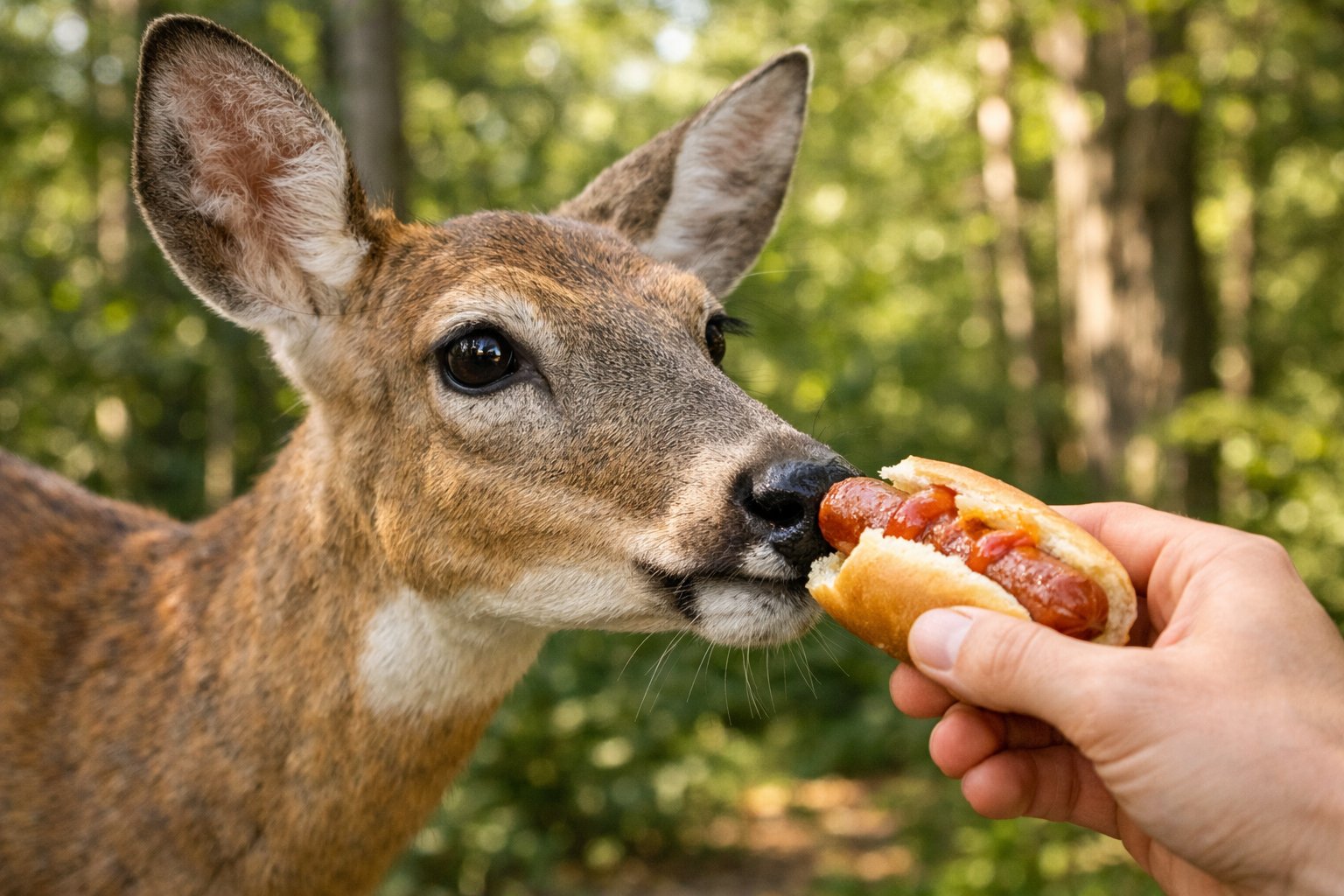
Let’s get into why deer sometimes take human food. We’ll look at what can go wrong when they eat processed meats, and how hunters actually turn venison into safe, tasty hot dogs for people. If you’re on the fence about feeding wildlife, this might help you decide. There’s a real difference between wild deer eating hot dogs and making hot dogs from deer meat.
Do Deer Eat Hot Dogs in the Wild?

Deer mostly munch on plants like acorns, grasses, clover, forbs, wildflowers, twigs, and legumes. Still, they’ll sample weird stuff if food is scarce or if they stumble on salty snacks.
Deer Diets and Natural Food Preferences
You usually see deer eating plant material. In spring and summer, they seem to love tender forbs, wildflowers, and clover for that protein boost.
When fall rolls around, nuts like acorns and more legumes help them build up fat for winter. Once winter hits, deer browse on twigs and woody stuff since green plants are hard to find.
Deer need a high-fiber, low-fat diet. Their rumen microbes break down plant cellulose, so grains, processed meats, and fatty human foods just don’t work in their gut.
If you’re thinking about feeding them, stick with native plants or check with wildlife experts instead of tossing them processed food.
Unusual Eating Behavior: Deer and Meat
People have spotted deer eating meat, but it’s rare. Sometimes, they’ll nibble on small birds, rodents, or even discarded meat like hot dogs if natural salts or calories are tough to find.
Usually, these moments happen because they’re desperate, curious, or drawn by strong salt smells. When a deer eats a hot dog, it’s not normal at all.
You might catch a deer sneaking a bite if the food’s easy to grab at campsites or picnics. But if one deer starts, others might catch on and start looking for people food too.
Risks and Effects of Feeding Hot Dogs to Deer
Feeding hot dogs to deer can mess things up for both the animals and your neighborhood. Hot dogs pack a lot of salt, fat, and preservatives, which can upset a deer’s digestion and throw off their nutrition.
If people keep feeding them, deer can lose their natural fear of humans and start gathering in one spot. That leads to more disease, attracts predators, and even increases the chances they’ll get hit by cars.
Plant communities might suffer too, since deer change their foraging habits. If you want to help local wildlife, skip the processed meats and plant native legumes or other forage plants instead.
Some folks have actually seen deer go for hot dogs near grills and campsites, which shows how easy access can spark these odd behaviors.
How Venison Hot Dogs Are Made

Here’s how people turn lean venison into juicy hot dogs. The process covers the main steps, tools, and flavors that make it work.
You’ll get a quick rundown on meat-to-fat ratios, seasonings, and some straightforward cooking choices.
Traditional Deer Hot Dogs vs. Store-Bought Varieties
Traditional deer hot dogs start with freshly ground venison, usually mixed with pork fat for about an 80/20 lean-to-fat ratio. That fat keeps the hot dogs moist and helps bind everything together.
Homemade links get stuffed into hog or collagen casings and twisted into 5–7 inch links before cooking.
Store-bought venison or mixed-game hot dogs use more binder, salt, and preservatives. They might have fillers like textured vegetable protein or extra pork to improve texture and shelf life.
When you buy commercial products, you lose some control over the seasoning and fat content. If you care about flavor and using wild game, making your own keeps things pure.
You get to pick the sodium level, additives, and whether you want natural casings.
Key Ingredients and Seasonings for Homemade Venison Hot Dogs
Start with about three parts ground venison to one part pork fat. Chill both meats before grinding to keep the grind firm and avoid smearing.
Use kosher salt as your main seasoning—about one tablespoon per three pounds of meat. Add a teaspoon of black pepper, plus a teaspoon each of garlic powder and onion powder for some extra depth.
Want smoky or spicy? Toss in one or two teaspoons of smoked paprika and half a teaspoon of cayenne pepper. Adjust as you like.
Add about a quarter cup of ice water to help bind the mix and keep things juicy. If you want more aroma, try a teaspoon of ground coriander or mustard powder.
Keep everything cold while you mix. Cook a small patty to check the salt and spice before stuffing.
If you love classic toppings, plan for mustard, relish, or coleslaw when you serve them.
Essential Equipment and Cooking Methods
You’ll want a meat grinder and a sausage stuffer if you care about texture and easy filling. I usually reach for a medium grind plate with venison—it just seems to work best.
Grab some hog casings and give them a good soak and rinse. If you’re after something simpler, collagen casings save a bit of hassle.
I keep twine and a thermometer on hand. They make tying off links and checking the temp a lot easier.
When it comes to cooking, you can smoke or grill. If you’re smoking, aim for low heat—maybe 180–200°F.
Let the links go until they hit an internal temp of 160°F. That usually takes about 1–2 hours, but it depends on their size.
On the grill, cook over medium heat. Turn the links often so they don’t burn.
Once they reach 160°F inside and the casing looks nicely browned, you’re set.
Let the sausages rest for a few minutes after cooking. Then slice them up and serve with whatever sides you like—coleslaw or grilled onions always seem to work well with that wild-game flavor.


