
Looking for a quick answer? Most deer can sprint around 30 to 40 miles per hour, and some, like caribou, can hit about 50 mph in short bursts.
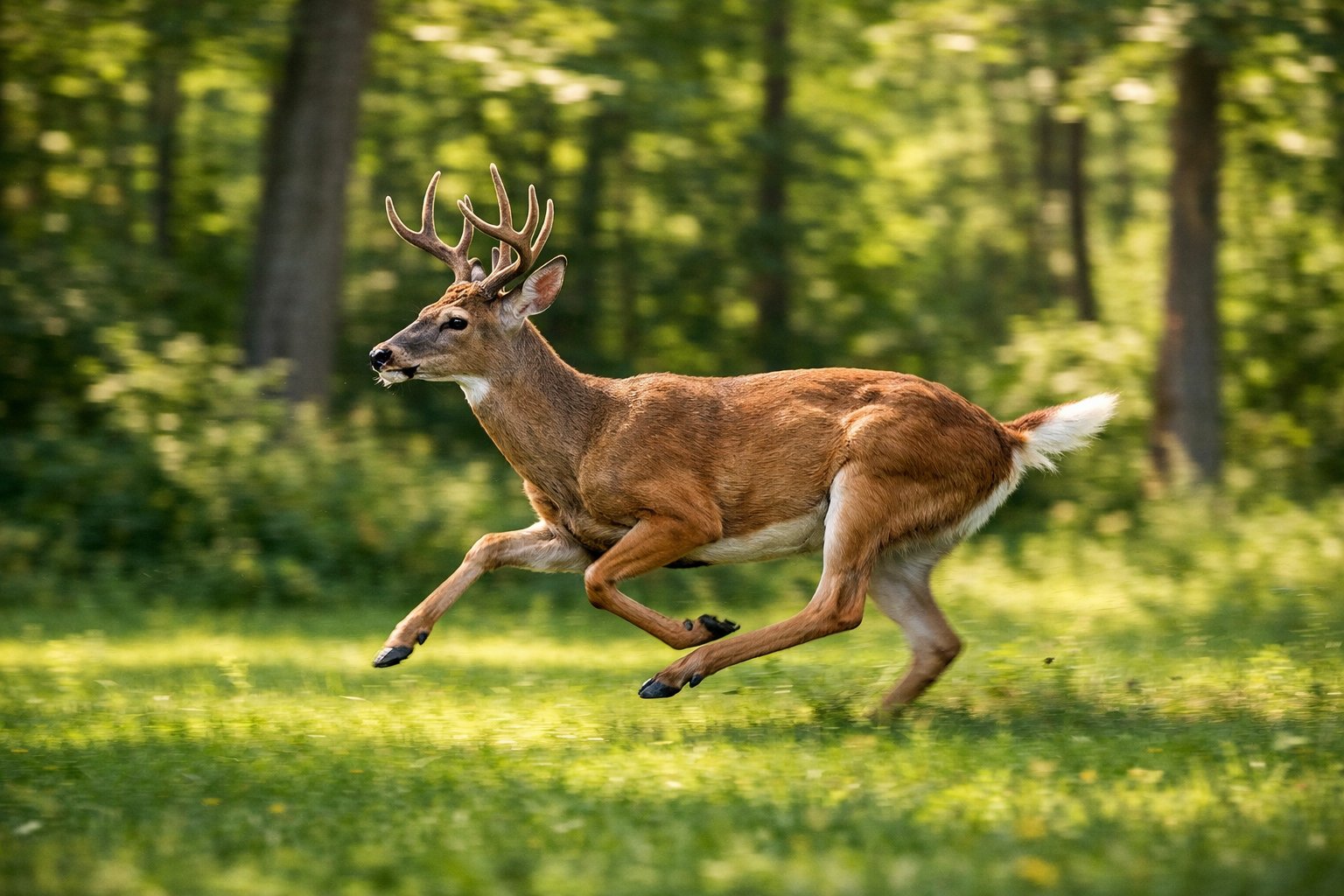
Let’s get into how that speed shifts depending on species, size, and what’s happening around the deer.
Why do deer rely on short, explosive runs and sharp turns instead of marathon chases? It’s all about survival.
Keep reading and you’ll find out which deer are the true speedsters, what slows them down, and how things like terrain or age change the game.
How Fast Can a Deer Run?

Deer can really move when they need to, but only for a short time.
Their top speed depends on species, body size, and the ground they’re running on.
Predators and habitat also play a big part in how they use that speed.
Average and Top Running Speeds
Most North American deer can burst up to 30–45 mph.
White-tailed deer usually hit 35–40 mph in a sprint.
Mule deer aren’t far behind, often pushing 40–45 mph out in the open.
Bigger species like elk and moose don’t reach quite as high per pound, but they can still clock in at roughly 35–45 mph for those quick dashes.
If you’re thinking about how long they can keep it up, that’s a different story.
Deer can hold 20–30 mph for a while, but their absolute max? That’s just for a burst.
They use their powerful back legs and a bounding run to leap over logs or fences when they’re escaping something.
Differences Between Deer Species
Speed really comes down to size and leg length.
Smaller, lighter deer—like some whitetail populations—take off fast and love to zigzag.
Mule deer, with those long legs, do great on open plains and rocky spots.
Elk and moose are heavier, so while they can hit strong top speeds, they’re not as nimble in thick woods.
Reindeer (caribou) stand out as some of the fastest, sometimes clocked near 50 mph.
Red deer in Europe and Asia usually get up to around 40 mph.
But honestly, it depends. Habitat, age, health, and even the season (think rut or winter) all change how fast a deer can go.
How Deer Speed Compares to Predators
Deer can often outrun or at least match many predators, especially in a straight sprint.
Coyotes and wolves run about 30–40 mph, but they can’t always keep it up for long.
Mountain lions count on sneaking up and then a quick pounce, not a drawn-out chase.
Pronghorns aren’t actually deer, but they blow most deer out of the water—hitting 55 mph and keeping it up longer.
If you’ve ever seen a chase, you’ll notice deer don’t just run straight.
They speed up fast, zigzag, and weave through obstacles to shake off predators.
That combo usually gives them the edge, especially against a lone hunter.
Factors That Influence Deer Speed
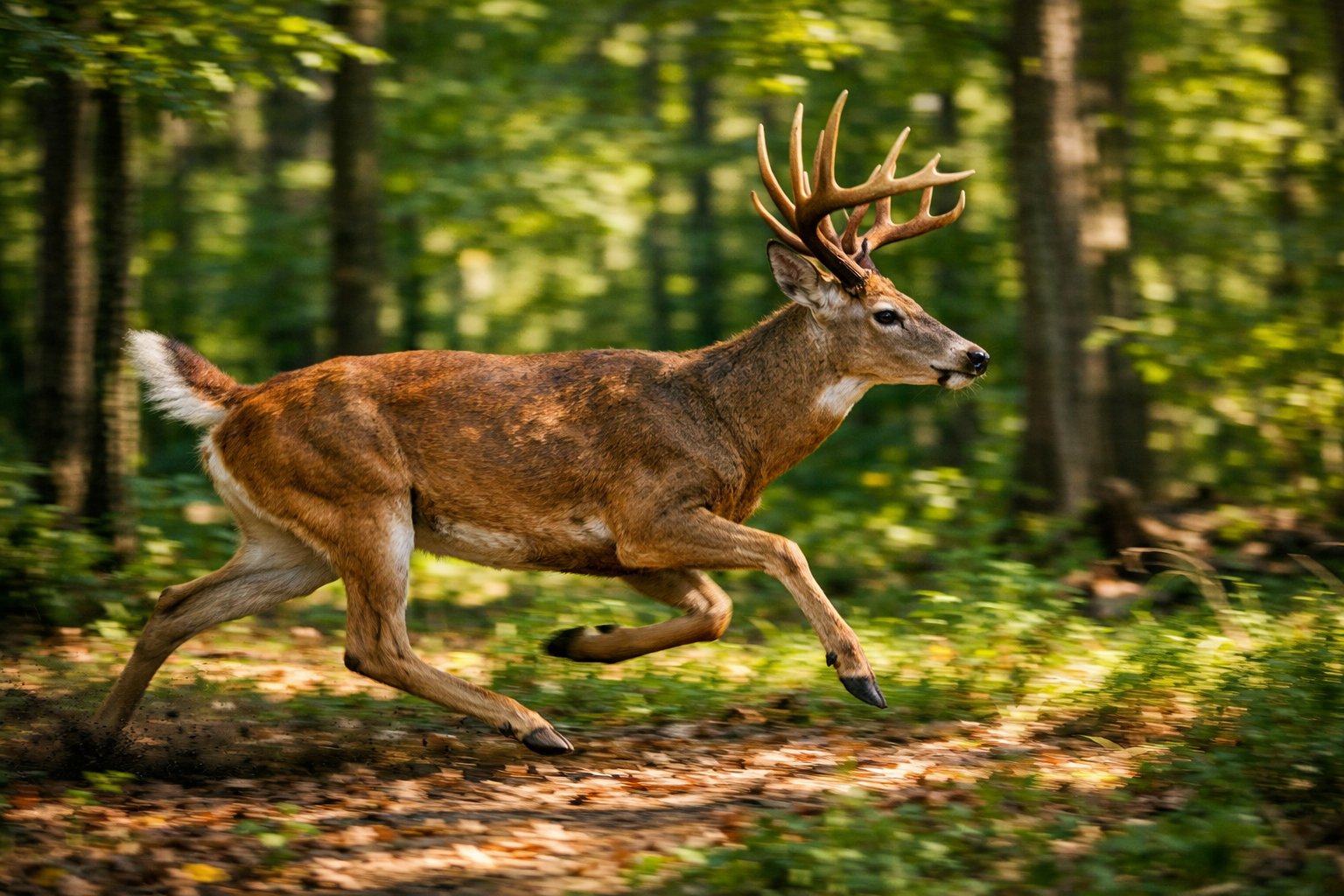
A deer’s speed isn’t just about legs.
It depends on how it’s built, how old or healthy it is, where it’s running, and why it’s running in the first place.
All these things mix together and decide how fast a deer can actually move, how long it can keep going, and how well it dodges stuff in its way.
Anatomy and Physiology: Built for Speed
Deer have these long, powerful back legs that launch them forward.
That’s what gives them those crazy-fast starts and long leaps.
If you look at their bodies, you’ll see why they can hit those speeds, but only for a short time.
Their spine works like a spring, flexing with every jump.
That stretch and compress action adds distance to each stride.
Big muscles in their hindquarters store up energy for quick getaways.
Hooves and flexible joints cut down on wasted energy.
They’ve got lightweight bones, too, so they’re strong but not heavy.
Put it all together, and you get an animal that’s agile, quick, and pretty good at dodging predators or clearing a fence.
Age, Health, and Terrain Effects
Young adult deer usually leave fawns or older deer in the dust.
If a deer’s hurt, sick, or carrying too much weight, it won’t run as fast.
Prime adults outpace the rest, plain and simple.
Where a deer runs changes everything.
Flat, open fields let them hit those top speeds—think 35–45 mph for a lot of species.
But thick woods, deep snow, or rocky ground slow them down and force them to make more hops than runs.
Weather matters, too.
Wet or icy ground makes hooves slip, while hard-packed dirt lets them fly.
If a deer’s well-fed and healthy, it can run farther before getting tired.
But if it’s dealing with parasites or poor nutrition, stamina drops fast.
Deer Speed in Survival, Mating, and Hunting Contexts
When a predator shows up, deer kick into high gear and dart away with quick zig-zags. They rely on speed to survive.
You’ll notice those sudden bursts, some wild turns, and even big leaps as they try to shake off anything chasing them.
During the rut, bucks get a bit reckless and run around more than usual. They’ll push their limits during mating chases, which can actually make them more visible to hunters.
Hunters should keep in mind that while rutting bucks move more, they don’t always hit their fastest speeds. Sometimes, they just seem more distracted.
Human activity and hunting pressure make deer behave differently too. If they’re close to roads or in heavily hunted spots, they’ll often choose quick escape bursts instead of drawn-out runs.
If you really want to predict how deer will move when you run into them, you have to consider all these different situations. It’s not always as simple as it seems.


