
You can actually spot a black deer—they really do exist, but wow, are they rare. A genetic twist called melanism gives some deer a dark or black coat. In some places, especially parts of Texas, people report more sightings than elsewhere. So, if you’re hoping to see one, you’ve got a shot, but it’s definitely a long one depending on where you look.
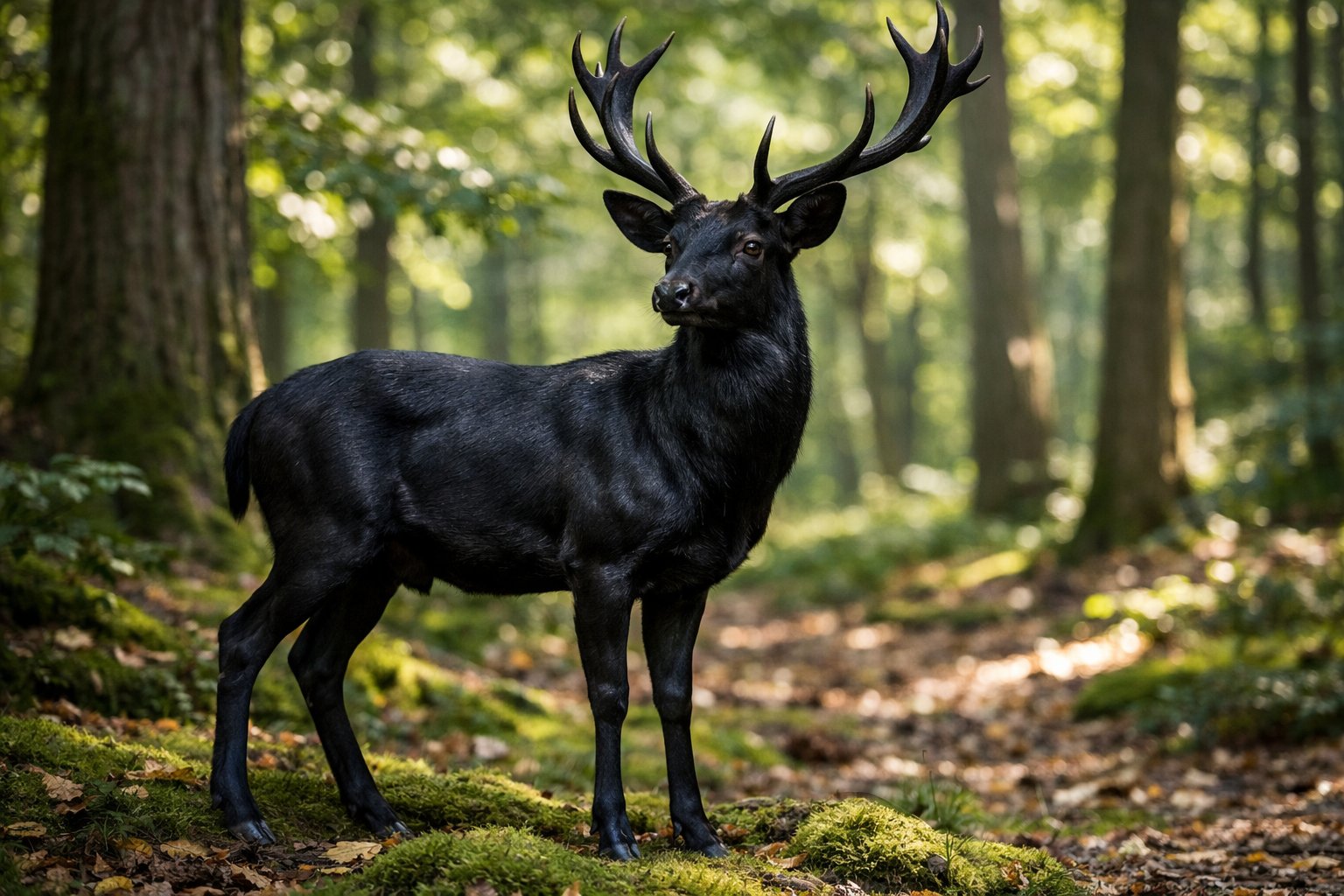
Let’s talk about what melanism is, how it happens, and how you can tell a melanistic deer apart from other color types. You’ll also get a sense of just how rare these deer are and where you might have the best luck spotting one.
What Are Black Deer and How Do They Occur?

Black deer aren’t a separate species. They’re just deer with way more dark pigment in their fur, all because of a genetic change.
Too much melanin in their coat turns them dark, and certain genes drive that process. This is different from what happens in albino or piebald deer.
Melanism and Melanin in Animals
Melanism basically means an animal’s got more melanin than normal. Melanin is the pigment that darkens skin, hair, and eyes.
In deer, that extra melanin can turn a regular brown coat almost black. You might spot melanistic individuals in different deer species—white-tailed deer and fallow deer, for example.
The dark coat actually helps some deer blend into thick forests or move around at night without being seen as easily. It’s not a new species, just a cool color variation.
Melanistic animals come in shades too—some are jet-black, others just look really dark brown. The melanin amount even changes eye and nose color a bit.
Unlike albino deer, melanistic ones keep their normal eye color since their eyes still have pigment.
Genetic Mutation and the Melanocortin 1 Receptor Gene
A genetic mutation usually causes melanism. One gene, the melanocortin 1 receptor gene (MC1R), plays a big role.
When MC1R changes, cells start making more eumelanin, which is the dark pigment. If both parents carry this gene variant, their fawn has a higher shot at being melanistic.
The mutation doesn’t show up the same way everywhere. That’s probably why places like Texas or some isolated areas see more black deer.
Genetics explain why you might find a cluster of melanistic deer in one spot but almost none elsewhere. Researchers track MC1R and related genes to see how this trait moves through deer populations.
Differences From Albino and Piebald Deer
Albino deer have no melanin at all. You’ll know them by their white coats and pinkish eyes or noses.
Piebald deer have a mix of normal and white fur. That pattern comes from a totally different genetic cause.
Piebalds show up with big white patches, while melanistic deer just look dark all over.
Here’s a quick cheat sheet:
- Melanistic deer: dark coat all over, eyes look normal.
- Albino deer: white fur, pink eyes and nose.
- Piebald deer: mix of dark and white patches, normal eyes.
These differences help with ID, but they also affect how people treat them. A lot of hunters and wildlife fans would rather just watch a melanistic deer than hunt it, since they’re so rare.
If you want to know where melanistic deer turn up, check out reports from Texas and a few other states.
How Rare Are Black Deer and Where Are They Found?

Black deer pop up because of a rare genetic change that darkens their fur. Let’s look at how often they show up, where you might find them in the U.S., and which deer species can actually have melanism.
Deer Population Statistics and Rarity
Melanistic deer barely show up in most deer populations. Some estimates say it’s about 1 in 30,000, but others go as rare as 1 in 100,000 white-tailed deer.
Basically, you could spend your whole life outdoors and never see one in most places.
The trait is recessive, so both parents need to carry the gene for a fawn to be melanistic. That keeps black deer rare, not a common sight.
Wildlife watchers and hunters using tools like the HuntWise app often spot them as one-off cases. There’s not much data, so it’s tough to know the exact numbers.
Regions With Higher Incidence: Central Texas and Beyond
Central Texas, especially the Edwards Plateau and nearby counties, has the most melanistic white-tailed deer in the U.S. Comal County and the Hill Country have several verified sightings and even some small breeding lines.
Other places—Pennsylvania, Virginia, Michigan, Mississippi, and New York—have occasional reports. But outside Texas, these are mostly just single sightings, not real populations.
If you’re serious about seeing a melanistic whitetail, your best bet is central Texas. Look on private land, preserves, or spots where naturalists have seen them more than once.
Local genetic isolation and old herd lines probably explain why Texas is such a hotspot.
Camouflage, Predation, and Survival Factors
A black coat changes how visible a deer is in certain places. In thick, shady woods, the dark fur helps them hide better at dusk or in the shadows.
That can make life safer when predators or hunters are around. But in open fields or snowy areas, a black deer stands out.
Hot weather might be tougher for them too, but we don’t have much proof about how it affects survival. Local breeding can make the melanism gene more common in a herd, but hunting and habitat loss can wipe it out just as fast.
Black Deer in Other Species and Locations
Melanism pops up in several deer species, not just white-tailed deer.
Fallow deer and some mule deer groups have shown dark-colored individuals too.
Fallow deer, especially those kept in parks, sometimes have more melanistic members. Their breeding history probably plays a role in that.
People sometimes compare these dark deer to “black panthers.” But honestly, that label belongs to melanistic big cats, not deer.
Still, both cases come from the same thing: too much melanin.
If you want to track sightings, check in with local wildlife groups or naturalists. You can also use reporting tools to confirm location and species.
That way, people can keep up good genetic records and help protect habitats—so these rare deer stick around as part of local biodiversity.


