
You might guess wolves or mountain lions top the list, but honestly, humans kill more deer each year than anything else—mostly through hunting and car accidents. That reality shapes deer populations, changes where deer roam, and sets the stage for everything else in this article about what really kills deer and which predators matter depending on where you are.
Disease, habitat loss, and competition within deer herds also take a toll. Local predators like coyotes, bears, and cougars can make a difference in some spots. If you want to get a feel for what really controls deer numbers, and how human decisions tip the balance, you’re in the right place.
Major Causes of Deer Mortality
Deer don’t just die from one thing. Human actions, cars, predators, and disease all play a part.
Each factor hits different ages and seasons, which keeps wildlife managers on their toes.
Hunting and Human Impact
Hunting stands out as the biggest direct cause of deer deaths from humans in much of North America. Every year, regulated hunting removes millions of deer, especially adult does and bucks, during specific seasons.
Wildlife agencies set harvest limits and hand out permits to keep numbers in check, support herd health, and try to reduce crop and forest damage.
Unregulated or illegal hunting can really hurt local populations. When people overhunt in small areas, they can shrink genetic diversity and change the age structure.
Human land use—like habitat loss, fragmentation, and deforestation—pushes deer into worse habitats and closer to roads and people. Managing deer often means juggling hunting, protecting habitats, and keeping a close eye on numbers.
Vehicle Collisions
Car-deer collisions wipe out a huge number of deer every year, especially at dawn and dusk. If you drive in the fall during the rut or in spring when fawns are on the move, your risk jumps.
Reports often count hundreds of thousands, sometimes over a million, deer-vehicle incidents per year in the U.S. These crashes can injure drivers too.
You’ll find higher collision rates on rural roads, along forest edges, and wherever habitat corridors cross highways. Wildlife agencies put up deer crossing signs and sometimes build underpasses or fences to cut down on crashes.
Driving slower at peak times, using good headlights, and paying attention to local warnings all help keep you and the deer safer.
Predation by Animals
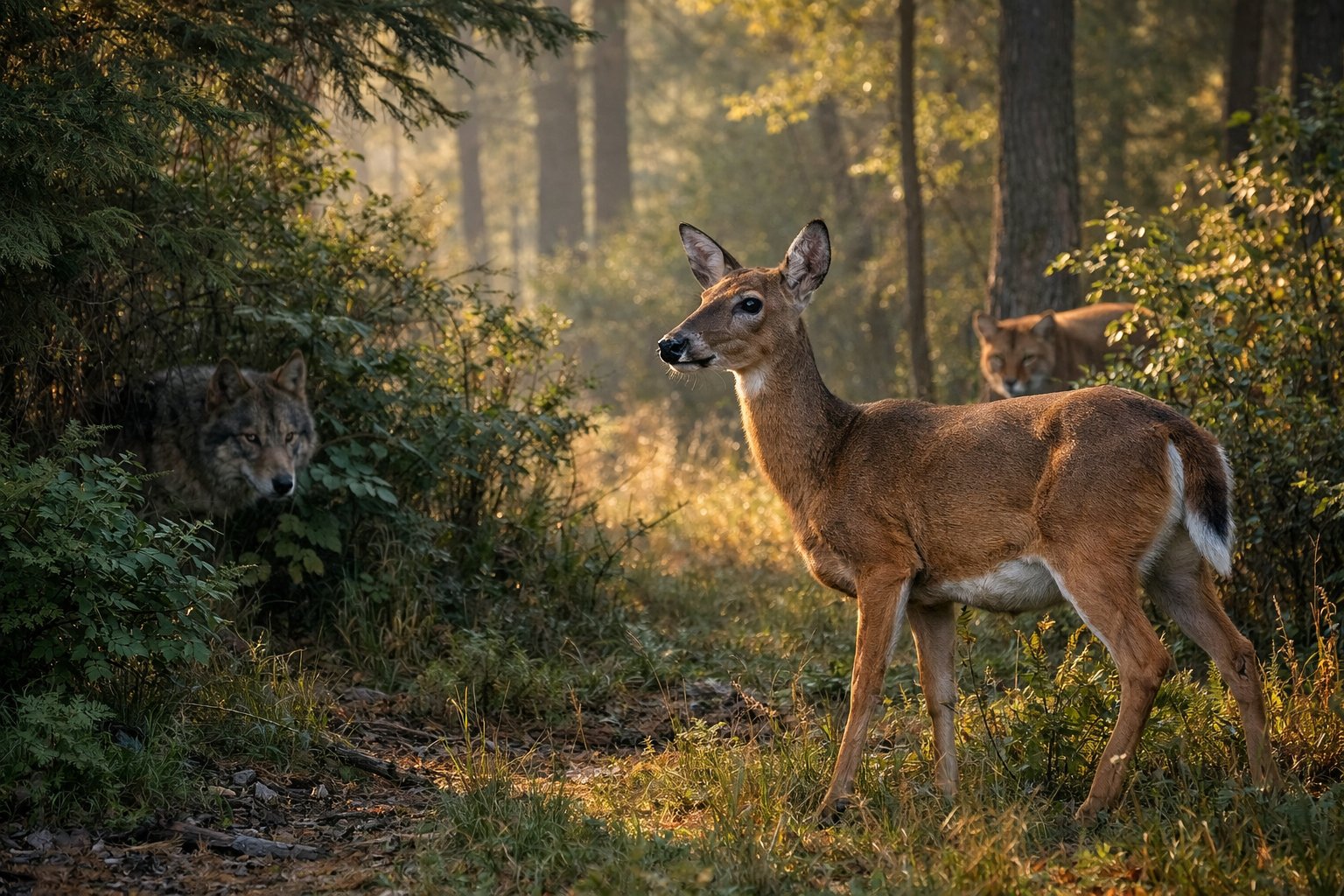
Predators mostly go after fawns, but sometimes take adults depending on the region. Coyotes, wolves, bears, bobcats, and mountain lions kill plenty of young deer, especially in those first weeks after birth.
Researchers find predators can cause a big chunk of fawn deaths in some places—sometimes more than half.
Predator impact really depends on habitat and how much people hunt. If hunting reduces adult numbers or if habitat gets chopped up, fawns get more vulnerable.
Predators also help thin out weak or sick deer, which wildlife managers actually consider when making plans.
Disease and Natural Factors
Disease, starvation, and weather can kill deer slowly or all at once. Chronic Wasting Disease (CWD) and other infections spread through herds and cut survival rates over time.
Harsh winters, not enough food, and shrinking habitats lead to starvation and higher death rates in bad years.
Seasonal patterns matter: winter die-offs spike when deep snow and cold make food scarce. Fawn survival depends on how good the spring plant growth and shelter are.
Wildlife managers keep tabs on disease, test for CWD, and sometimes tweak hunting rules or feeding policies to help protect herd health.
Predators That Kill Deer

Deer run into a bunch of different predators across North America, and each one hits deer differently depending on age, habitat, and time of year.
Let’s look at which animals go after fawns and adults, where they hunt, and what you might notice near roads or in the woods.
Coyotes and Their Impact on Fawns
Coyotes are probably the top predator of deer fawns in a lot of U.S. states. They hunt in pairs or small groups, using scent and stealth to track down hidden fawns during those first two weeks of life.
In open farmland or on the edge of suburbs, coyotes can take a big share of newborn white-tailed fawns.
Coyotes don’t usually bother with big healthy adults on their own. They stick to vulnerable young, sick, or injured deer.
When coyote numbers are high, fawn mortality can shoot up, especially if wet springs make hiding cover thin.
- Typical prey: rodents and rabbits, but fawns when they can get them.
- Hunting style: ambush and endurance.
- Where to spot them: edges of woods, fields, even suburbs.
Wolves: Apex Predators of Deer
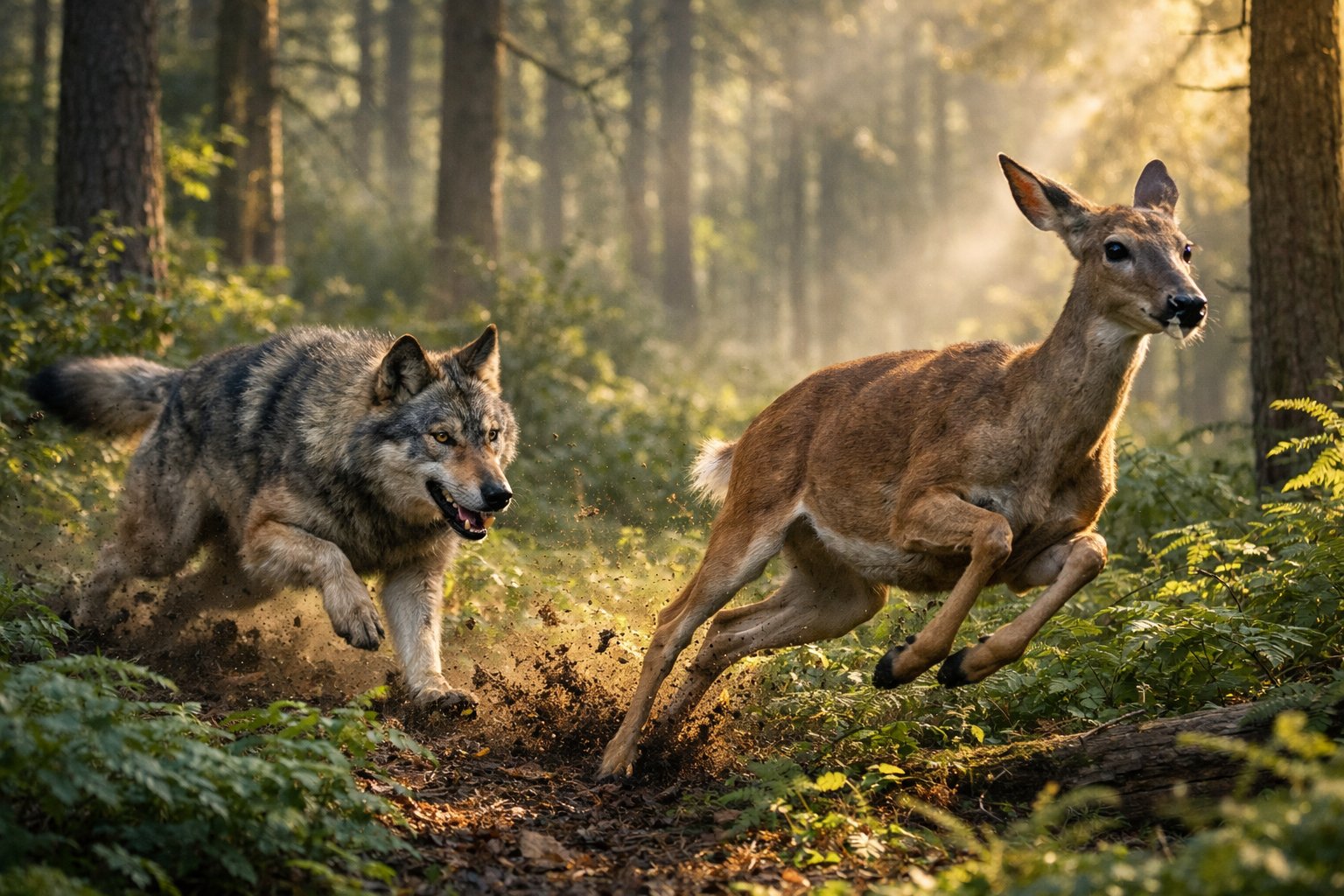
Wolves kill both fawns and adult deer and do it well where packs live. A wolf pack works together to chase and wear out deer, mostly going after older, sick, or young animals.
Where wolf numbers are strong, each wolf can take down a lot of deer every year.
Wolves change how deer behave and how big herds get across big areas. Their presence can even help forests by reducing deer browsing and changing where deer hang out.
Wolves often go after mule deer, white-tailed deer, and elk, depending on what’s around.
- Typical prey: deer, elk, moose (varies by region).
- Hunting style: pack chase and endurance.
- Where to see them: remote forests, protected lands.
Bears: Black, Grizzly, and Brown
Black bears and grizzly or brown bears mostly target newborn fawns, not adults. Bears use their noses to sniff out fawns in bedding spots and can take a lot of newborns in areas with lots of bears.
Black bears sometimes cause big, short-term fawn losses just after birth.
Grizzly and brown bears might kill larger deer if they get the chance, but they’re not really built for chasing adults like wolves or mountain lions. Bears also scavenge roadkill and carcasses, so they add to deer deaths that way too.
- Typical prey: fawns, small mammals, and carrion.
- Hunting style: opportunistic ambush and scavenging.
- Where to find them: dense forests, mountains, river corridors.
Mountain Lions, Bobcats, and Lynx
Mountain lions (or cougars) regularly kill adult deer. A single mountain lion might take a deer about once a week if there’s enough around, making them a major threat to adult deer where they live.
Bobcats and lynx, being smaller, mostly take fawns and yearlings but will go after adults if they get the opportunity.
If you’re in cougar country, watch for signs like scrapes, deer kills hidden under brush, or nighttime activity. Mountain lions hunt by sneaking up and then using a quick burst of power, ambushing deer near trails, drainages, or the edges where deer browse.
- Typical prey: deer (adults for cougars, fawns for bobcats/lynx).
- Hunting style: stealth, ambush, and pounce.
- Where to see them: rugged terrain, thick cover, forest edges.
Other Predators and Rare Threats
Raptors, scavengers, and the occasional alligator also prey on deer. Eagles and vultures usually just scavenge, but sometimes they’ll snatch up very small fawns in open areas or marshes.
American alligators often grab deer that wander too close to swamp edges in the Southeast. It’s not super common, but it definitely happens.
Let’s not forget about people. Human-related causes—like car collisions and hunting—kill way more deer each year than most wild predators do.
Wolves show up as rare predators in some states, and every now and then, a big snake might take a deer. But honestly, these threats barely compare to coyotes, bears, or cougars when it comes to numbers.
- Scavengers: Vultures and eagles mostly go after remains.
- Opportunists: Alligators in southern wetlands sometimes take deer.
- Human impact: Hunting and car accidents kill more deer than natural predators.
If you want to dig deeper into how coyotes and other animals affect deer populations, check out this page about what kills the most deer: https://www.deeranddeerhunting.com/content/blogs/dan-schmidt-deer-blog-whitetail-wisdom/what-kills-the-most-deer-in-a-year.


