
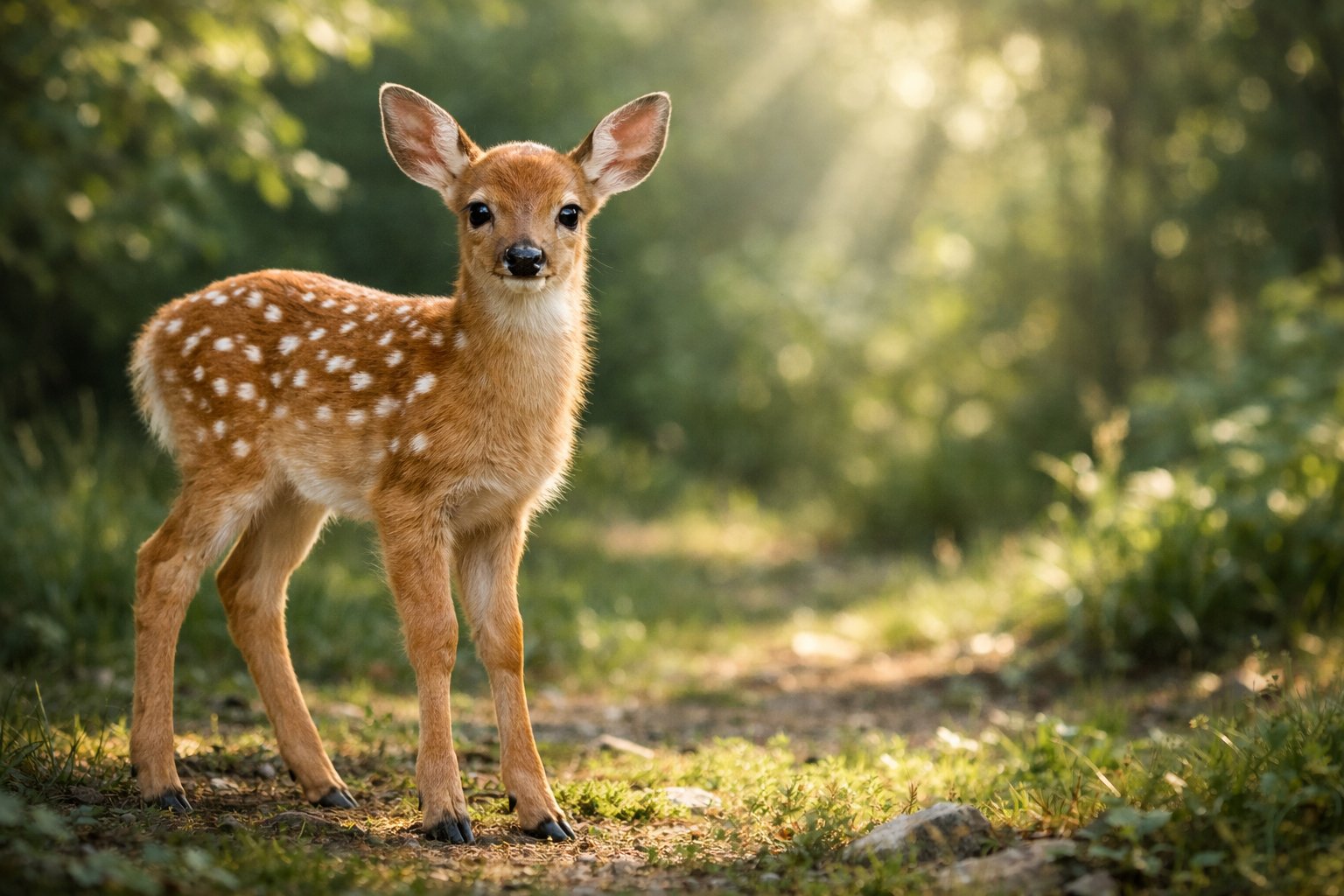
Ever spot a tiny, spotted deer tucked away in the woods and wonder what you’re supposed to call it? Most folks call a baby deer a fawn, which is a simple name that’ll keep popping up as you read about how they hide, nurse, and grow.
Stick around, and you’ll find out why fawns lie so still, when it’s actually okay for people to step in, and how their wobbly first steps give them a fighting chance. I’ll also break down the other names folks use for young deer, depending on the species, so you can sound like you know your stuff next time you see one.
What Do You Call a Baby Deer?

People usually stick with one main name for a baby deer, though a few others pop up depending on the deer’s size and species. You’ll mostly hear the word that fits small to medium deer, but when it comes to bigger species, there’s a different term.
Fawn: The Most Common Term
We call young white-tailed deer, mule deer, muntjac, and a bunch of other small to medium species fawns. This label works for newborns all the way through their first year or so.
Most fawns show up with white spots on a reddish-brown coat. Those spots? They help the little ones disappear into grass and brush while their mom heads off to eat.
If you stumble on a tiny, quiet baby deer tucked in tall grass, it’s almost always a fawn. Fawns stand up within hours and nurse several times a day, but mostly, they just lie still to avoid drawing attention.
When you check field guides or wildlife websites, “fawn” is the word you’ll see for these species.
When Is “Calf” Used?
We use “calf” for young moose, elk, reindeer (caribou), and other big cervids. If the adult animal is huge, people say calf instead of fawn.
For example, a moose or elk baby is a calf from the start. Calves come into the world bigger than fawns and usually don’t have spots, or if they do, those fade fast.
Moms with calves move them around more and get them grazing earlier. If you’re reading about moose or elk in hunting, biology, or park info, you’ll notice the word “calf” used for their young.
Kid: An Uncommon Alternative
Some folks call a baby deer a kid, but honestly, that’s pretty rare and informal. “Kid” is the right word for young goats, so using it for deer can get confusing.
You might hear it in laid-back conversations or in places where goat lingo mixes into the local talk. In formal writing or wildlife guides, though, you won’t see “kid” much.
If you want to be clear, stick with fawn for most small to medium deer and calf for the big ones. Using “kid” might trip up people who expect standard terms.
Naming by Species and Region
Names can change depending on species and sometimes even by region. White-tailed and mule deer babies are fawns. Muntjac and water deer babies are fawns, too.
Moose, elk, and caribou newborns? Those are calves. Some places have their own words, but field guides usually stick with fawn or calf.
If you want to get it exactly right, check a local wildlife page for the animal you’re interested in. For example, info about white-tailed deer will call their babies fawns, while park brochures about elk use “calves.”
Use those specific names if you want to sound accurate.
Unique Traits and Life of Baby Deer

Let’s get into how these young deer hide, grow, and act with their moms and herds. I’ll also mention when people or wildlife centers actually need to help out fawns that are injured or left alone.
White Spots and Camouflage
Most fawns come with white spots on a reddish-brown coat. These spots break up their shape in dappled sunlight, making it way harder for predators to spot them.
For the first few days, newborn fawns barely have any scent. That’s why their moms leave them hidden and only come back to nurse a few times a day.
The spots start to fade as the fawn gets bigger. By a few months old, they look a lot more like adult deer.
You’ll spot this pattern most often in white-tailed deer fawns, but other species show similar markings, too. Bigger species like moose calves usually don’t have dense spots—they count on their size and where they hide to stay safe.
How Fawns and Calves Grow
When they’re born, most fawns weigh somewhere between five and ten pounds. They can stand and walk within about an hour, but they stick pretty close to their hiding spot for a while.
You’ll see them nibbling on plants after about two weeks and eating more solid food by one or two months old.
Fawns nurse for around 8–12 weeks, though they might stick with their mom for up to a year. The name changes with the species: deer babies are fawns, but elk and moose babies are usually called calves.
Bucks and stags eventually grow antlers; does, hinds, or cows (the females) usually don’t.
How fast they grow depends on food and how many predators are around. In places with lots of good food, fawns put on weight faster and become independent sooner.
In tougher spots, moms keep them close for longer to help them survive.
Mother and Herd Behavior
Does hide their babies and only come back to feed and check on them. You might notice a mother use scent-masking tricks so predators can’t follow her back to the fawn.
If something scary shows up, fawns freeze in place—this stillness is a big part of how they stay alive.
As fawns get older, they join up with the herd. Herd sizes can be small family groups or bigger crowds, especially in winter.
Bucks and stags usually split off during mating season, while does and their young stick together for safety and extra eyes.
Adult deer play different roles based on species and time of year. In some, like red deer, hinds lead the group.
In others, female deer form the core of the herd, and males wander or defend their own spots.
Baby Deer in Wildlife Rehabilitation
Wildlife rehab centers often take in fawns that look injured, sick, or orphaned. If you stumble upon a fawn alone, try watching from a distance for a day—does usually come back.
Only reach out to a rehab center if the fawn is bleeding, clearly hurt, feels cold, or if the spot isn’t safe. Rehab staff stick to strict rules to prevent imprinting.
They use age-appropriate milk replacer and treat injuries as needed. Staff also get the young deer ready for release.
Centers test for disease and show local folks how to help wild animals without causing harm. When it’s time, the team releases the deer back into the wild.
If the deer learned to forage and avoid people, it’ll join wild herds. Successful releases really depend on the deer’s age, health, and the season.
Most centers pick spring or fall for release, since food and cover are easier to find.


