
Ever spotted a fawn in the spring and wondered if deer have babies all year? Well, most deer don’t give birth year-round. They actually time their mating and births so fawns show up in spring or early summer, right when food and warm weather give them the best shot at survival.
Most deer species have just one breeding season per year and give birth once, usually in late spring.
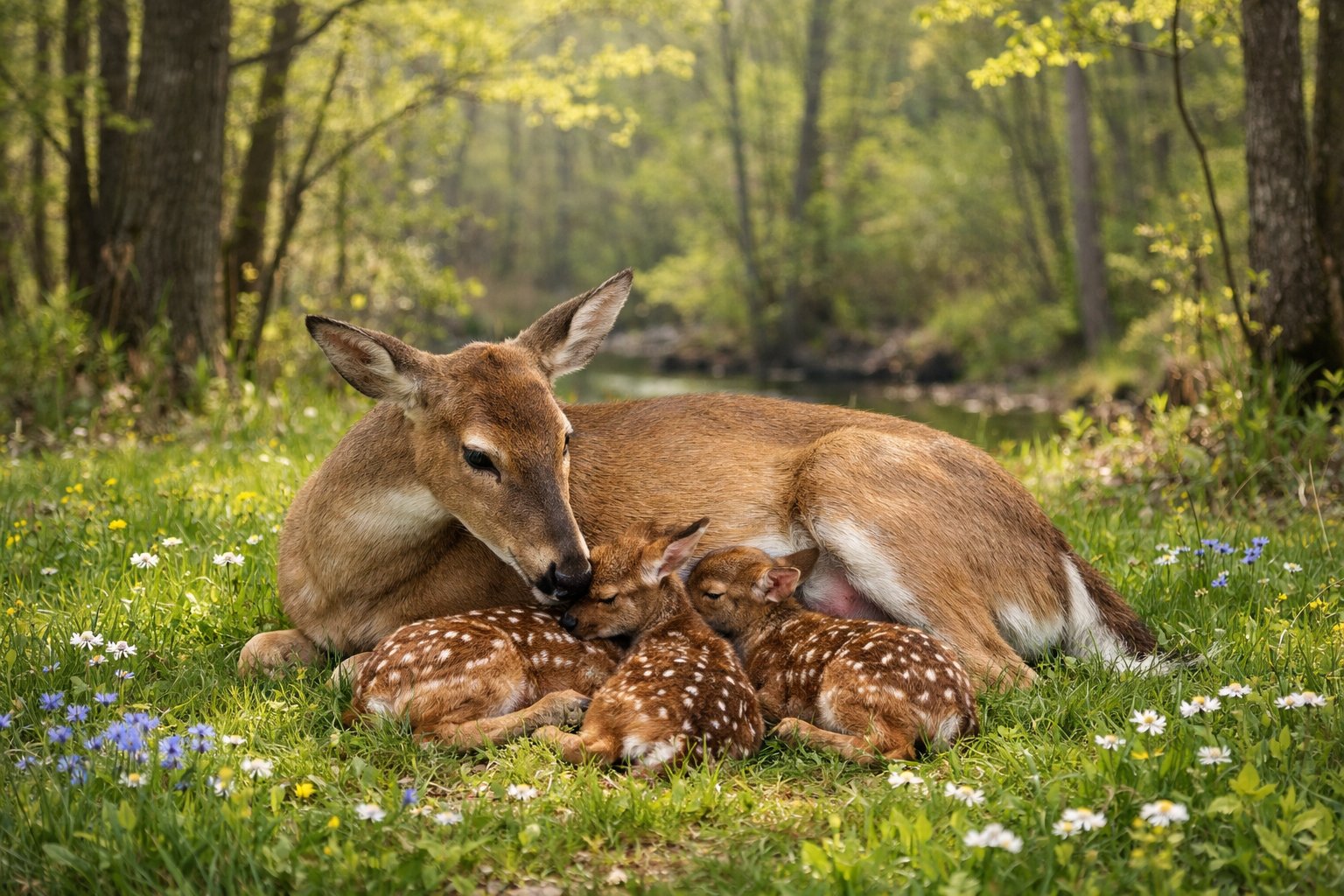
If you’re curious about why timing matters, let’s get into it. I’ll break down how mating season, gestation, and even local climate all play a role in when fawns are born.
You’ll also see how different species and regions can shake up those dates, and what that means if you spot a fawn in your yard or out on a trail.
Do Deer Give Birth All Year?
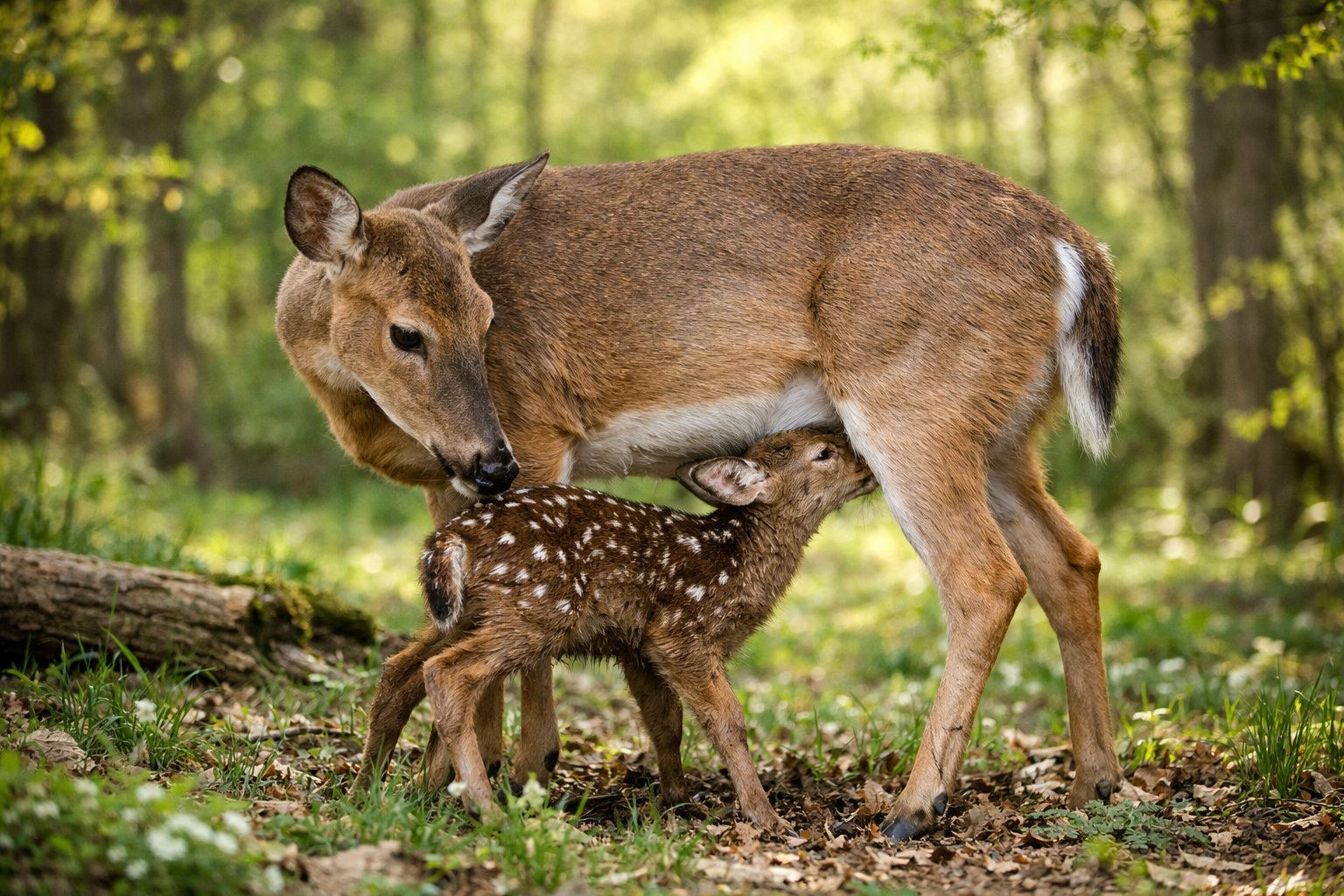
Deer don’t give birth all year. Most fawns are born in spring and early summer, but the timing depends on species and where they live.
Seasonal Nature of Deer Births
Deer plan their mating so fawns arrive when food and cover are at their best. In a lot of temperate places, does mate in the fall and then give birth in late spring or early summer.
White-tailed deer, for example, usually mate between October and December, then give birth five to seven months later, often in May or June.
This timing really boosts fawn survival. Warm weather, new plant growth, and thick vegetation help mothers hide and feed their young.
You won’t find newborn fawns in winter in these areas, because deer avoid the harshest conditions.
Influence of Deer Species on Birthing Season
Different species pick different months for birthing. White-tailed deer, mule deer, and red deer usually give birth in late spring.
Caribou (reindeer) living in the Arctic tend to calve earlier, from April to June, since their growing season is so short.
Roe deer and some others use delayed implantation. They mate in summer but pause development so fawns are born in May or June.
Elk (wapiti) and fallow deer also follow the pattern of fall mating and spring births. Each species has its own twist on gestation length, number of fawns, and exact birth month.
Regional Variations in Fawning
Where you live changes things. In North America, most fawns show up in May or June, with June seeing the most births.
Colder or northern regions often have births a little earlier so fawns get more time to grow before winter hits.
In tropical places, some deer species don’t stick to a strict season because there isn’t much change in daylight. That can spread births across more months.
Local habitat and food make a difference too. If deer have plenty to eat, they might fawn earlier or more successfully.
Environmental and Biological Factors Affecting Birth Timing
Day length, nutrition, and weather all influence when deer give birth. Shorter days in fall kick off the mating cycle.
A doe’s health and food supply decide if she’ll conceive and if she can carry twins or just one fawn.
Predators and people can affect fawn survival, but they don’t usually change birth timing. Wildlife managers keep an eye on these dates to set hunting seasons and protect nursery areas during peak fawning.
If you want more details on timing and species, check out this guide on when deer give birth.
Deer Breeding and Fawn Development

Deer follow seasonal breeding schedules and give birth several months after mating. Let’s look at when bucks and does mate, how long pregnancy lasts, how you might spot a pregnant doe, and how fawns develop.
Breeding Seasons and Rut Behavior
Most temperate deer species breed once a year, usually in the autumn. For white-tailed deer, the rut peaks from late October into November.
Mule deer and elk have their own peak dates, but the idea’s the same: shorter days trigger hormones and start the rut.
During the rut, bucks chase does, spar with each other, and rub trees. The dominant bucks mate with does in estrus, while younger bucks hang back.
Does come into heat for just a short window, and if they don’t conceive, they cycle back into estrus every 18–25 days until they get pregnant.
People can disrupt the rut if they get too close or make a lot of noise. If you’re watching deer, it’s best to keep your distance so they can do their thing without added stress.
Gestation Periods by Species
Gestation usually lasts about six months for many deer species. White-tailed deer carry their fawns for around 200 days.
Mule deer have similar pregnancies, and bigger deer like elk are pregnant for about 240 days.
You can figure out when fawns will arrive by counting back from the rut. If the rut peaks in mid-November, you’ll see most fawns born in late May or June.
In warmer southern regions, the rut starts earlier and so do the births.
Most species breed just once a year, so having more than one litter is pretty rare. If a doe breeds late, her fawn might be born as late as July or August, but those late fawns have a tougher time making it through their first winter.
Signs of Pregnancy in Female Deer
You can sometimes spot a pregnant doe by her shape and behavior. In late winter and spring, look for a rounder belly, fuller sides, or even movement from the fawn.
Her mammary glands swell and her teats darken as birth gets closer.
Pregnant does eat more to build up energy and pick quiet, hidden spots to rest. They might seem warier and spend more time tucked away.
Younger does usually have just one fawn, while older ones often have twins.
It’s best not to approach or touch a pregnant doe. If you disturb her, she might get stressed, abandon her fawn, or move it somewhere less safe.
Fawn Development and Survival
Newborn fawns usually weigh somewhere between 4 and 8 pounds. Their spotted coats help them blend right into the grass.
Within an hour, most fawns can stand up and nurse. After that, they’ll often stay bedded down and perfectly still for hours—trying to avoid catching a predator’s eye. The doe comes back to nurse them a few times a day.
Good cover, proper nutrition, and fewer predators really boost a fawn’s chances. Healthy adult does often have twins, but yearlings usually just have one fawn.
At about two weeks old, fawns start nibbling on plants. By three or four months, they’re weaned and begin following their mother more, sometimes joining up with small groups.
If you stumble across a bedded fawn, it’s best to just walk away. The mother leaves her fawn hidden on purpose. Only reach out to wildlife professionals if the fawn is clearly injured, bleeding, or in real danger.


