
Spotting a deer can really catch you off guard. Try to stay calm, stop moving, and give the animal space so you both stay safe.
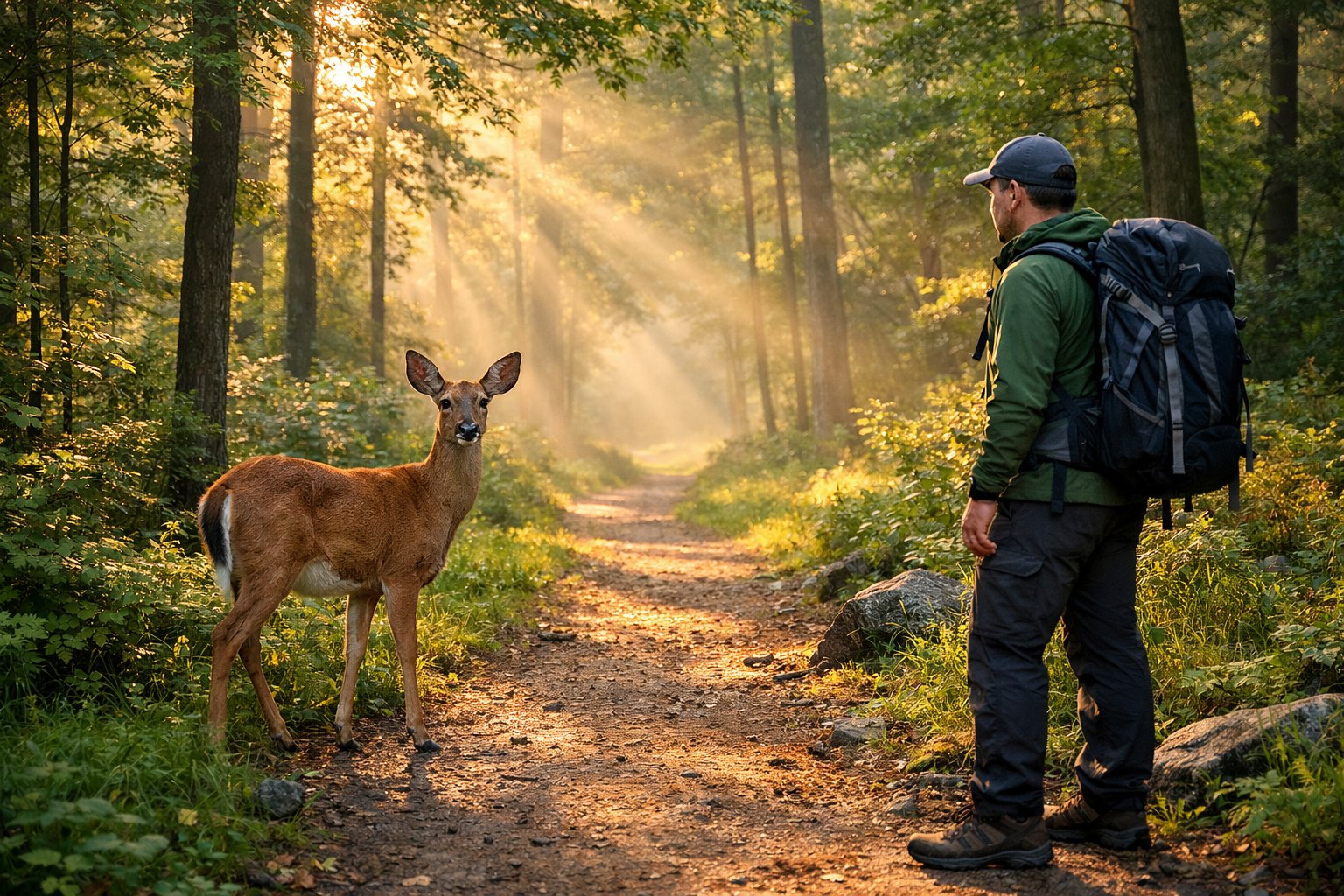
If the deer is on or near your path, pause and slowly back away—don’t approach or startle it.
If you see a deer while driving, slow down and keep an eye out for others. Deer usually travel in groups.
If you’re walking, stay still and watch the deer’s body language. Back away slowly if it looks tense or agitated.
Here’s what you should do in both driving and walking situations, how to spot warning signs, and what to avoid so you can handle things safely.
What to Do If You See a Deer While Driving

Slow down, scan the road edges, and get ready to brake. Use your lights, but don’t jerk the wheel—quick moves can send you off the road.
Stay Alert and Watch for Deer Crossing Signs
Keep an eye out for deer crossing signs and wooded spots where deer often move. These signs usually mean deer cross there a lot.
When you see them, slow down and scan both sides of the road. Drive slower at dawn and dusk since deer seem to love those hours.
Use your high beams if it’s legal and safe—they really help you see better. Drop to low beams and slow down if another car is coming.
Spot one deer? There’s probably more. Deer travel together, so expect others to follow.
Keep both hands on the wheel and brake in a straight line if you need to.
Best Practices When a Deer Is on the Road
If you see a deer in your lane, brake firmly and stay in your lane. Swerving suddenly could make you hit another car or end up off the road.
Braking in a straight line lowers your risk of a worse crash. Flash your hazard lights to warn drivers behind you.
If it’s safe, honk briefly if the deer looks unsettled. Never get out of your car in traffic to chase or move a deer.
Skip deer whistles or gadgets—they don’t seem to work. Always wear your seat belt and keep your speed reasonable, especially in the fall when deer are extra active.
What to Do If You Hit a Deer
Pull off the road safely and turn on your hazard lights. Check yourself and your passengers for injuries first.
If anyone’s hurt, call emergency services right away. Don’t touch an injured deer.
Call the police or animal control to report the crash and get help with the animal. If it’s safe, take photos of the damage and the scene.
Contact your insurance company to file a claim. Hitting a deer usually falls under comprehensive coverage, not collision—double-check your policy.
Hang onto the police report number and any paperwork for your insurer.
What to Do If You See a Deer While Walking

Stop, stay calm, and give the deer space. Watch its posture and move away slowly if you can, while keeping an eye on what it does.
Understanding Deer Behavior and Body Language
Deer usually act shy and will take off if they sense danger. If you see relaxed ears and slow chewing, the deer probably feels calm.
Ears turned back, stomping, snorting, or a raised tail mean it feels threatened. Bucks during the rut can act bold or chase rivals, so watch out.
Does with fawns get extra protective and may act aggressively if you get too close. Keep your posture low and non-threatening.
Avoid direct eye contact and loud noises. If the deer freezes and stares, pause and back away slowly.
Notice where you could go if the deer bolts—just in case.
How to Respond When Encountering a Deer on Foot
First, stop and check the deer’s mood from a safe distance—25 yards is a good rule if you can manage it. Speak in a calm, soft voice and move slowly toward an open route away from the animal.
Don’t run; sudden movement can make the deer chase or spook others nearby. If the deer blocks your path, take a wide detour around it to stay out of its space.
Want a photo? Use your phone’s zoom—don’t get closer. If you spot several deer, assume more are hiding nearby and give them all extra room.
If you’re on a trail, wait quietly for the deer to move or step aside and let it pass.
Safety Tips If You Encounter Aggressive or Injured Deer
If a deer starts acting aggressive—maybe it’s stomping, lowering its head, or even charging—try to get a solid object like a tree or a car between you and the animal. Back away slowly. Never turn your back.
If the deer charges, run for cover or climb to higher ground if you can.
If you see an injured or sick deer, don’t get close or try to help. Keep kids and pets far away.
Call your local animal control or wildlife agency to report the location and any visible injuries. Take note of how the deer looks and acts so responders know what to expect.
If a deer blocks a trail and won’t move, warn other hikers. Wait at a safe distance until the professionals show up.


