
You’ll spot deer all over the UK, from thick woodlands to the edges of parks, and sometimes they even wander close to towns. Britain has six wild deer species right now, so depending on where you are, you might run into red, roe, fallow, sika, muntjac, or water deer.
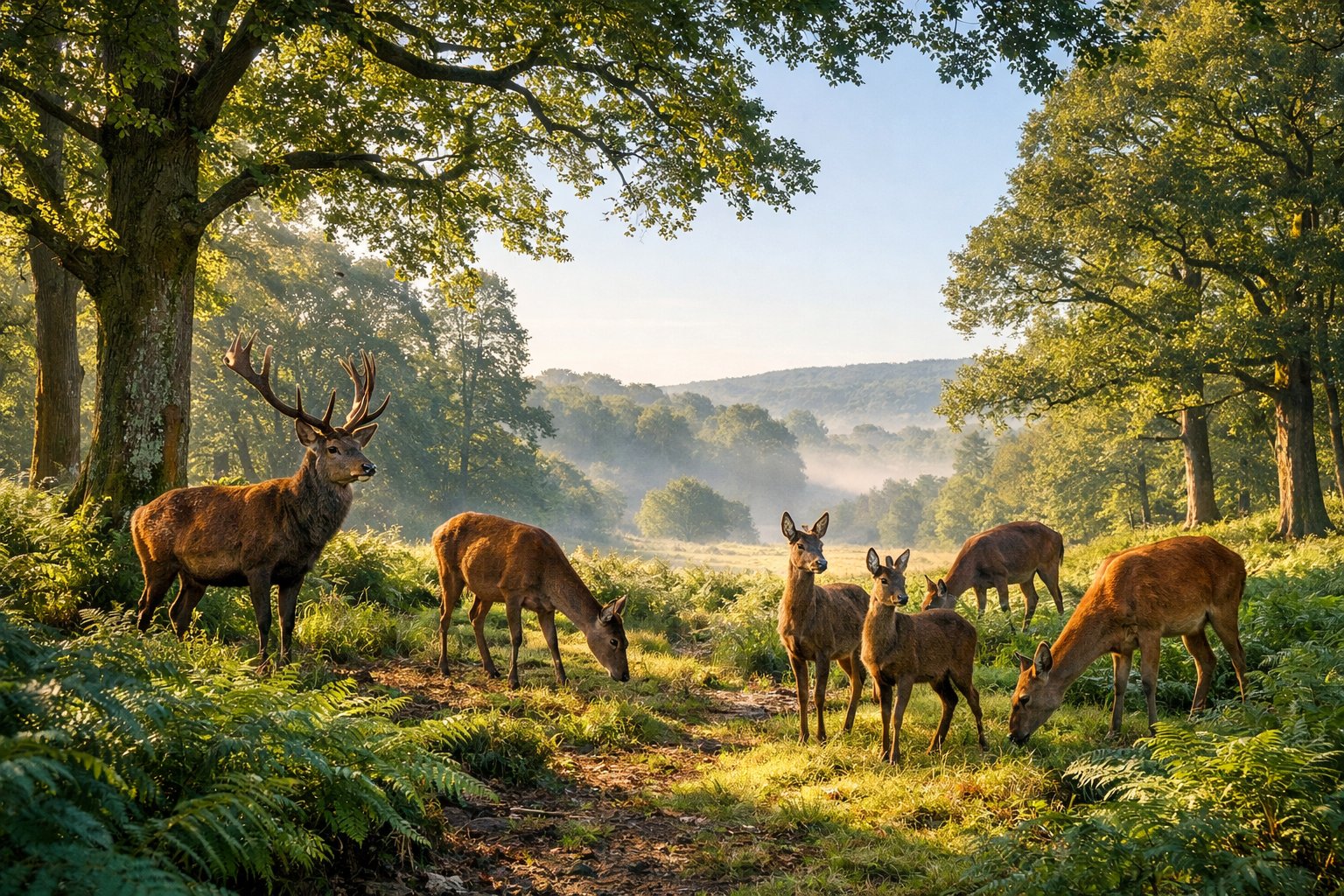
Let’s take a look at which British deer you might bump into, how to tell one from another, and where they tend to hang out. We’ll also touch on their habits and why folks try to manage their rising numbers.
If you’re out exploring, it’s worth remembering: knowing what to look for and where helps you spot deer safely. It also gives you a sense of how they fit into the mix with farms, roads, and the rest of the local wildlife.
Wild Deer Species in the UK
You’ll find six wild deer species scattered across Britain. They all look and behave a bit differently. Some have been here forever, while others showed up more recently and now shape the look and feel of woodlands and parks.
Native and Introduced Deer
It helps to know which deer are native and which ones people brought in. Red deer and roe deer are the UK’s natives. They’ve stuck around since the last ice age and play big roles in both upland and lowland habitats.
People introduced the other species, either on purpose or because they escaped. Romans and Normans brought fallow deer back, and now they’re a common sight in parks and woods. Sika, muntjac (Reeves’ muntjac), and Chinese water deer arrived later and have set up wild populations, mostly in England and Wales. Each new species changes the way plants grow and sometimes competes with the locals.
Red Deer
Red deer (Cervus elaphus) are Britain’s biggest wild deer. You’ll see them on Scottish hills, especially in the Highlands, and in some big lowland forests. Stags grow those impressive branched antlers for autumn rut battles. Hinds, the females, don’t have antlers and usually stick together in family groups.
Red deer munch on grasses, heather, and young tree shoots. Watch out for rutting stags in October and November—they can be aggressive. Managed estates keep an eye on red deer numbers since too many can really damage young trees and upland habitats.
Roe Deer
Roe deer are smaller and pretty adaptable. You’ll spot them in woods, hedgerows, and farmland from Scotland all the way down to southern England. Bucks have short, three-point antlers. Does show strong maternal instincts, raising their fawns hidden away in tall grass.
Roe deer eat shoots, leaves, and sometimes your garden plants, so don’t be surprised if you see them in parks or even suburbs. They breed in late summer, but fawns don’t show up until spring because of delayed implantation. The British Deer Society has some good tips if you’ve got roe deer visiting your garden.
Fallow Deer
Fallow deer sit right in the middle size-wise, and the males have those broad, palmate antlers. Parklands, big estates, and mixed woods are their usual haunts. They were native ages ago, then the Romans and Normans reintroduced them, which is why you’ll still find them in managed deer parks.
Fallow deer come in all sorts of colours, from tan to dark or even spotted. They graze on grass and nibble shrubs, which can help or hurt biodiversity depending on how many there are. Land managers sometimes need to control their numbers to protect young trees and ground plants.
Sika Deer
Sika deer are smaller, with spots, and originally came from East Asia. You’ll mostly find them in western Scotland, some parts of Wales, and a few spots in England. Sika males grow antlers and sometimes hybridize with red deer, which conservationists worry about since it changes native red deer genetics.
Sika love thick cover and eat grasses, heather, and young shoots. Listen for their high-pitched calls during the rut. Local wildlife groups keep tabs on sika to limit hybridisation and reduce their impact on important red deer habitats.
Muntjac Deer
Reeves’ muntjac are small, almost dog-sized, and have spread across much of England. You’ll know them by their loud barking alarm call, and the males have short antlers and little canine tusks. They thrive in gardens, woods, and hedgerows, often showing up near towns.
Muntjac breed all year and can get pretty numerous in some places. They eat low plants and young tree seedlings, which can really slow down woodland regrowth. If you’re managing woods or a garden, it’s worth protecting young plants from muntjac.
Chinese Water Deer
Chinese water deer are Britain’s smallest and probably oddest wild deer. Males have prominent tusks instead of antlers, and neither sex grows antlers at all. You’ll mostly find them in East Anglia and parts of the Midlands, hanging out in reed beds, riverbanks, and on the edges of farmland.
They eat grasses and water plants, usually sticking to small family groups. There aren’t as many of them as other deer, but they’re still an interesting part of the local wildlife. Conservation groups track where they live to see how they’re affecting wetlands and farms.
Habitats, Behaviour, and Deer Management

Let’s talk about where deer actually live, what they get up to in different seasons, where you’ll find the most of them, and how people try to manage their numbers to protect both the land and the wildlife.
Habitat Ranges Across the UK
Deer pop up in all sorts of places across the UK. Red deer roam open moors and the Scottish Highlands, where the wide hills and heather give stags space to graze and form groups. Roe deer prefer the edges of mixed woods and hedgerows in lowland England and some parts of Scotland.
Fallow and muntjac like woods, parklands, and garden edges. Muntjac are small and hide in thick undergrowth, so you might spot them in suburban woods or reed beds near water.
On Exmoor and in some parts of Wales, open heath and scrub support small herds. Farmland and shelterbelts in East Anglia can hold roe and fallow deer too.
If you’re out walking, look for deer signs—tracks, droppings, and nibbled shoots where hinds and young deer have been feeding.
Antlers and Rutting Season
Male deer grow antlers every year, using them for display and fighting. Stags shed velvet and harden their antlers in late summer. You’ll see antlers at their biggest just before the rut kicks off.
The red deer rut happens from late September through November in Scotland. Roe deer rut earlier, sometimes as early as July. During the rut, stags call out, stake out territories, and spar with rivals to win over mates.
It’s best to keep your distance in rutting areas—deer can get unpredictable when stressed. Don’t go near hinds with fawns. If you spot scraped ground or snapped branches, that’s a sign of recent rutting.
Deer Distribution Hotspots
Scotland has the biggest numbers of wild deer, especially up in the Highlands and on upland moors. You’ll see red deer on high ground and sika or fallow in lower woods.
In England, hotspots include Exmoor, bits of the Pennines, and the southern and eastern woodland belts. Roe and fallow deer also show up in East Anglia’s hedgerows and farmland.
Ireland’s got plenty of deer too, especially sika and red deer, across uplands and some lowland forests. Urban woodlands and reed beds near rivers can hide muntjac and small groups of roe.
Check out maps or ask local wildlife trusts if you want to know where deer are most common—or where you might need to watch out for them on the roads or near crops.
Sustainable Deer Management
Good deer management means finding a balance between helping habitats recover and looking after animal welfare. You’ll probably need a mix of approaches: keep an eye on population numbers, put up tree guards or fences for young saplings, and sometimes cull deer if their numbers start to threaten woodland regrowth.
Forestry and conservation teams rely on trained rangers who handle humane control and track each carcass for traceability. They don’t just focus on the deer—they also restore understorey plants and create safe spots for ground-nesting birds.
Timing matters, too. Planting gets scheduled to dodge periods of heavy browsing. Sometimes, you’ll notice venison showing up locally, which helps cover some management costs—as long as it’s processed to proper food standards.
Local deer groups and the Deer Initiative jump in with surveys and advice on best practices. If you’re a landowner, it’s smart to get guidance on seasonal plans, so your efforts actually help both trees and wildlife during key breeding times.


