
Maybe you’ve spotted deer tracks or caught a glimpse of brown darting through the woods. It’s natural to wonder—how many kinds of deer are out there? The deer family (Cervidae) includes about 50–55 species, split into two main groups and scattered across most continents. That number sounds impressive, but it barely scratches the surface of all the shapes, sizes, and antler styles you might come across.
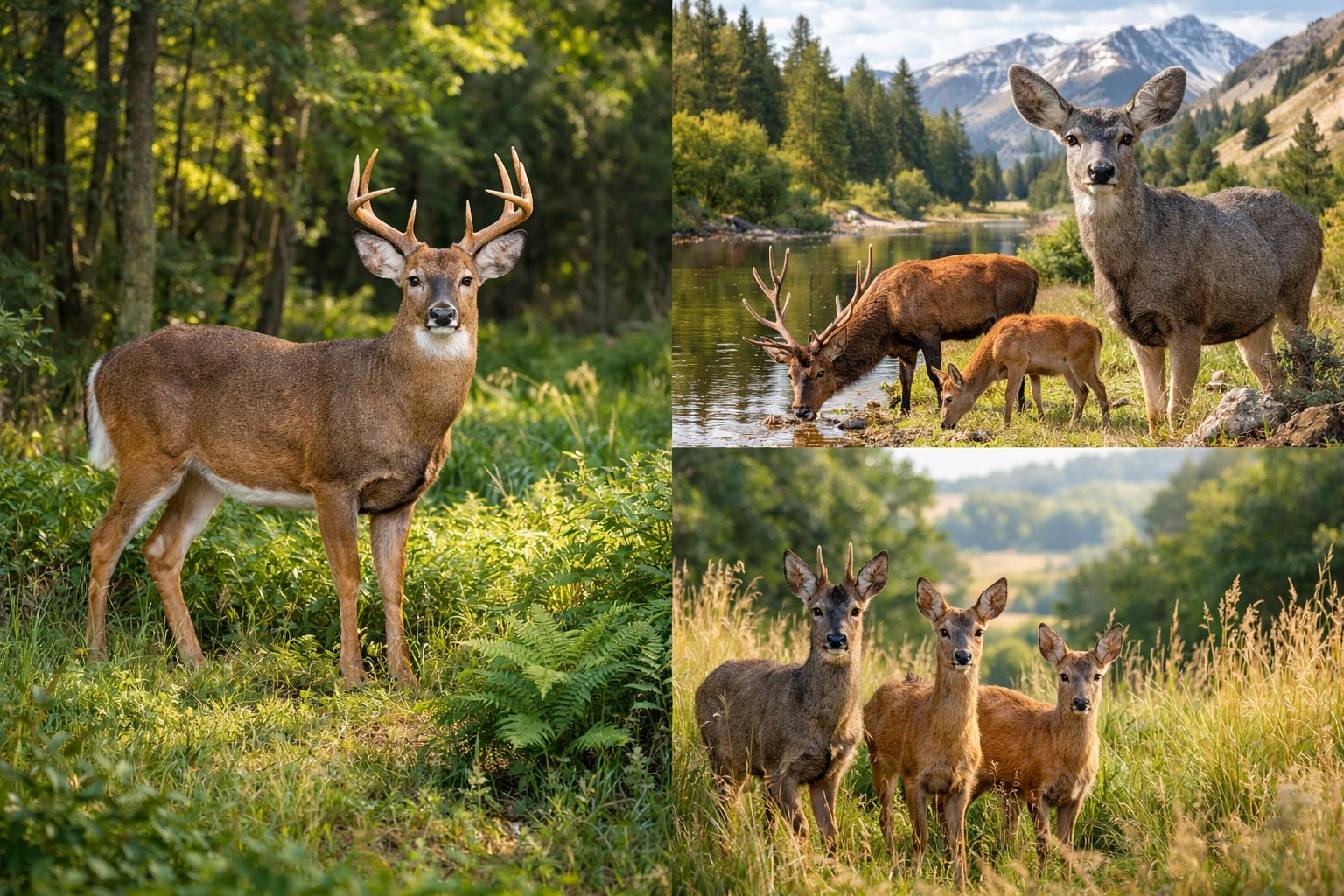
Keep reading and you’ll see where these species live, how scientists split the deer family, and what makes a moose so different from, say, a muntjac or a white-tailed deer.
You’ll also get quick profiles of some standout deer and a few easy ways to spot what sets them apart.
How Many Types of Deer Are There Around the World?
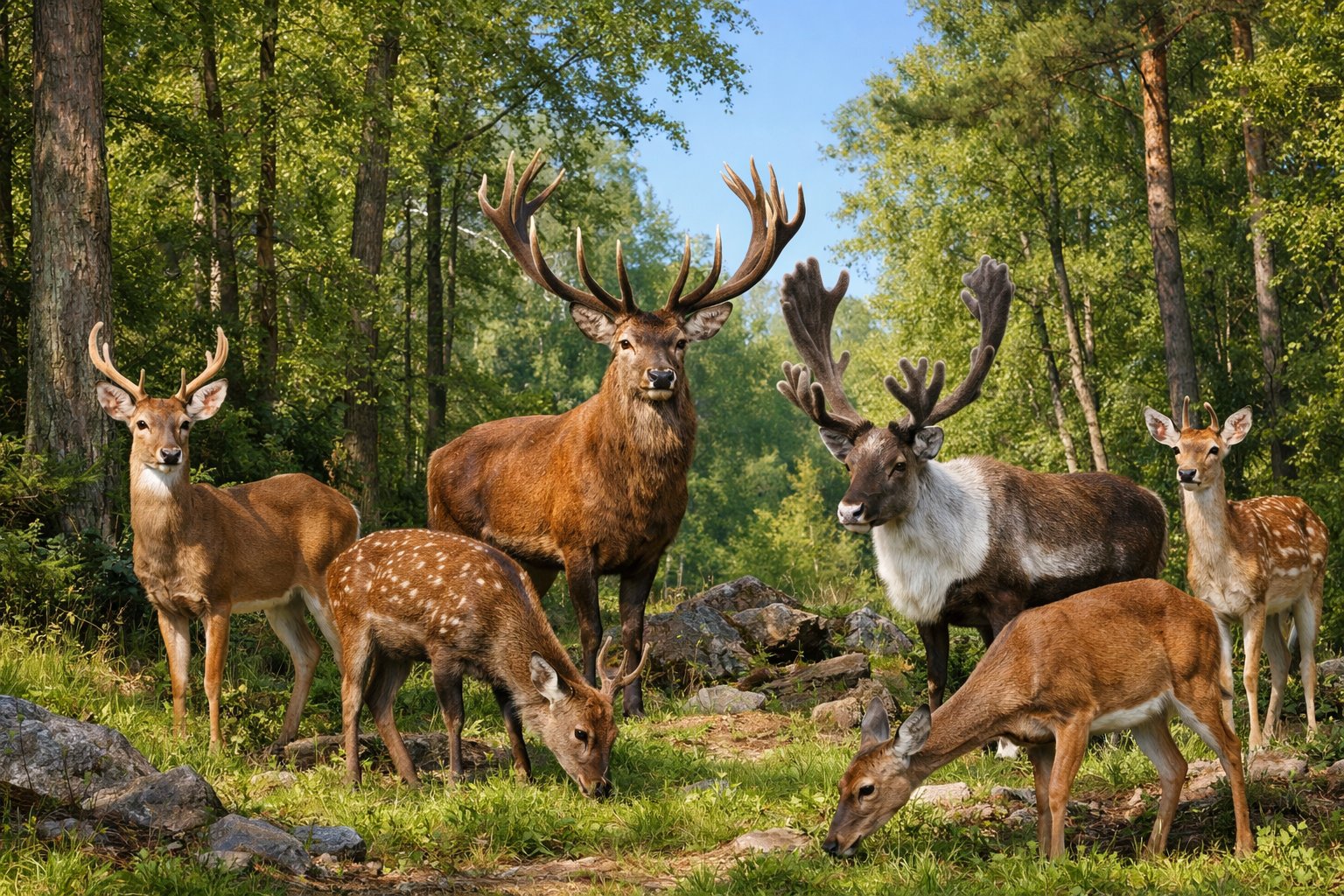
Here’s the gist: we’ll cover how many deer species scientists recognize, how they sort them, and what really makes one type different from another.
Total Number of Recognized Deer Species
Scientists generally count between 43 and 55 deer species worldwide, depending on how they split subspecies and what’s been discovered lately.
Most references stick with about 43 species in the Cervidae family, but some field guides and databases bump that up to 50–55 by splitting populations or recognizing new ones.
These counts include deer living on every continent except Antarctica and Australia (where people introduced them later). The list covers the familiar white-tailed deer and moose, plus smaller, lesser-known ones like pudus and muntjacs.
Taxonomy keeps shifting as genetic studies shake things up, so the numbers aren’t set in stone.
Major Groups Within the Deer Family
The deer family, Cervidae, mainly splits into two subfamilies: Capreolinae (New World deer) and Cervinae (Old World deer).
Capreolinae covers animals like roe deer, caribou (reindeer), and a bunch of North American species.
Cervinae contains red deer, sika, and muntjacs.
There’s also a small group, Hydropotinae, which includes the water deer (Hydropotes) and its unusual tusk-like teeth. All deer fall under the order Artiodactyla, making them even-toed ungulates.
Most are ruminant herbivores, chewing cud and relying on multi-chambered stomachs to break down plants.
Key Distinguishing Features Among Deer Types
You can usually tell deer apart by looking at their antlers, hooves, teeth, and even how they act.
Most male deer grow antlers, but in a few species, like reindeer, females do too. Antler shape—whether it’s branched or just simple spikes—helps you figure out the species.
The structure of their feet also splits Old World and New World deer.
Body size swings wildly, from the tiny northern pudu to the massive moose.
Some deer, like chital, have spots, while others, like elk, show solid coats. Their diets focus on leaves, shoots, and grasses, since they’re all ruminant herbivores.
You’ll notice differences in when they breed, where they hang out, and the sounds they make—those clues can help you tell species apart in the wild.
For a deeper dive into species lists and where they live, check out the comprehensive compilation of deer species at Britannica’s list of deer.
Notable Deer Species and Their Unique Characteristics

Let’s get into which deer grow the biggest, which ones roam North America and Eurasia, and which species break the “typical deer” mold.
Moose: The Largest Deer Species
Moose (Alces alces) take the prize for the biggest deer. Adult bulls sometimes tip the scales at over 700 kg (1500 lb) and stand taller than 2 m (6.5 ft) at the shoulder.
They grow broad, palmate antlers that really stand out, especially in late summer and autumn.
You’ll mostly find moose in boreal and mixed forests dotted with wetlands.
They munch on aquatic plants, shrubs, and young trees. Their long legs let them wade into deep water for food and to dodge biting insects.
Moose calves grow fast and usually hide in thick cover for their first few weeks.
White-Tailed Deer and North American Varieties
White-tailed deer (Odocoileus virginianus) have spread across North America and look different depending on where you find them.
You can spot them by the white underside of their tail, which they flash when startled. They’re super adaptable—living in forests, fields, suburbs, and even city parks.
Mule deer (Odocoileus hemionus) and black-tailed deer (O. h. columbianus) stick mostly to western North America. Mule deer have big, mule-like ears and a unique bounding run called stotting.
Black-tailed deer are a coastal version of mule deer with darker tails.
Caribou (Rangifer tarandus)—domesticated as reindeer—handle Arctic life well. Both sexes grow antlers, and they migrate huge distances.
Red Deer, Elk, and Cousins in Eurasia
Red deer (Cervus elaphus) live across Europe and parts of Asia and tend to be large with impressive, branched antlers.
In North America, their close relatives are elk (Cervus canadensis). Elk are bigger and famous for their bugling calls in western mountain herds.
Sika deer (Cervus nippon) are smaller, often spotted, and sometimes hybridize with other Cervus species where their ranges overlap.
Roe deer (Capreolus capreolus) are small, nimble, and pretty common in European woodlands.
Fallow deer (Dama dama) come in a bunch of coat patterns, and the males show off flattened antlers.
Persian fallow deer (Dama mesopotamica) are much rarer and stick to a limited range.
You’ll spot plenty of behavioral and size differences, depending on the local habitat and hunting pressures.
Unique and Lesser-Known Deer Types
Some deer don’t really fit the classic image you might have in mind.
Take water deer (Hydropotes inermis), for example. They don’t have antlers at all, but the males sport these wild, tusk-like canines.
Tufted deer (Elaphodus cephalophus) show off a quirky little tuft on their foreheads and have short antlers. It’s a look you don’t see every day.
Muntjacs (Muntiacus spp., like M. reevesi) stay pretty small and, honestly, they’re a bit jumpy—they’ll bark if something startles them. Some even have little tusks.
You’ll find some of the tiniest deer in the world among pudu (Pudu spp.) and a handful of Mazama species in the Americas.
Marsh deer (Blastocerus dichotomus) grow big hooves that help them move through muddy wetlands. It’s a neat adaptation.
Barasingha (Rucervus duvaucelii) and swamp deer live mostly in grasslands or floodplains, which probably explains why they look so at home there.
If you pay close attention, you can spot barking deer (muntjacs), hog deer, Eld’s deer, and spotted/axis deer (Axis axis) by their unusual behaviors or distinct coat patterns. Isn’t it fascinating how much variety there is?


