
Ever noticed bite marks or missing fruit and wondered who’s snacking in your garden? Yep — deer eat cucumber plants and the fruit, especially when their usual food runs low. Protecting your patch really does matter.
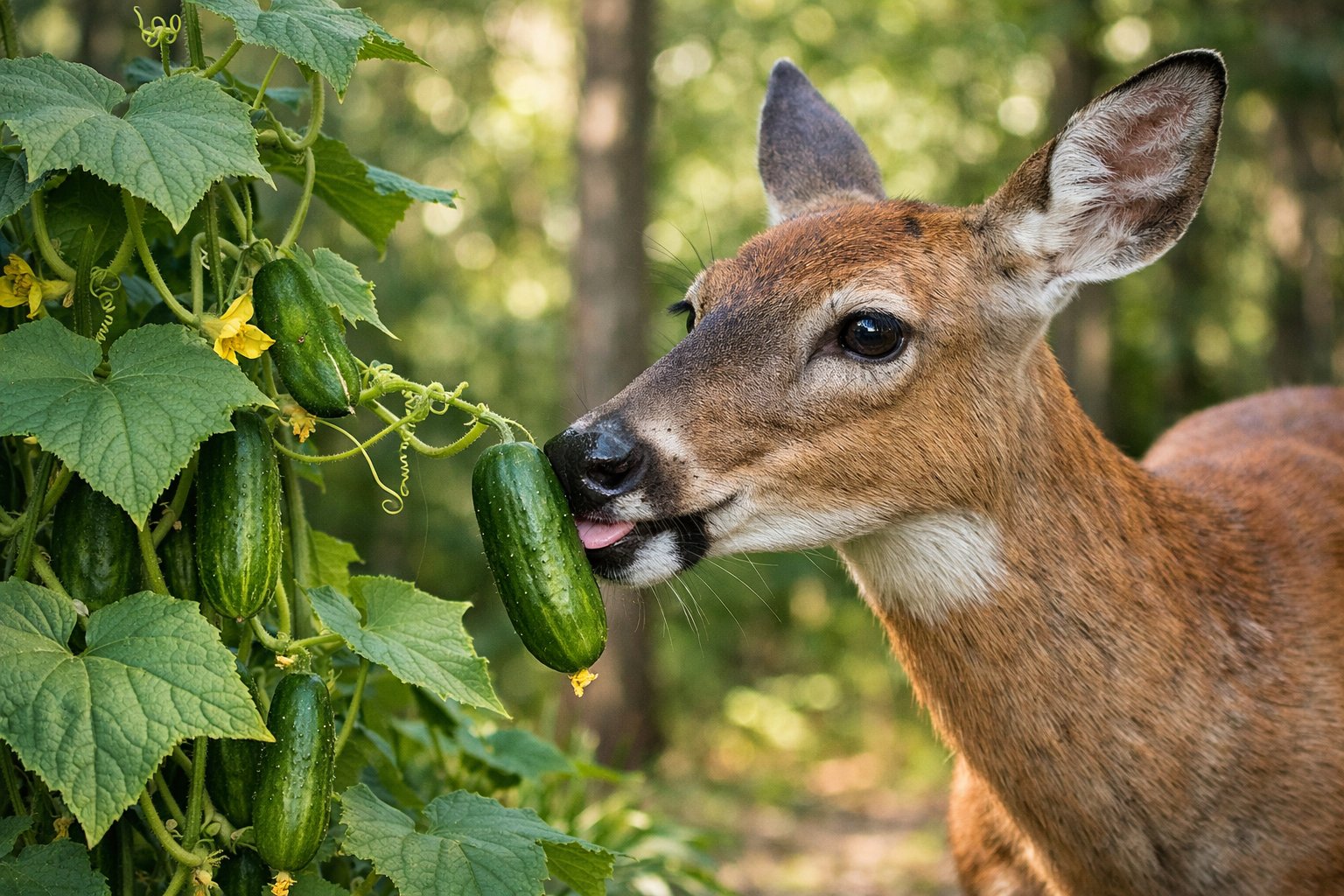
If you want to keep your plants intact and harvest more cucumbers, it helps to know why deer target leaves, flowers, and fruit in the first place.
Some garden setups just seem to invite trouble, honestly.
This post shares practical steps you can use to make your cucumbers less tempting.
You’ll find quick, actually doable tips on fences, repellents, and planting tricks.
These work for both small yards and big gardens.
Hopefully, you’ll end up picking more cucumbers and stressing less about wildlife.
Do Deer Eat Cucumbers and Cucumber Plants?

Deer eat cucumbers and cucumber plants when food is scarce or the plants look easy to munch.
Texture, bitterness, and what else is around all play into whether deer bother your cucumber patch.
Deer Feeding Habits and Preferences
Deer love tender, high-calorie plants like young shoots, fruits, and soft leaves.
They usually avoid rough or hairy textures, so many cucumber plants (Cucumis sativus) fall lower on their menu when they’ve got other options.
Deer prefer foods that give quick water or energy.
A ripe cucumber is mostly water and can attract deer, especially during dry spells.
You’ll probably spot browsing mostly at dawn and dusk.
Deer like to sample plants first; if they enjoy the taste, they come back.
If a herd hangs around your area, expect repeat visits.
Which Parts of Cucumber Plants Are Eaten by Deer
Deer eat leaves, tender shoots, flowers, and the fruit itself.
They usually go for young leaves and vine tips first since they’re softer and less hairy.
Deer nibble fruits with smooth skins more than the bumpy pickling types.
They often ignore bitter peels, but if they’re hungry, they’ll eat the fruit anyway.
If deer strip your plant back to the main stem or yank up vines, the plant won’t recover for the season.
Light nibbling usually lets the plant bounce back.
Factors Influencing Deer to Eat Cucumbers
Food scarcity changes everything.
During drought or winter, deer eat less-preferred plants like cucumbers.
Plant traits matter, too.
Smooth-skinned varieties and low bitterness attract deer.
Stems with irritating hairs or bitter cucurbitacins tend to push them away.
Location and accessibility play a role.
Unfenced gardens near woods or field edges get more visits.
Nighttime activity and a higher local deer population boost the odds your cucumbers get eaten.
Deer-Resistant or Susceptible Cucumber Varieties
Pickling cucumbers and bumpy-skinned types seem less appealing because of their texture.
Varieties labeled “pickling” usually have rougher skins, and deer mostly avoid those.
Smooth, mild-flavored slicing cucumbers get more attention.
Some specialty types—like maroon or horned cucumbers—have spines or weird textures that deer don’t like.
If you want to lose fewer plants, try bumpy-skinned or spiny varieties.
You can also plant taller, aromatic deer-resistant plants around your cucumber bed for a little extra protection.
How to Protect Cucumber Plants from Deer

Mix up barriers, repellents, and smarter planting if you want to keep deer out.
Focus on physical fences for the long haul.
Add scent- or taste-based repellents, and change up nearby cover to make your garden less inviting.
Physical Barriers and Fencing
A tall, sturdy fence works best.
Aim for an 8-foot fence made of woven wire or deer netting.
If local rules or your wallet stop you, set up two 4–5 foot fences spaced 4–5 feet apart to mess with deer depth perception.
For small plots, build cages from chicken wire or hardware cloth around each plant or trellis.
Make cages high enough for vine growth and anchor them so deer can’t knock them over.
U-shaped welded wire or cattle panels make low-cost trellis cages.
Temporary row covers or bird netting help during vulnerable growth stages.
Secure the edges to the ground so deer can’t nudge the fabric aside.
Check fences and netting regularly for gaps and damage.
Deer Repellents and Deterrents
Go for repellents that target deer smell and taste.
You’ll need to reapply after rain.
Homemade sprays with eggs, garlic, and hot sauce can work—just strain the mix and add a drop of dish soap to help it stick.
Commercial products with putrescent egg solids or capsaicin also do the job; follow the label directions.
Try motion-activated sprinklers to startle deer without hurting them.
Hang shiny stuff, wind chimes, or reflective tape and move them every few days so deer don’t catch on.
Don’t rely on just one deterrent—rotate methods so deer stay wary.
Place soap bars (Irish Spring works) in mesh bags and hang them around the patch.
Replace or move them monthly.
If you’ve got a dog, let it spend some supervised time near the garden to add a scent deterrent.
Companion Planting and Habitat Modification
Plant strong-scented herbs and shrubs around your cucumbers to mask the scent.
Rosemary, lavender, chives, and thyme all work well.
Use a 2–3 foot wide border of these plants to form a living barrier.
Add fuzzy or prickly plants like lamb’s ear or certain thistles to make browsing uncomfortable.
Don’t plant highly toxic varieties if kids or pets play nearby.
Clear out nearby brush, tall weeds, and dense shrubs that give deer cover.
Keep your garden close to regular human activity.
Plant cucumbers near patios, walkways, or your house so deer think twice.
Clear hiding spots within 30–50 feet of the patch to make deer less comfortable and cut down on browsing time.
Recognizing Signs of Deer Damage
Deer usually leave jagged, torn leaf edges because they don’t have upper front teeth. If you spot shredded stems or uneven bites on your cucumber vines and leaves, that’s a big clue.
Cleanly cut stems? That’s probably rabbits or rodents instead of deer.
Check the ground for hoof prints. Deer prints look heart-shaped and split right down the middle, especially in soft soil or mud.
You’ll sometimes find scattered, pellet-shaped droppings in clumps. That’s another sign deer have been around.
Take a look at the height of the damage. If you see bites happening anywhere from 2 to 6 feet above the ground, deer are probably the culprits.
Try to monitor your plants every day, especially at dawn and dusk when deer love to feed. Snap a few photos of the damage and watch for any patterns. It’ll help you figure out which deterrents to try and where to put up fences or repellents.


