
Ever spot a deer at dusk and wonder if it sleeps through the night like you? Deer don’t stick to a simple night-day routine. They rest in short bursts and stay busiest around dawn and dusk. That pattern helps them eat safely and stay on alert for danger.
As you read on, you’ll see when deer choose to rest, how their sleep shifts with the seasons or human activity, and where they hide out for a nap. These details might just change the way you watch wildlife or plan your time in deer country.
Do Deer Sleep at Night? Core Sleep Patterns and Timing

Deer sleep in short bouts scattered through the day and night. Their rest shifts with safety, season, and human activity, so you might spot them at dawn, dusk, or even in the middle of the night.
Deer Activity: Crepuscular, Nocturnal, or Diurnal?
Deer mostly act crepuscular — they’re most active at dawn and dusk. That timing helps them eat when light is low and predators aren’t prowling much.
Still, you’ll catch deer moving at night, especially if people disturb them during the day. In places with lots of daytime human activity, deer adapt and become more nocturnal to steer clear of us.
Sometimes, in bright daylight or in calm, safe areas, deer will browse or lie down, making them seem diurnal where people are rare. Season matters too. In winter, deer might move more during the day to warm up and find food.
How Long Do Deer Sleep: Average Sleep Durations
Deer don’t spend hours and hours in deep sleep. Over 24 hours, they get maybe 3–6 hours of sleep total, but it’s broken up into quick naps.
Each nap can last just a few minutes, though they’ll rest longer if they feel safe. You’ll see more solid rest when a deer beds down in thick cover or on a cold, calm day to save energy.
Because they have to stay alert, deep REM sleep doesn’t last long and happens less often than in predators.
Polyphasic Sleep and Sleep Cycles in Deer
Deer take several naps throughout the day and night — that’s polyphasic sleep. This habit keeps their senses sharp for danger but still lets them get the rest they need.
When they rest, deer usually tuck their legs under and keep ears and noses working. That way, they can leap up fast if something comes near.
If you watch deer for a while, you’ll notice them switching between eating and short rests all day and night. Things like human presence, predators, and food all affect when and how long they sleep.
For more details on deer activity and rest, you might check out info from the National Deer Association or other wildlife groups.
Where and How Deer Sleep: Bed Sites, Behavior, and Adaptations

Deer look for safe, quiet spots close to food and water, and they rest in short naps day or night. Let’s take a look at where they bed, how they position themselves, and how groups help with safety.
Where Do Deer Sleep: Bedding Areas and Habitat
Deer pick bedding spots with cover and quick escape routes. You’ll find them in evergreen thickets, dense brush, tall grass edges, or under fallen logs. These places hide them from predators and shield them from wind or rain.
They like to bed down near food and water so they don’t have to travel far. In winter, deer choose south-facing slopes, cedar stands, or pine copses that hold warmth and block wind. In summer, they’ll move to shaded hollows or creekside cover to stay cool.
Different species have their own bedding preferences. White-tailed deer stick to brushy edges and conifer cover. Mule deer go for ridgelines and hidden saddles. Elk and moose need bigger, more open bedding areas near food.
How Deer Sleep: Positions, Vigilance, and Awareness
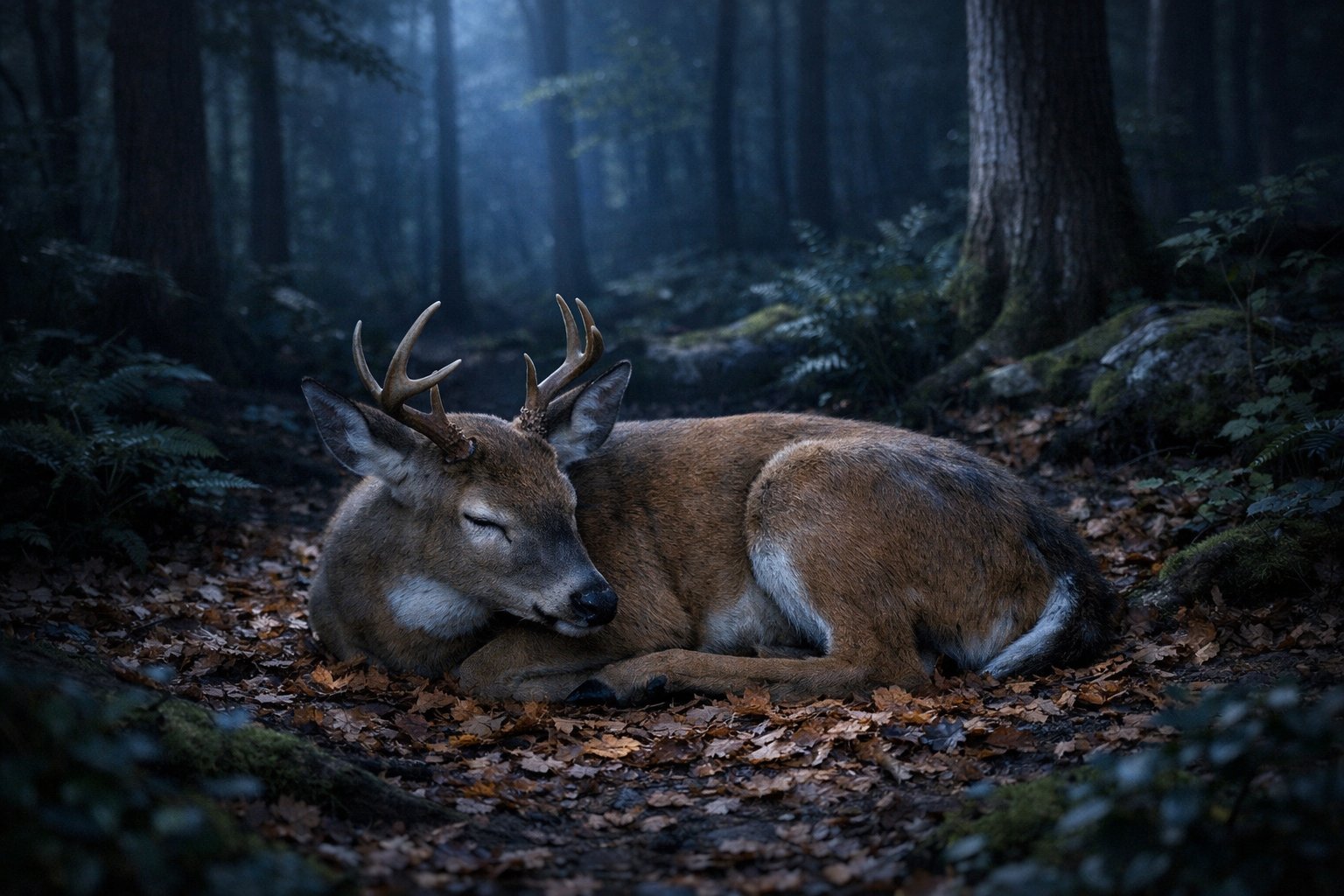
Deer mostly nap in short bursts, not long deep sleep. You’ll see them lying with their chest on the ground and legs tucked under (sternal recumbency). That posture keeps them warm and ready to bolt.
Even while dozing, deer stay alert. Their ears swivel and noses twitch. They switch between light sleep and quick checks so they can sense danger fast.
Deer use wind and terrain to keep tabs on threats. They bed upwind of likely approaches or on rises to watch. This constant alertness means they rarely get long, deep sleep.
Do Deer Sleep Standing Up or Lying Down?
Deer almost always lie down to sleep. Lying down lets them ruminate and slip into short deep sleep. When they bed, they tuck their legs so they can spring up quickly.
Sometimes, you’ll see a deer rest standing for a moment after a quick check or if the ground is rough. Horses and a few other ungulates can sleep standing for longer, but deer don’t have that trick. Standing sleep in deer is brief and really just for light dozing.
If a deer senses danger, it’ll stay on its feet or jump up from its bed in a flash. Their body and leg positions always put escape first, comfort second.
Deer Sleep in Groups: Social Behavior and Safety
When deer bed down together, they boost the group’s overall alertness. You might spot some deer keeping watch while others rest.
They seem to take turns, and this system helps them spot predators early.
How they group up depends on the species and the time of year. In winter, white-tailed deer usually stick to family groups.
Mule deer tend to spread out a bit more. If the habitat allows, elk and moose gather in bigger groups.
Fawns like to bed close to their mothers, probably for safety.
Deer also think about where they sleep as a group. They look for spots with enough cover for everyone and easy escape routes.
If one deer sounds the alarm, the whole group can bolt quickly.


