
Seeing a deer suddenly in your garden can be a surprise. It’s a little unsettling, honestly, but you can handle it safely.
Just stay back and watch from a distance. Let the deer find its own way out—trying to chase or approach it isn’t a good idea for anyone.
Your best move? Keep that safe distance and make sure the deer has a clear path to leave. Then, check if any of your plants took a hit.
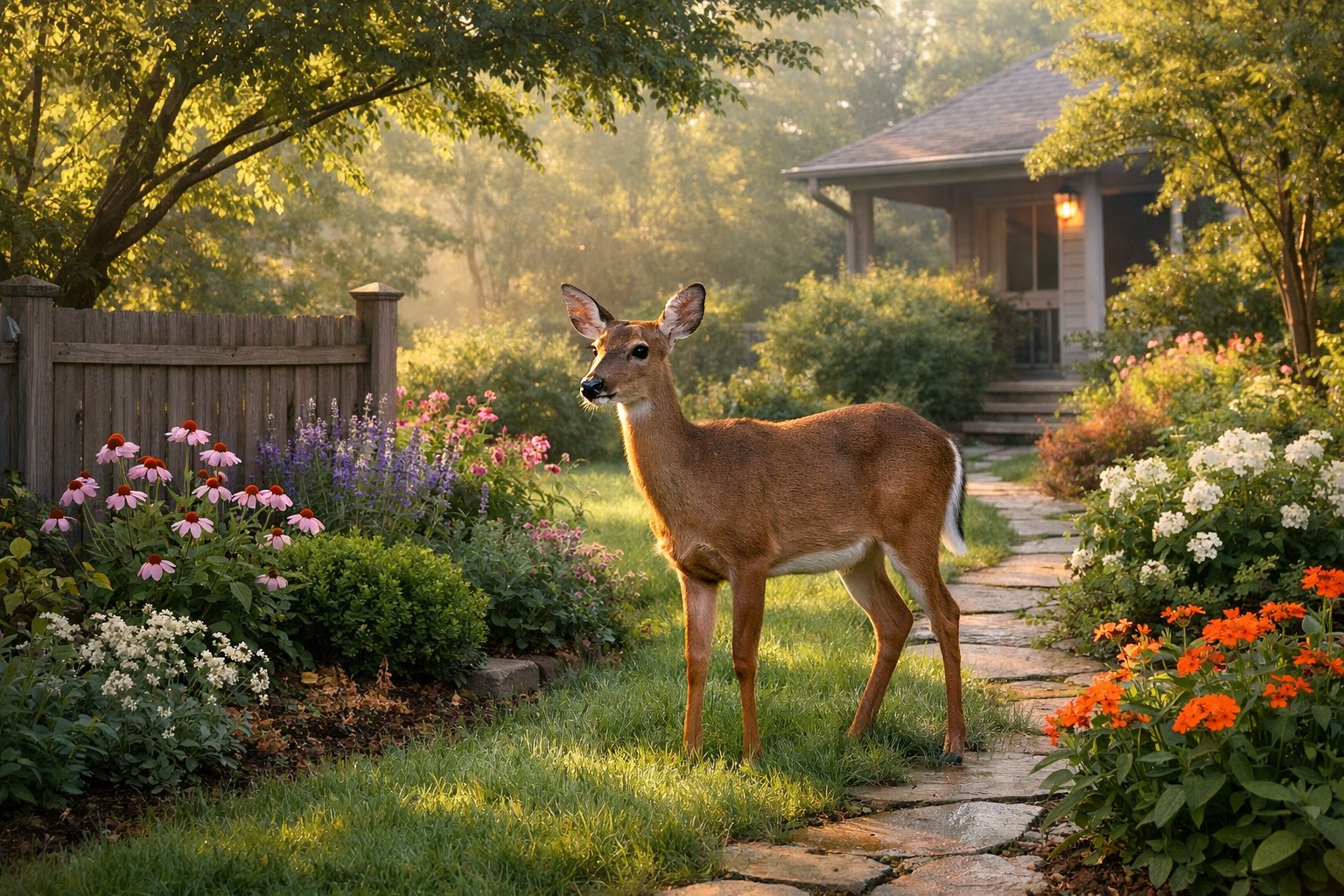
Once the deer leaves, take a look at your plants. Check for chewed leaves, stripped bark, or trampled paths so you know what to protect next time.
This guide will help you spot signs of deer activity and give you easy ways to defend your garden. Think fences, strong scents, or just picking the right plants.
Identifying Deer Presence and Damage

You can tell deer have been around by checking for certain clues. Look for tracks, droppings, and the way your plants got eaten.
Check for rubbed trees, too. These help you decide how to protect your plants next time.
Common Signs of Deer Activity
Look for split hoof prints—two teardrop shapes side by side. White-tailed deer tracks usually run about 2–3 inches long, while mule deer tracks can be a bit bigger.
A narrow, beaten path or a line of packed dirt often shows where deer walk again and again.
You’ll likely spot small, round, pellet-like droppings in clusters. That’s a sure sign deer have been feeding nearby.
You might see rubbed sap or bark on young tree trunks—bucks do this with their antlers. Scrapes look like bare patches under low branches, with torn leaves and scraped soil.
These clues often pop up near gardens, woods, and along fences.
Types of Deer Found in Gardens
Most North American suburbs get visits from white-tailed deer. They have that classic white underside to their tails and usually hang out near woods or open lawns.
Mule deer live more out West. They’ve got bigger ears and sometimes pick different plants, but the garden habits are pretty similar.
Sometimes fawns tag along with adults. They take smaller bites so the damage isn’t always obvious.
Bucks and does act differently—bucks make rubs and scrapes, especially during rut. Does focus on feeding and nursing.
If you know which type of deer visits, you can pick the right deterrent. Tall fences work best for white-tailed deer, while scent barriers or certain plants help with habitual browsers.
Recognizing Deer Damage to Plants
Deer love to nibble new growth, buds, and soft leaves. Look for clean, angled cuts on stems or missing tips—deer bite neatly, not ragged like rabbits.
Fruit trees often lose bark near the base or get twigs torn off lower branches.
You might notice trampled plants or flattened mulch where deer wandered through. Broken stems and stripped leaves on veggie plants are another giveaway.
If bulbs or flowers vanish and you don’t see signs of other pests, deer probably did it.
Take a photo and jot down which plants got hit. Patterns help you figure out what deer like most in your garden.
Understanding Deer Feeding Patterns
Deer usually show up at dawn or dusk, but they’ll graze during the day if they feel safe.
They go for tender new shoots in spring and fall, and browse woody twigs in winter when greens are scarce.
Your plant choices and nearby cover—like woods or brush—shape where and how often deer visit.
Deer tend to stick to the same routes and come back to good food sources. If your garden feels safe, expect repeat visits.
They avoid strong odors and some tastes. Planting pungent herbs near your favorite beds can help.
Notice when they show up and which plants get hit first. That’ll help you make a defense plan that actually works.
Protecting Your Garden from Deer

Start with changes you can actually manage. Block off key beds, choose plants deer don’t like, and try smell- or motion-based deterrents where deer usually come in.
Installing Effective Physical Barriers
Set up a fence that’s at least 8 feet tall—most deer won’t bother jumping it. If that’s too much, try two shorter fences, maybe 4–5 feet high, spaced 4–6 feet apart.
Deer get spooked by the depth and usually won’t try to clear both. Use solid panels if you can; deer hesitate to jump what they can’t see through.
For single plants or small groups, wire cages or hoops of deer netting, 4–6 feet tall and staked down, work well.
Electric fencing can help where it’s allowed. One high wire at 7–8 feet or several lines at different heights can do the trick.
Keep the lines clear so nothing shorts them out. If you want something less visible, try wide gravel strips or rock borders—deer don’t like unstable footing near beds.
Choosing and Planting Deer-Resistant Species
Swap out plants deer love, like hostas and tulips, for tougher ones. Daffodils, alliums, and hellebores are good picks for bed edges—deer usually leave them alone.
Ornamental grasses, Russian sage, and lavender add texture and smell that deer dislike. Group herbs like rosemary, thyme, oregano, sage, mint, and catmint near entry points.
Their strong scent helps mask tastier plants. For favorites you can’t give up, like hydrangeas or roses, use protective cages or keep up with repellent sprays.
Plant bulbs deeper or under wire cages to keep tulips and daffodils safe in spring. For fruit trees, trunk guards and weekly repellents help during winter when deer get desperate.
Natural and Homemade Deer Repellent Solutions
Mix up a spray with eggs, water, and a splash of milk. Apply it every week or two, and after rain.
If you’d rather not make your own, commercial egg-based sprays like Liquid Fence work too.
Try odor barriers—hang garlic, hot pepper, or strong soap near plants. Sprinkle dried blood meal or hang soap bars on stakes by vulnerable shrubs.
After heavy rain, reapply and switch up your recipes so deer don’t get used to them.
Plant mint, lavender, thyme, or oregano around sensitive beds. Just a heads up, some homemade remedies smell pretty strong and might attract pets, so place them wisely.
Utilizing Motion-Activated and Scare Devices
Try installing motion-activated sprinklers right where deer usually sneak in. That quick burst of water usually teaches them to steer clear of those paths.
You might want to use motion-activated lights or ultrasonic devices, but honestly, they work better when you mix them with other tricks. Don’t just rely on one gadget.
Set up predator decoys—think plastic owls or maybe a fox statue. Move them around every few days; deer catch on fast if you don’t.
Stick some reflective tape or hang wind chimes near the edge of your garden. They help in the short term, especially while you figure out which methods really work for you.
Try pairing sprinklers with fencing and maybe some repellents for a stronger defense. Keep an eye on things and switch up your tactics as the seasons change. Winter and spring bring different deer appetites, so you’ll need to adjust your timing and placement.


