
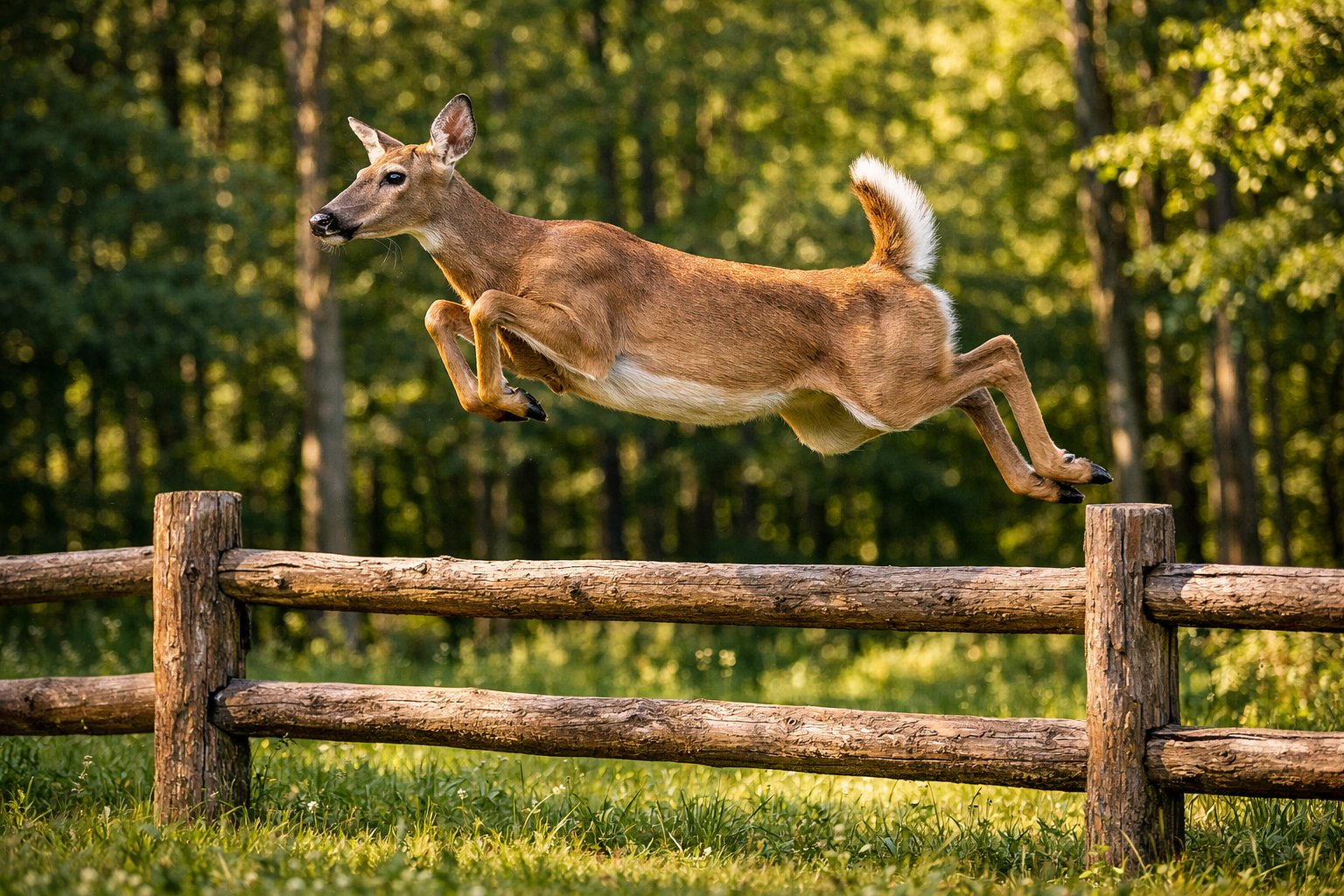
Most deer can jump a 3-foot fence without much trouble if they want to. If food, fear, or a clear path motivates them, a 3-foot barrier usually won’t stop them.
You might wonder what really makes deer jump higher, which fence heights actually work, and what else helps keep them away. Let’s look at how species, motivation, and fence design play a role, and check out some practical options that don’t cost a fortune.
Deer Jumping Ability: Species, Motivation, and Fence Heights

Deer differ by species, age, and what they need. Their jumping height depends on their size, how determined they feel, and whether they get a running start.
How High Can White-Tailed Deer and Mule Deer Jump?
White-tailed deer often clear obstacles around 6 to 8 feet high. Some healthy adults can even push close to 10 or 12 feet if they’re running or scared.
Mule deer jump a bit differently. They use long, bounding leaps and can hit similar heights when they’ve got momentum.
Smaller or younger deer don’t usually jump as high. Heavier or older deer might not reach those top heights as easily.
Habitat makes a difference too. Deer on open plains rely on speed and long jumps, while those in forests tend to use short bursts and vertical hops.
What Influences a Deer’s Jump: Depth Perception, Motivation, and Run-Up
Deer don’t see depth quite like we do. They’re better at spotting movement than picking out details.
If they can’t see what’s on the other side of a fence, they often hesitate and just won’t jump.
Motivation really matters. A deer running from a predator or chasing a mate will try harder than one just thinking about a snack.
A good run-up—several meters—gives them the boost they need to jump higher. If the ground is uneven or there’s not much space, they’re less likely to make the jump.
Can Deer Really Jump a 3 Foot Fence?
Yeah, no problem. Most adult deer can clear a 3-foot fence without breaking a sweat.
Even young or small deer can step over or hop a 3-foot barrier. If the fence is see-through and they spot food, they’ll probably give it a shot.
A 3-foot fence might slow down a fawn or an injured deer, but it won’t stop a healthy white-tailed or mule deer. With low barriers, deer often just walk around, go under, or jump right over.
If you want to protect your plants behind a short fence, you’ll need extra deterrents.
Recommended Fence Heights to Keep Deer Out
Most folks recommend fences at least 7 or 8 feet tall to reliably keep out white-tailed deer. Mule deer and especially athletic deer might still clear 8 feet, but 8 feet gives you a better shot if you’ve got lots of deer around.
There’s another trick: two fences, each 4 to 5 feet high, spaced about 4 or 5 feet apart. Deer usually get confused by the gap and don’t try to jump both.
You can make fences non-transparent or bury wire a foot underground to stop digging. If you want more details on fence heights and how deer behave, check out this overview on how high deer jump.
Effective Deer Fencing and Deterrent Methods

You’ll need fences and deterrents that actually fit your yard, the local deer population, and your budget. Pick materials that prevent jumping or squeezing, and use smart design tricks or active deterrents if height alone isn’t enough.
Choosing the Best Fence Material: Wire, Woven Wire, and High-Tensile Options
Pick your fence material for strength and visibility. Standard wire fences (just single strands) are cheap, but deer can push through or slip between them.
Woven wire fences have smaller gaps and hold up better when deer lean on them. Use 4–6 inch mesh near the ground to block fawns, and smaller gaps higher up for adults.
High-tensile wire fencing stretches less and keeps its tension longer. It works well for long fences and needs fewer posts.
If you have heavy deer pressure, go for 7–8 foot heights with high-tensile. For gardens, combine a shorter woven wire skirt buried 6–12 inches to stop digging.
Use sturdy wood or steel posts. Secure gates with woven wire or tight mesh. Check knots and staples at least once a year.
A well-built woven or high-tensile fence protects your plants and lasts longer than flimsy single-strand wire.
Design Strategies: Double Fencing, Chicken Wire, and Angled Fences
Double fencing uses two parallel fences about 4–6 feet apart. Deer usually balk at the gap and almost never try to jump both.
Two 4–5 foot fences spaced apart often work better than a single 8-foot fence and can even cost less.
Chicken wire can help with small beds and seedlings. Its light mesh keeps out fawns and rabbits, but a determined adult deer might still push through.
Reinforce chicken wire with stakes and use closer spacing where deer like to press against it.
Angled fences slope outward at the top. This makes a deer’s jump harder by adding visual and physical obstacles.
A 45-degree overhang or posts leaning outward can do the trick. Combine an angle with height or double fencing for the best results, especially in tight yards or where tall fences aren’t allowed.
Deer Deterrents: Electric Fencing, Motion-Activated Sprinklers, and Visual Barriers
Electric fencing delivers a quick, unpleasant shock that teaches deer to stay away. I recommend using low-impedance energizers and at least two strands—one at 18–24 inches, another at 36–48 inches.
Remember to check local rules and put up warning signs. You’ll get the best results if you keep vegetation off the wires.
Motion-activated sprinklers can startle deer before they even reach your plants. Point them at entry spots and tweak the sensitivity so they don’t go off for every little thing.
They’re usually cheaper than tall deer fencing. Sprinklers work great near gardens or in smaller yards.
Visual barriers block the view and make deer think twice about jumping. A solid wood or vinyl fence, 7–8 feet high, stops most deer in their tracks.
If you can’t go that high, try adding opaque fabric to your current fence. You could also install visual panels wherever deer might sneak in.
For extra protection, mix visual barriers with motion sprinklers or electric lines. Layering different deterrents just seems to work better, doesn’t it?


