
Ever spot a deer near your yard and wonder what would happen if your dog wandered over? Yeah — most deer get spooked by dogs. The scent, shape, and sounds of canines just flip that instinctual “run!” switch in their brains. Let’s dig into why deer react this way and what it means for you, your pets, and the wildlife nearby.
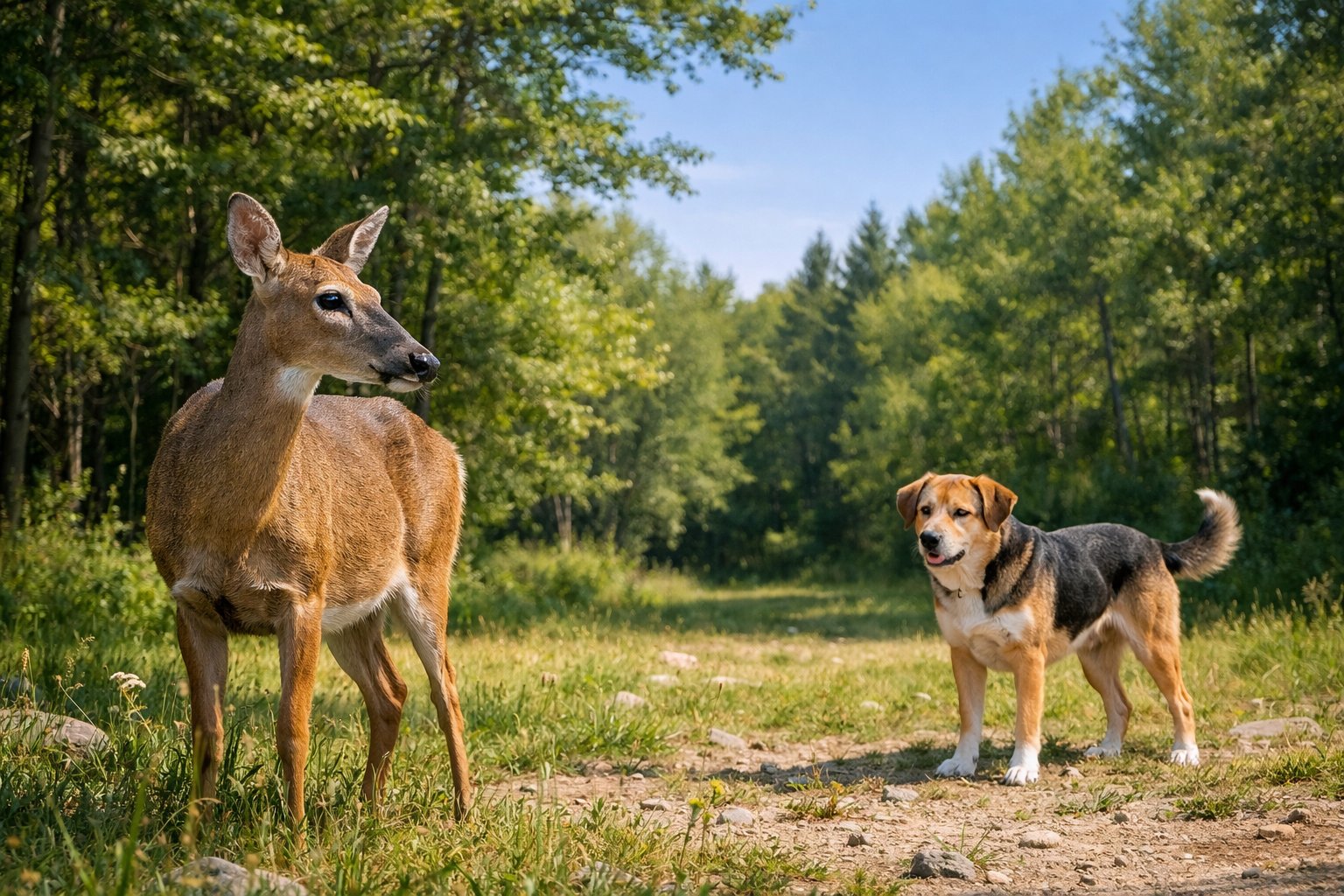
We’ll look at how smell, sight, and noise trigger a deer’s flight response. Sometimes, deer act differently in cities. I’ll toss in some tips for keeping your dog safe and making life less stressful for deer when you’re outside.
Why Deer Are Afraid of Dogs

Most deer will dash off the moment they sense a dog nearby. They react this way because of old predator threats, their sharp senses, and how dogs tend to act.
Instinctual Fear and Evolutionary History
Deer inherit their fears from ancestors who survived by running from wolves and other canines. Over thousands of years, the ones who ran fastest lived to pass on their genes.
When deer spot or smell a dog, you’ll catch them with pounding hearts, tense muscles, and that classic bolt. Mothers will defend fawns and warn others. These instincts kick in even if your dog’s tiny or just sniffing around — deer don’t care about intentions, just the predator vibe.
Scent, Sound, and Sight Triggers
Deer use their noses first. Your dog’s smell drifts on the wind, and deer can pick it up before they even see you.
They’ll also react to barking or paws crunching leaves. Those sounds remind them of predators on the move.
Movement matters too. If your dog runs or charges, or even just looks “canine,” deer usually don’t stick around. Want deer to stay calm? Keep your dog quiet and still — scent and noise are the biggest triggers.
Differences in Urban vs. Rural Deer Responses
City or suburban deer bump into dogs more often, so they sometimes get a little used to calm, leashed pets. You might notice they don’t always bolt right away.
But if a dog looks unfamiliar or moves fast, even city deer will run. Out in the country, deer keep their guard up because they see fewer dogs and wolves.
A roaming dog in rural areas can really stress deer out, mess with their feeding, and push them into risky places. How deer act really depends on what they’ve experienced in their home turf.
Influence of Dog Behavior and Breed
Dogs that chase, bark, or sprint trigger deer to run or even fight back. Hunting breeds or big, energetic dogs look and act more like predators, so deer react more strongly.
Even small, chill dogs can scare deer if they move suddenly or have a strong scent. Walking a big hound? Expect deer to notice — and probably dash.
To keep everyone safe, keep your dog close and don’t let it chase or bark at deer.
Related reading: Want more details? Check out this page about why deer fear dogs (https://iere.org/why-are-deer-afraid-of-dogs/).
Deer and Dog Interactions: Risks, Safety, and Responsible Ownership

You need some ground rules to keep your dog and local deer safe. Stick to leash laws, watch out for risky seasons, and use repellents or deterrents if needed.
Seasons with Higher Conflict: Rutting and Fawning
In fawning season (spring to early summer), does get super protective. If you spot a doe with a fawn, keep your dog on a tight leash and quietly head the other way.
Does might charge if they think a pup’s too close. Fawns often lie still — don’t touch or move them.
Rutting season (fall) brings out aggressive bucks. Bucks with antlers can get territorial, especially in thick cover or at dawn and dusk.
Avoid walking dogs in those spots during peak times. Local wildlife agencies or community boards usually post timing updates, so check before you head out.
Deer Defensive Behavior and Attacks on Dogs
Deer don’t hunt dogs, but they’ll defend themselves. They can kick, stomp, or jab with antlers.
Small dogs face more danger, especially if they run off or chase deer. If a deer charges, try to get between your dog and the deer if it’s safe.
Call your dog back and use the leash to pull them away. If your dog gets hurt, get to the vet quickly — hoof wounds or punctures can get nasty.
Serious incidents? Report them to animal control or wildlife officers so they can warn neighbors or track aggressive deer.
Keeping Dogs on Leash and Safe Outdoor Practices
Leash your dog in deer habitats and near greenbelts. A sturdy, short leash gives you control and stops sudden chases.
Train your dog to come when called and practice “leave it” around wildlife. Try walking in the middle of the day when deer aren’t as active.
Skip dense brush, deer trails, and fields at dawn or dusk. For off-leash play, use fenced yards or keep a close eye.
Carrying a whistle or treat pouch helps you redirect your dog fast. Always follow local rules about dogs and wildlife.
Responsible ownership keeps your dog safe and helps local deer populations by reducing stress.
Dogs as Deer Deterrents and Use of Repellents
Sometimes, a well-trained dog keeps deer away from your yard. If the dog isn’t under control, though, things can spiral—barking or chasing might hurt both the dog and the deer.
It’s better to rely on a calm, trained presence instead of letting your dog harass wildlife. I’d suggest sticking to humane strategies.
Try mixing things up: motion-activated lights, plants that deer don’t like, and commercial repellents (just follow the label). Rotating repellents seems to help, especially if you use them with barriers like fencing.
If you want more guidance on handling dogs and deer—or need to know what’s legal—check out wildlife resources. The Blue Cross has some solid advice on dogs and deer safety.


