
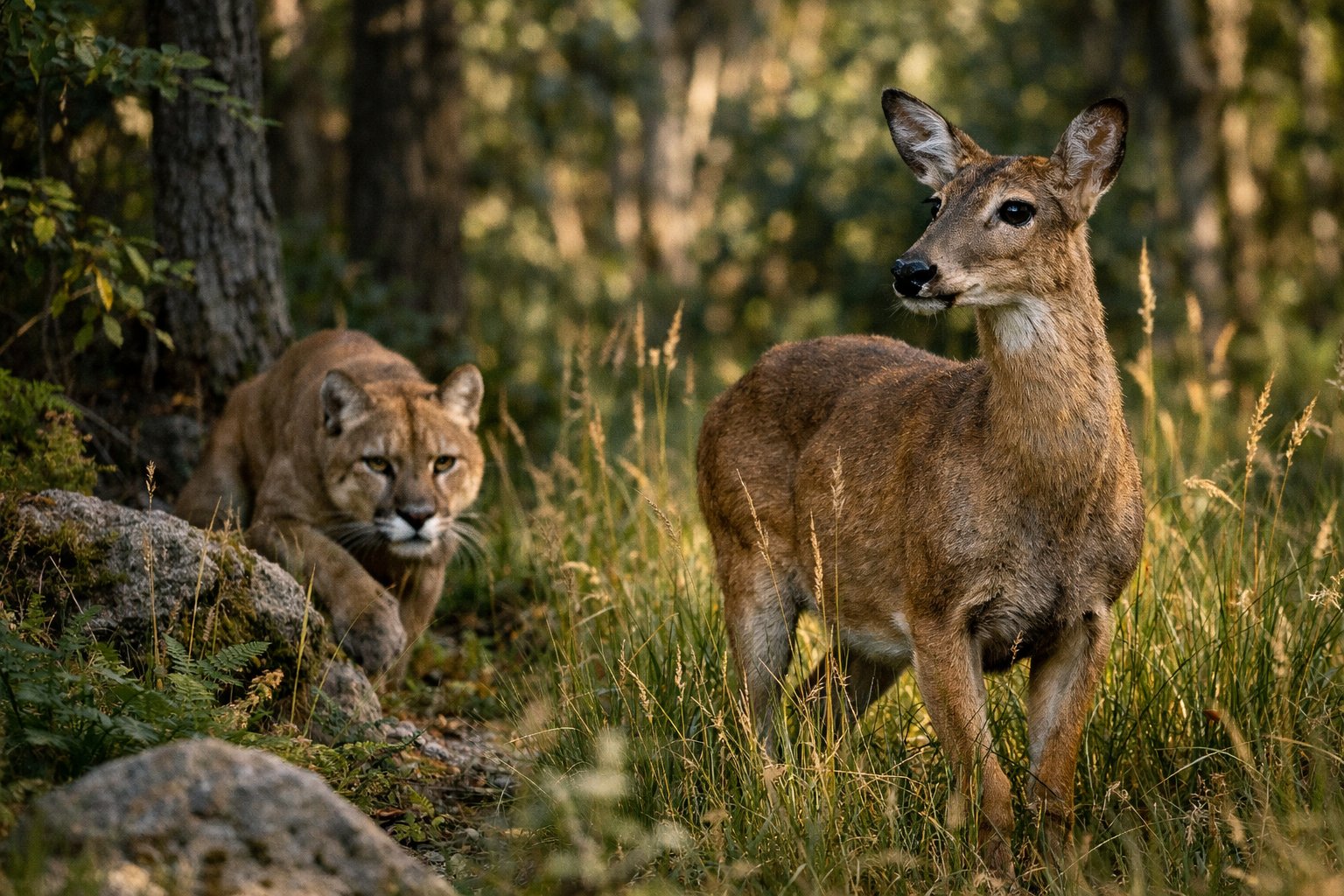
Ever spot a deer in your yard and wonder what could actually take one down? Predators like wolves, mountain lions, and coyotes hunt and kill deer. Sometimes, though, hunger, disease, or even cars end their lives, too.
Large carnivores and packs of canids are the biggest natural threat to a healthy deer.
As you read on, you’ll see how a deer’s diet and habitat make it more or less vulnerable to these dangers.
You’ll also notice how season, health, and human activity shift the risks deer face. That’s why some places have tons of deer, and others, barely any.
Deer Diet Essentials: What Deer Prefer to Eat
Deer go for foods that give them energy, protein, and fat. You’ll catch them munching on nuts, soft fruits, greens, or even farm crops, depending on what’s around and the time of year.
Acorns and Other Mast
Acorns are a favorite in fall and early winter. Deer especially love white oak acorns since they’re lower in tannins and easier to digest.
Chestnuts and beechnuts add fat and carbs, which help deer bulk up before winter.
You’ll often find deer gathering under oak trees after mast drops. Look for tracks or scuffed leaves where they dig for nuts.
Mast availability really affects how deer move and how healthy they stay into the cold months.
Favorite Fruits and Berries
Fruits like apples, pears, and persimmons give deer a quick burst of sugar and hydration. In late summer, they’ll snack on blackberries and raspberries when the berries are ripe and soft.
Soft fruits help deer regain weight in spring and keep them hydrated.
Deer like fruit that’s fallen or hanging low enough to grab. If you manage land, planting apple or pear trees near cover can make deer stick around.
Don’t leave fruit out to mold, though—it can hurt deer.
Greens: Forbs, Clover, and Alfalfa
Tender forbs, clover, and alfalfa bring protein and minerals, especially in spring and summer. You’ll spot deer grazing on clover patches and new forbs—they’re easy to digest and packed with nutrients.
Alfalfa fields are a big draw, especially for does nursing fawns or yearlings growing fast.
Deer also browse new leaves and shoots from shrubs and young trees. Forbs like plantain, chickweed, and dandelion are common picks.
If you want to help deer, mix legumes and forbs to improve forage quality.
Crops and Grains Deer Eat
Deer eat plenty of farm crops—corn, wheat, soybeans, and cereal grains are all on the menu. Corn is a high-calorie food in fall and winter, while soybeans and wheat provide both green browse and grain in late summer and fall.
In spring, deer graze on fresh cereal crops when green growth pops up.
You’ll see heavy crop damage near field edges and where woods meet open land. Farmers sometimes set up buffer zones or diversion plots to cut losses.
If you manage land, planting a small grain or brassica plot can draw deer away from your main crops.
Links: Check out this guide on what deer eat and a seasonal breakdown at HowStuffWorks.
How Deer Diet Influences Their Habitat, Health, and Interactions

What deer eat shapes where they live, how healthy they stay, and even how they mix with other animals and plants.
Good forage fuels antler growth and breeding. It even changes plant communities.
Poor food leads to malnutrition and slow antler growth. It also makes deer browse their favorite plants harder.
Deer Feeding Behavior and Seasonal Changes
Deer change their eating habits with the seasons and what’s available. In spring and summer, they focus on tender shoots, forbs, and new leaves.
These protein-rich foods help does nurse fawns and give bucks energy for antler growth.
When fall rolls around, deer switch to nuts, fruits, and mast to build fat for winter. They go for acorns, apples, and whatever late-season browse they can find.
Winter is tough—twigs, bark, and woody browse become the main fare. You might see deer spending more time feeding just to get enough energy.
Local habitat really drives these choices. Farm fields, forest edges, and even suburban yards offer different foods.
Deer gather where food is richest, which affects plant growth and where predators or hunters might spot them.
Role of Diet in Antler Growth and Reproduction
Antler growth takes protein, calcium, and phosphorus. If bucks have access to high-protein forage in spring and summer—think legumes, new shoots, or food plots—they’ll grow bigger, heavier antlers.
Poor nutrition means smaller, weaker racks.
Does need solid nutrition before and during pregnancy. Enough fat and minerals boost fawn survival and milk quality.
If you manage habitat, plant protein-rich forages and set out mineral blocks at key times to support reproduction.
Because deer are ruminants, they extract nutrients slowly. They do best with frequent, good meals—not just one rich food.
You can help herd health by keeping forage diverse across the year, not just relying on a single source.
Deer-Resistant Plants and Food to Avoid
You can cut down on deer browsing by planting things they usually don’t like. Tough, aromatic, or woody plants—like boxwood, lavender, and most conifers—often keep deer away.
Native shrubs like bayberry and some holly species also stand up well to browsing.
Don’t feed deer human food or salty snacks. Bread, chips, and processed stuff mess with their digestion and natural foraging.
Corn as a sole feed is a bad idea—it can cause crowding, spread disease, and throw off their nutrition.
When you plant, use a mix and protect young plants with cages or repellents. Rotate repellents and add physical barriers where you can.
That way, you lower deer damage without making them depend on handouts.
Deer Forage and Wildlife Management Tips
If you’re hoping to attract deer safely, try planting a mix of food plots. Clover, chicory, and brassicas all work well for spring and summer nutrition.
I’d also toss in some native mast trees—oaks are a solid choice—so you’ve got something for deer to fatten up on in the fall. Just remember to keep your plots close to cover, but not so close to roads that you’re inviting trouble.
When it comes to management, keep an eye on browse rates and the overall health of the herd. Trail cameras and basic vegetation surveys can help you spot overbrowsing or deer that aren’t looking their best.
If you notice deer are hammering young trees and threatening forest regeneration, you might need to take action. Controlled hunting, fencing, or even targeted repellents can all help reduce pressure.
Honestly, feeding deer long-term isn’t a good idea. Supplemental feeding tends to increase disease risk and can mess with their natural movement.
Instead, focus on improving habitat with diverse forage available year-round. A bit of thoughtful planning goes a long way toward supporting healthier deer and keeping your plant communities balanced.


