
You’ll spot deer using simple signals and steady habits. They feed at dawn and dusk, stay alert to danger, and stick together in loose social groups.
A deer’s behavior revolves around feeding, dodging predators, and mating. If you watch their body language and daily routines, you’ll get a sense of what they need and why they move the way they do.
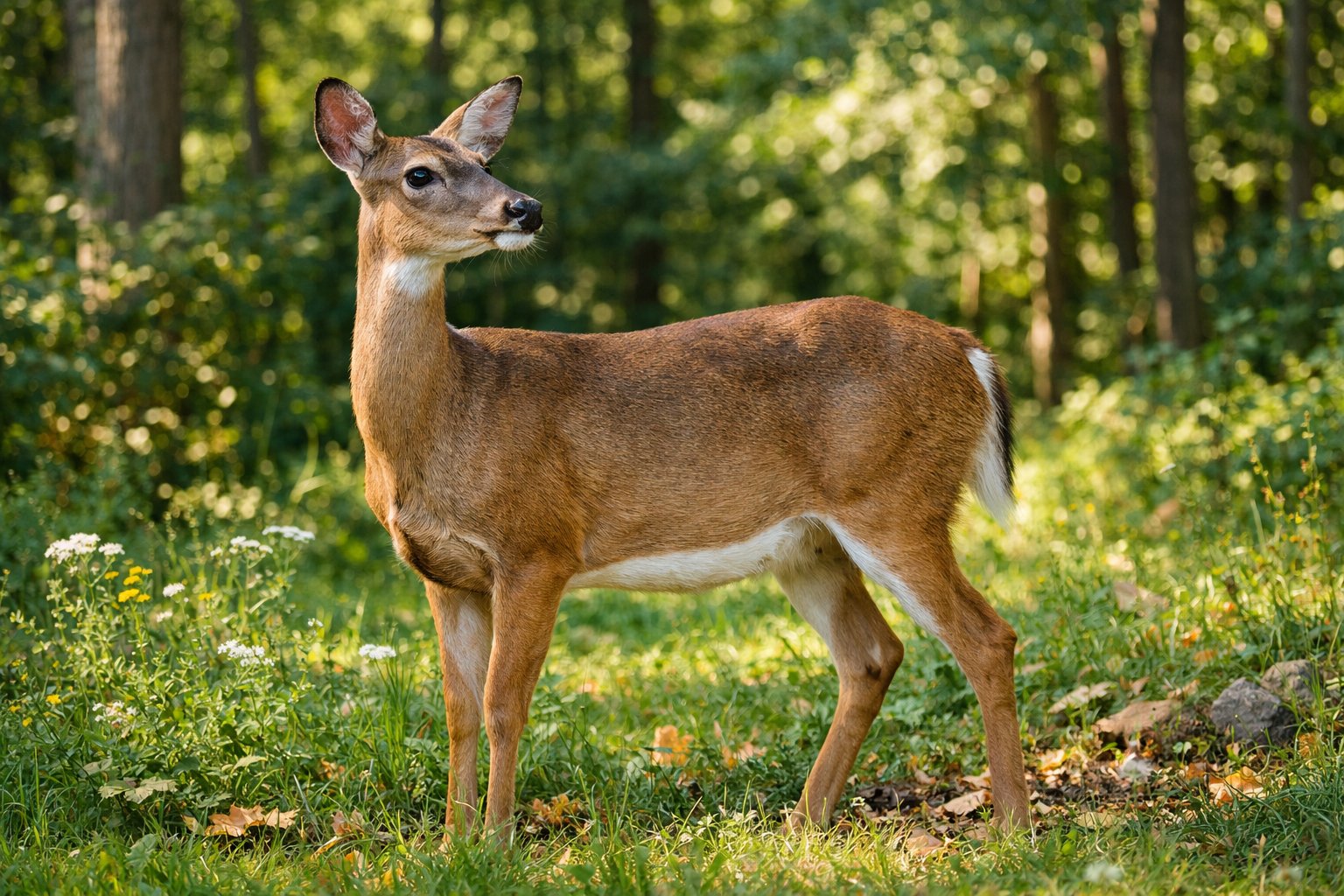
Walk into a field or the edge of a wood, and you’ll see how ears, tail, and stance give away a deer’s mood. I’ll break down those signals, show how social rank shapes their groups, and explain how seasons change feeding and movement.
You’ll start to recognize what a deer is doing and maybe even why it’s doing it.
Core Behaviors and Social Structure

You’ll learn how deer spend their days, form groups, and communicate with sounds, posture, and scent.
Expect to see clear examples of how they move, feed, and sort out social ranks—not to mention the marks they leave behind.
Typical Deer Behaviors and Activity Patterns
Deer are crepuscular, so you’ll most likely spot them at dawn and dusk. They forage for grasses, buds, and browse in short, repeated bouts.
A white-tailed doe might feed four to six times a day, moving slowly between cover and feeding patches.
During hot midday hours, deer rest in shade or thick cover to avoid heat and predators. In winter, they feed for longer stretches but move less to save energy.
Fawns stick close to their mothers and hide for long periods in their first weeks. The mother sneaks back to feed them every so often.
You’ll notice seasonal changes, too. The rut in autumn makes bucks move more during the day and take more risks.
In summer, deer focus on caring for fawns and dodging biting insects.
Herd Dynamics and Social Interactions
Deer build their social structure around matrilineal groups. You’ll often see family groups of does and their young living in overlapping home ranges.
Older does usually lead when it comes to feeding order and getting the best browse.
Bucks form loose bachelor groups outside the rut. When breeding season hits, they split off to compete for does.
Dominance shows up in posture, who gets food, and who mates. Most conflicts are short; antler rubbing and displays usually settle things before a full fight breaks out.
Group size changes a lot. Food, cover, and predators all shape how big or small a group gets.
In poor habitat, groups shrink and get more competitive. In safe, food-rich spots, herds can be larger and even include unrelated deer.
Communication: Vocalizations, Body Language, and Scent
Deer use three main ways to communicate: sound, posture, and scent. Their vocal signals include snorts, grunts, and the mother’s bleat for her fawn.
You’ll hear a sharp snort if there’s danger, and a soft grunt when deer interact up close.
Body language is almost like a secret code. A raised white tail warns other deer.
Ears that swivel toward sounds, or flatten with a lowered head, show aggression. You can spot who’s dominant by their stance and how close they let others get.
Scent matters a lot. Deer have glands on their feet, faces, and tarsal areas.
Bucks rub their antlers and faces on trees, leaving scent and visual marks called rubs. Does and bucks make scrapes—patches of ground they paw or urinate on—to signal breeding status and territory.
These scent marks tell other deer about identity, sex, and readiness to breed.
Territorial Behavior and Scent Marking
Not every deer defends a strict territory, but you’ll see some territorial behavior tied to breeding and resources.
Bucks patrol and mark areas during the rut to attract does and warn off rivals. They use scrapes and rubs to leave chemical messages.
Scrapes usually sit under low branches. A buck will sniff, paw, and urinate in the scrape.
Rubs show up as fresh bark removal and sometimes hair stuck to trees.
You can map deer activity by looking for clusters of scrapes and rubs along trails and field edges.
Female home ranges overlap more and don’t get defended as aggressively. Territory-like behavior ramps up where food or cover is scarce, making scent marking and interactions more intense.
Feeding, Movement, and Seasonal Changes

Deer change what they eat, where they go, and how they act each season to survive and raise young.
You’ll see how their diet shifts with plant availability, when they move, how they dodge predators, and even how your own land or habits might affect them.
Feeding Habits and Dietary Preferences
Deer browse and pick their food carefully. You’ll catch them eating leaves, twigs, buds, fruits, acorns, and grasses, depending on the season and what’s around.
In spring, they love tender shoots and new leaves. In fall, they go after high-energy foods like acorns and mast to fatten up for winter.
When snow covers the ground in winter, they browse woody twigs, evergreen needles, and whatever mast they can find.
Their four-chamber stomach helps them digest tough plants. If you want to protect your garden, try deer-resistant plants and fencing, or clean up fallen fruit.
Supplemental feeding changes how deer move and can concentrate them, which isn’t always good for disease or management.
Daily and Seasonal Movement Patterns
Deer stick to dawn and dusk for most of their activity, but they adapt to food, weather, and hunters.
You’ll see more daytime movement where people rarely go, and more nighttime activity near towns.
Seasonal shifts usually follow food and breeding. Many deer move to wintering grounds or valley bottoms where snow isn’t as deep.
Some herds migrate along wildlife corridors, while others stay put year-round in milder climates.
During the rut, bucks travel farther and follow does, which means you’ll see them more during the day.
Hunters use these patterns to pick their spots, but local habitat, moon phases, or weather can always throw a wrench in the plan.
Predator Avoidance and Defense Strategies
Deer rely on sharp senses and quick thinking to survive. They use smell, hearing, and wide-angle vision to spot wolves, coyotes, mountain lions, or humans.
If they sense danger, they flag their white tails, stomp, snort, or bolt away in a zigzag to throw off predators.
Fawns usually hide by staying still and keeping their scent low. Living in groups helps, since one deer’s warning can save the rest.
Hunting pressure makes deer more nocturnal and secretive. If you want to protect livestock or pets, try lights, fencing, or keeping attractants out of reach.
Influence of Habitat and Human Interactions
Habitat really shapes where deer go and how many you’ll see. You’ll spot more deer along the edges where forests meet farm fields. They like spots with cover, food, and water all close together.
When people break up land with roads, deer get squeezed into smaller spaces. That’s when you start seeing more deer-vehicle collisions.
People change deer behavior too, sometimes without meaning to. Feeding them, planting tasty shrubs, or hunting less can make deer bolder. Suddenly, they’re munching on your garden or landscaping.
Wildlife corridors and smart habitat management give deer safer routes and better living conditions. Regulated hunting helps keep populations in check.
If you’re planning land use, think about adding food plots, cover strips, or buffer zones. These features can guide deer away from trouble spots and lower conflicts.
Curious about when deer are most active? Check out this guide to when deer usually come out.


